

Fine Art Poster
From £28
A giclée print on 200gsm matte fine art paper, using a twelve-colour process for accurate, fade-resistant colour. Supplied unframed, delivered flat or rolled.



Archival giclée
Frames arrive ready to hang
Secure checkout
Made to order
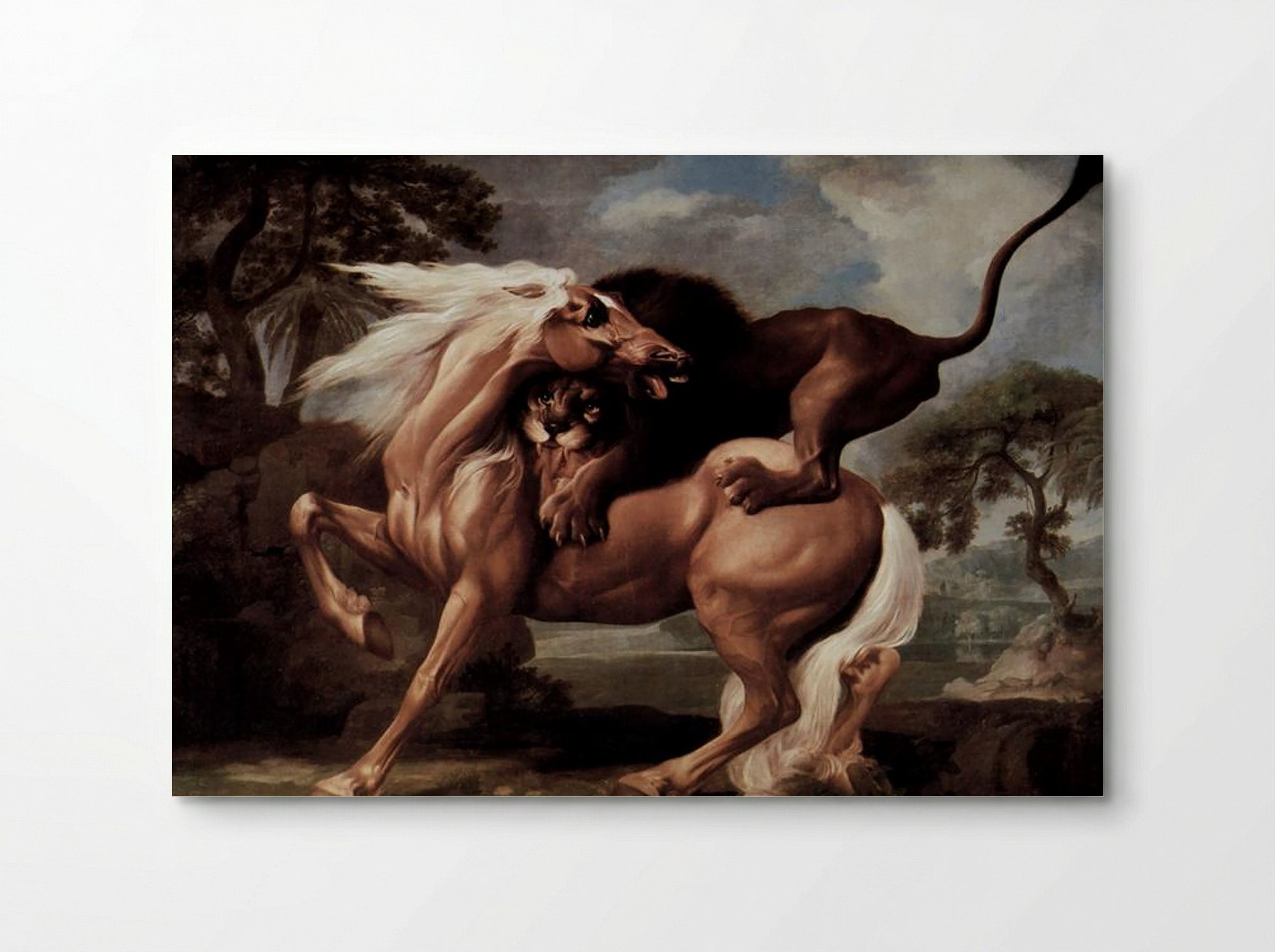
A dramatic depiction of a horse in mortal danger, 'Horse Attacked by a Lion' showcases George Stubbs's anatomical precision and talent for animal painting. The dynamic composition and muted colour palette add to the painting's sense of realism.
George Stubbs, an 18th-century British painter, is celebrated for his anatomical accuracy and skill in animal painting. He combined scientific observation with artistic talent, producing works that were both aesthetically pleasing and informative. Stubbs's detailed studies of horses, including dissections, set him apart from his contemporaries. His paintings often depict animals in naturalistic settings, reflecting a keen interest in the relationship between humans and the natural world. 'Horse Attacked by a Lion' exemplifies Stubbs's dramatic flair and anatomical precision. The painting captures a moment of intense struggle between a horse and a lion, set against a sparse, rocky backdrop. The horse, with its muscular form and flowing mane, is depicted in a state of panic, its eyes wide with fear. The lion, powerful and predatory, clings to the horse's back, its teeth bared in a fierce snarl. The composition is dynamic, conveying the energy and violence of the encounter. The muted colour palette, dominated by browns, creams, and greys, adds to the painting's sense of drama and realism. The landscape, though minimal, provides a sense of depth and context, enhancing the overall impact of the scene.
Because every print is made to order, we don't offer change-of-mind returns, refunds or exchanges. If your order arrives faulty, damaged or incorrect, we'll replace it free of charge — just contact us within 48 hours of delivery. See our refunds page for full details.
We ship worldwide, printing at the production hub nearest to your delivery address. Delivery times and costs vary by destination — you'll see the options available to you at checkout.
Each print is produced to order using 12-colour giclée printing on FSC-certified archival paper. Designed in Britain and printed at your nearest production hub to reduce waste and speed up delivery.

Artist Biography
Our Features
Designed for Lasting Impact
Every Solis piece is made to order with archival, gallery-quality materials built to last.
To keep your artwork looking its best:
Museum-grade giclée on FSC-certified archival matte paper, with framed and canvas options.
Made to order
Every piece is printed to order. These are the five finishes, and what makes each one different.
From £28
A giclée print on 200gsm matte fine art paper, using a twelve-colour process for accurate, fade-resistant colour. Supplied unframed, delivered flat or rolled.

From £45
The same fine art print in a solid wood frame with UV-protective acrylic glaze and rigid backing. Five frame colours. Arrives ready to hang.
Why Choose Us ?
Damage-free delivery guarantee
Fast Shipping
Museum-Quality Materials
Artist Biography
George Stubbs
You May Also Like
Cookies show us which prints people love, so we hang the right art. Help us fill it?
Essential cookies only if you prefer · Privacy Policy