

Fine Art Poster
From £37
A giclée print on 200gsm matte fine art paper, using a twelve-colour process for accurate, fade-resistant colour. Supplied unframed, delivered flat or rolled.



Archival giclée
Frames arrive ready to hang
Secure checkout
Made to order
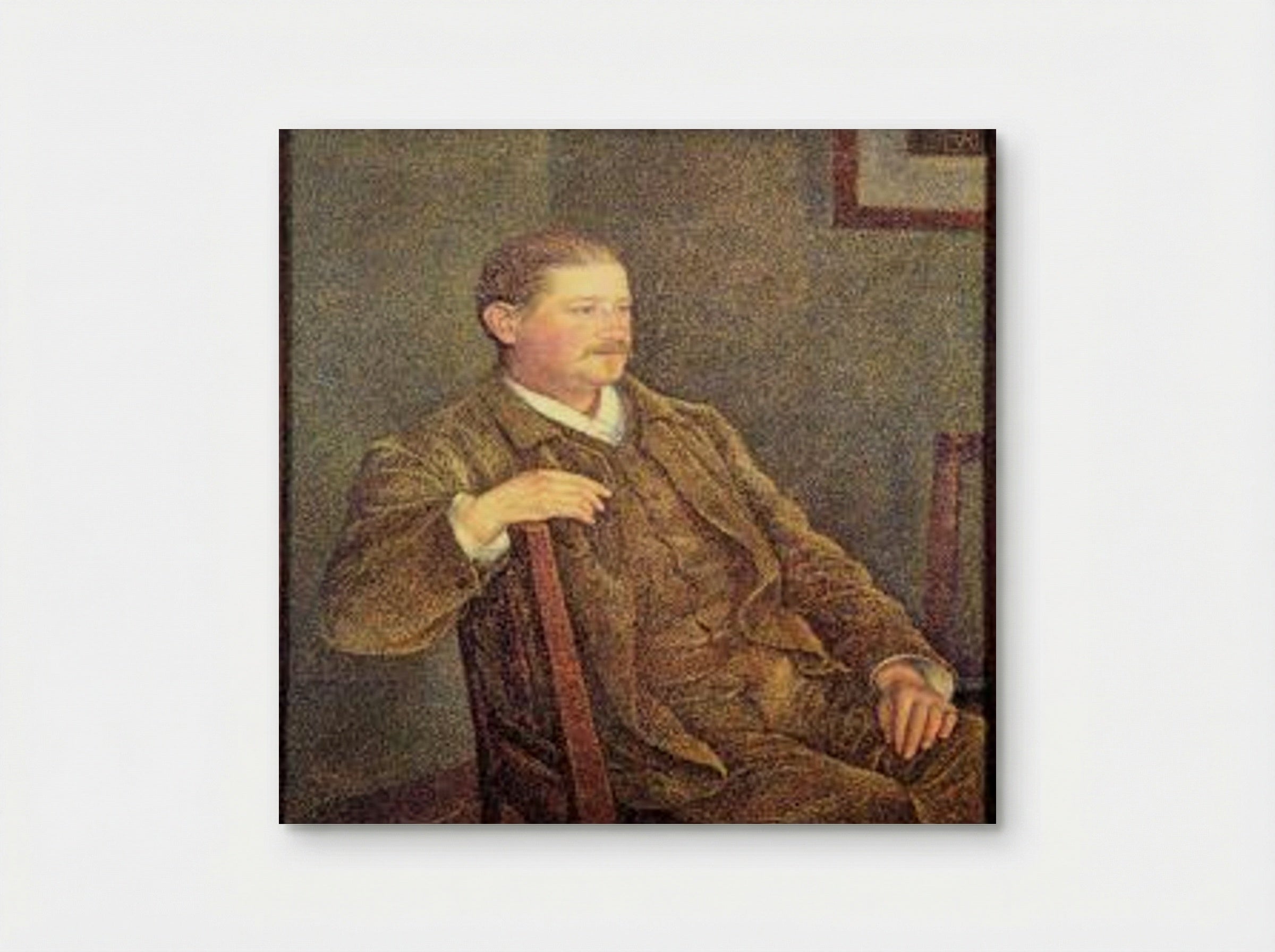
A refined portrait of a seated gentleman by French Academic painter Auguste Toulmouche, capturing a quiet moment of reflection with precise detail.
Auguste Toulmouche, a French painter active during the nineteenth century, gained recognition for his depictions of Parisian bourgeois life. While he is often associated with the refined, domestic scenes of women in fashionable interiors, this portrait demonstrates his technical proficiency in capturing the likeness and character of his subjects. The work presents a seated gentleman, rendered with a focus on the textures of his attire and the quiet atmosphere of the room. The composition is restrained, placing the subject in a three-quarter view against a muted background. Toulmouche employs a controlled palette, favouring earth tones and subtle variations in brown and ochre. This choice directs the viewer's attention to the subject's expression and posture. The brushwork is precise, reflecting the academic training that defined the artist's career. Unlike the more experimental approaches of his contemporaries, Toulmouche maintained a commitment to traditional methods of representation, ensuring clarity of form and a polished finish. This portrait offers a glimpse into the social milieu of the period. The subject's attire suggests a man of status, and his relaxed yet composed demeanour provides a sense of individual personality. The title, Five Minutes Late, introduces a narrative element, implying a specific moment in time or a brief pause in the subject's day. Through his careful observation, Toulmouche creates a study that balances formal portraiture with a sense of human presence. The work remains a representative example of the portraiture produced for the upper-middle classes in late nineteenth-century France, where the emphasis was placed on decorum, material detail, and the accurate rendering of the sitter's social standing.
Because every print is made to order, we don't offer change-of-mind returns, refunds or exchanges. If your order arrives faulty, damaged or incorrect, we'll replace it free of charge — just contact us within 48 hours of delivery. See our refunds page for full details.
We ship worldwide, printing at the production hub nearest to your delivery address. Delivery times and costs vary by destination — you'll see the options available to you at checkout.
Each print is produced to order using 12-colour giclée printing on FSC-certified archival paper. Designed in Britain and printed at your nearest production hub to reduce waste and speed up delivery.
Specific Features
Every Solis piece is made to order with archival, gallery-quality materials built to last.
Care & Cleaning
To keep your artwork looking its best:
Materials & Sizing
Museum-grade giclée on FSC-certified archival matte paper, with framed and canvas options.

Artist Biography
Made to order
Every piece is printed to order. These are the five finishes, and what makes each one different.
From £37
A giclée print on 200gsm matte fine art paper, using a twelve-colour process for accurate, fade-resistant colour. Supplied unframed, delivered flat or rolled.

From £59
The same fine art print in a solid wood frame with UV-protective acrylic glaze and rigid backing. Five frame colours. Arrives ready to hang.

From £95
A deeper solid wood frame: 33mm deep with a 20mm face and Perspex glaze. The print sits unmounted for a clean gallery presentation. Black, white or natural.

From £30
Hand-stretched canvas with neat gallery-wrapped edges, giving the artwork surface texture and depth. Arrives ready to hang.

From £135
Stretched canvas set in a floating wood frame, our most substantial finish. Arrives ready to hang.
Why Choose Us ?
Damage-free delivery guarantee
Fast Shipping
Museum-Quality Materials
You May Also Like
We use cookies to measure our marketing and see which prints people love.We use cookies to measure our marketing.
By continuing to browse, you agree · Privacy Policy