

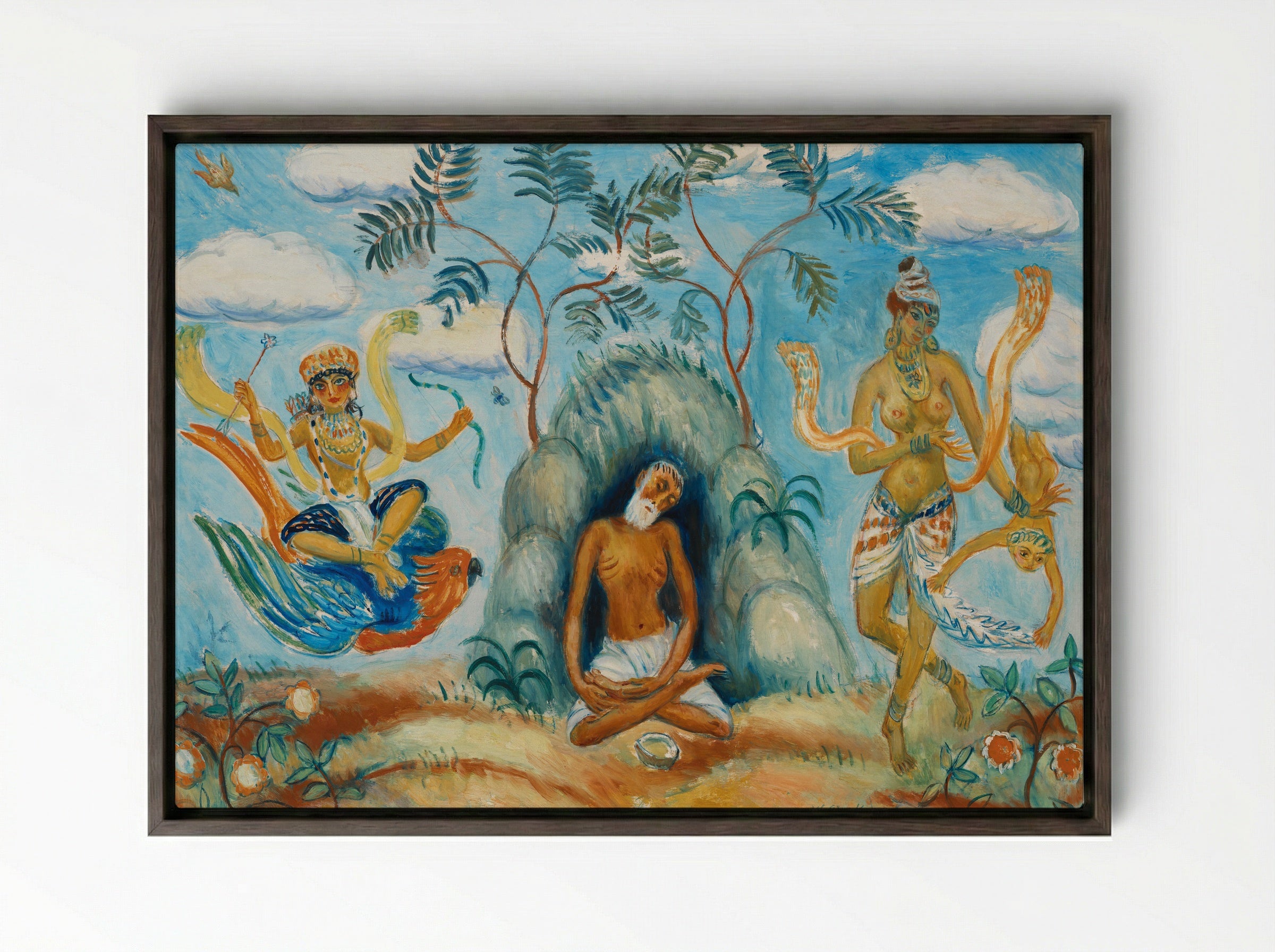
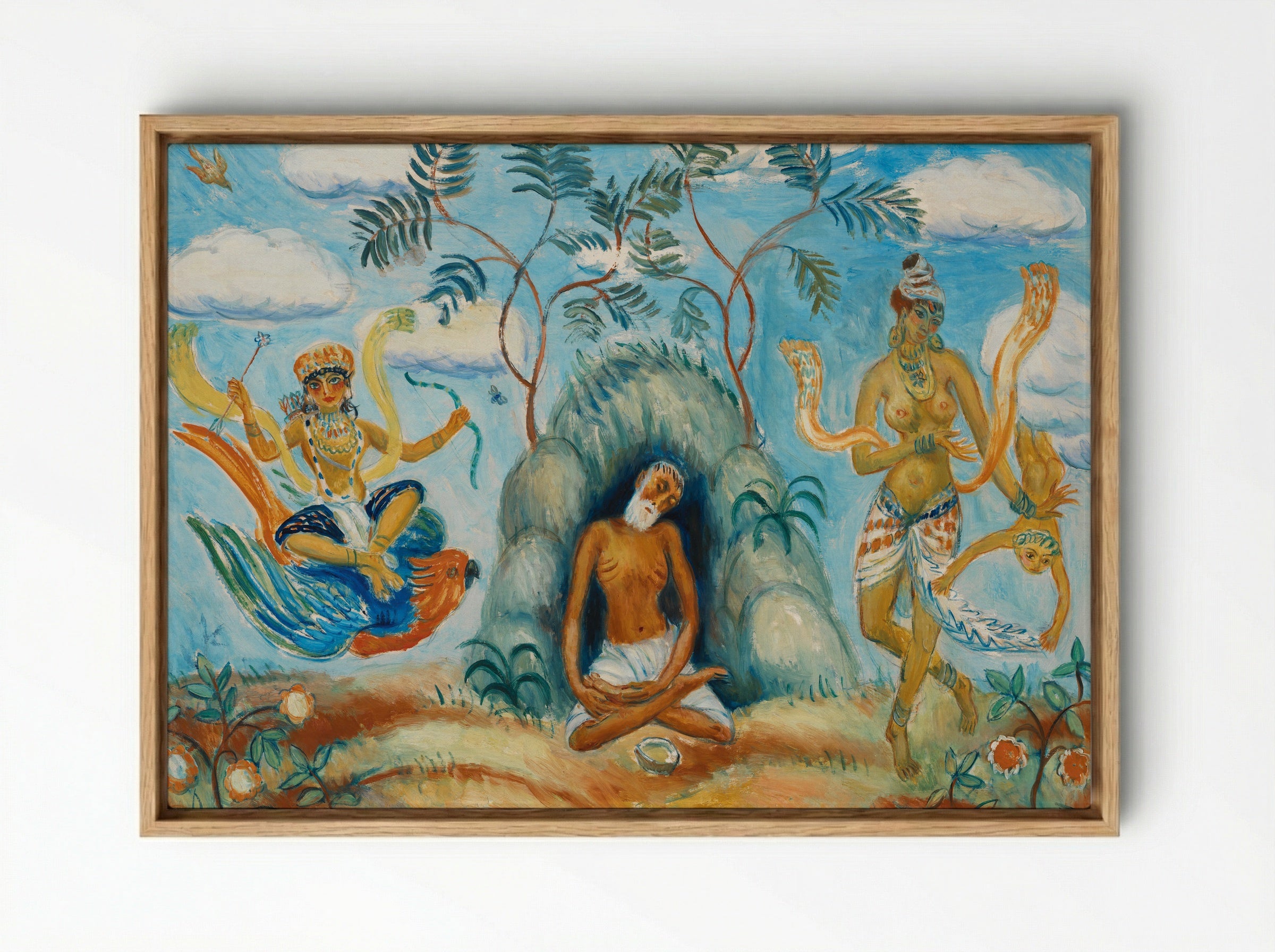
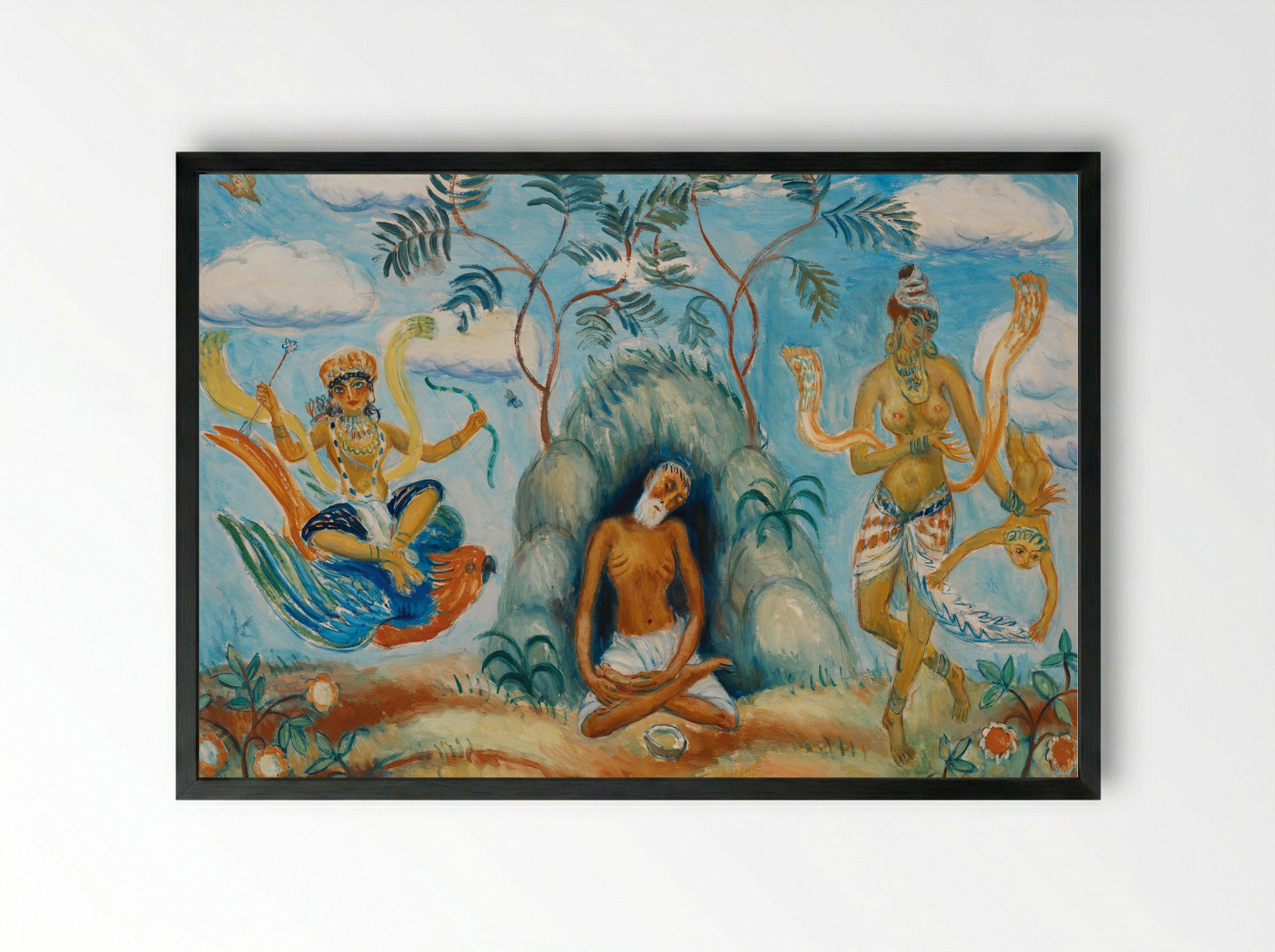
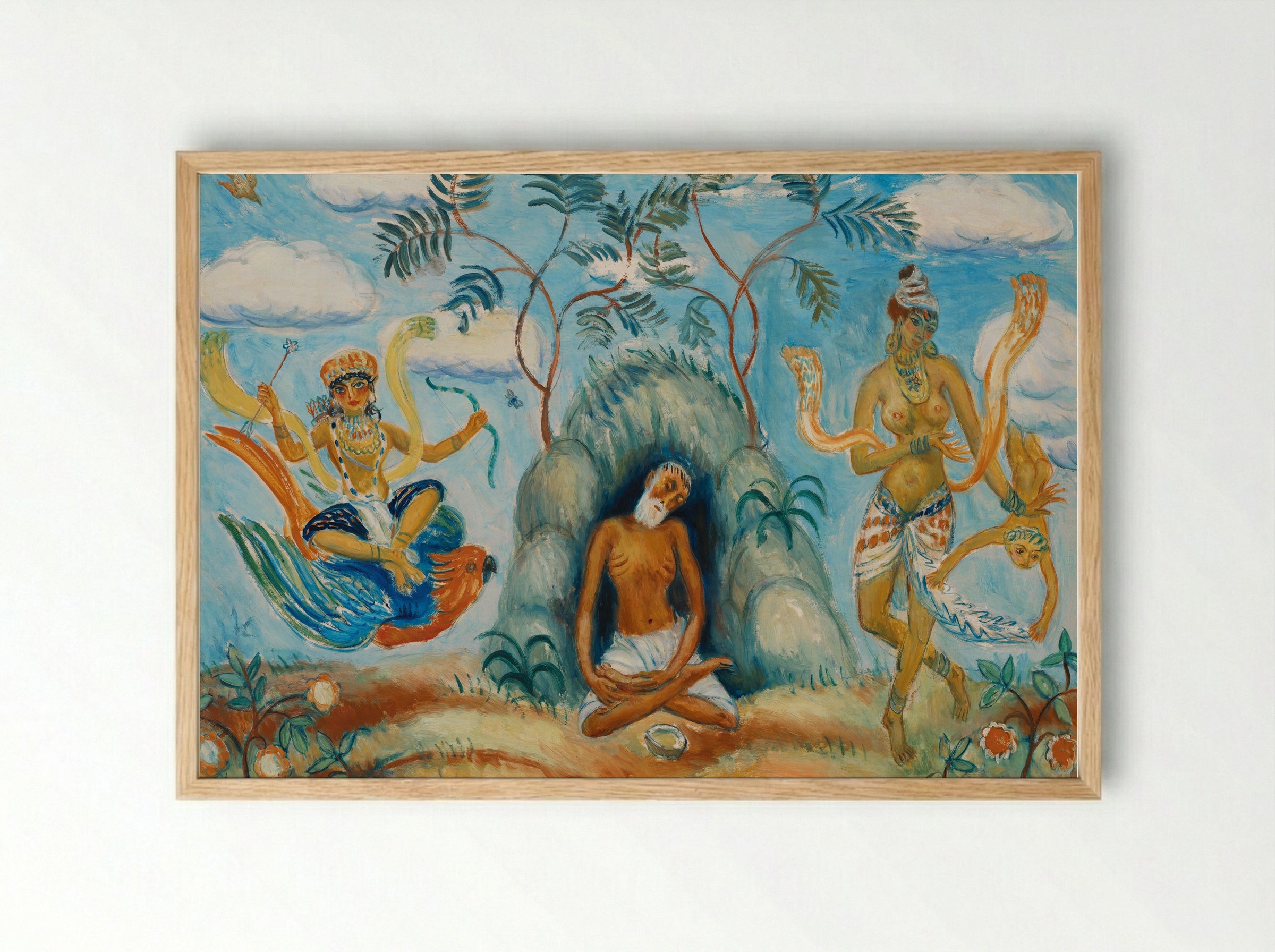
Decoration - William James Glackens
Archival giclée
Ready to hang
Secure checkout
Made to order
Description
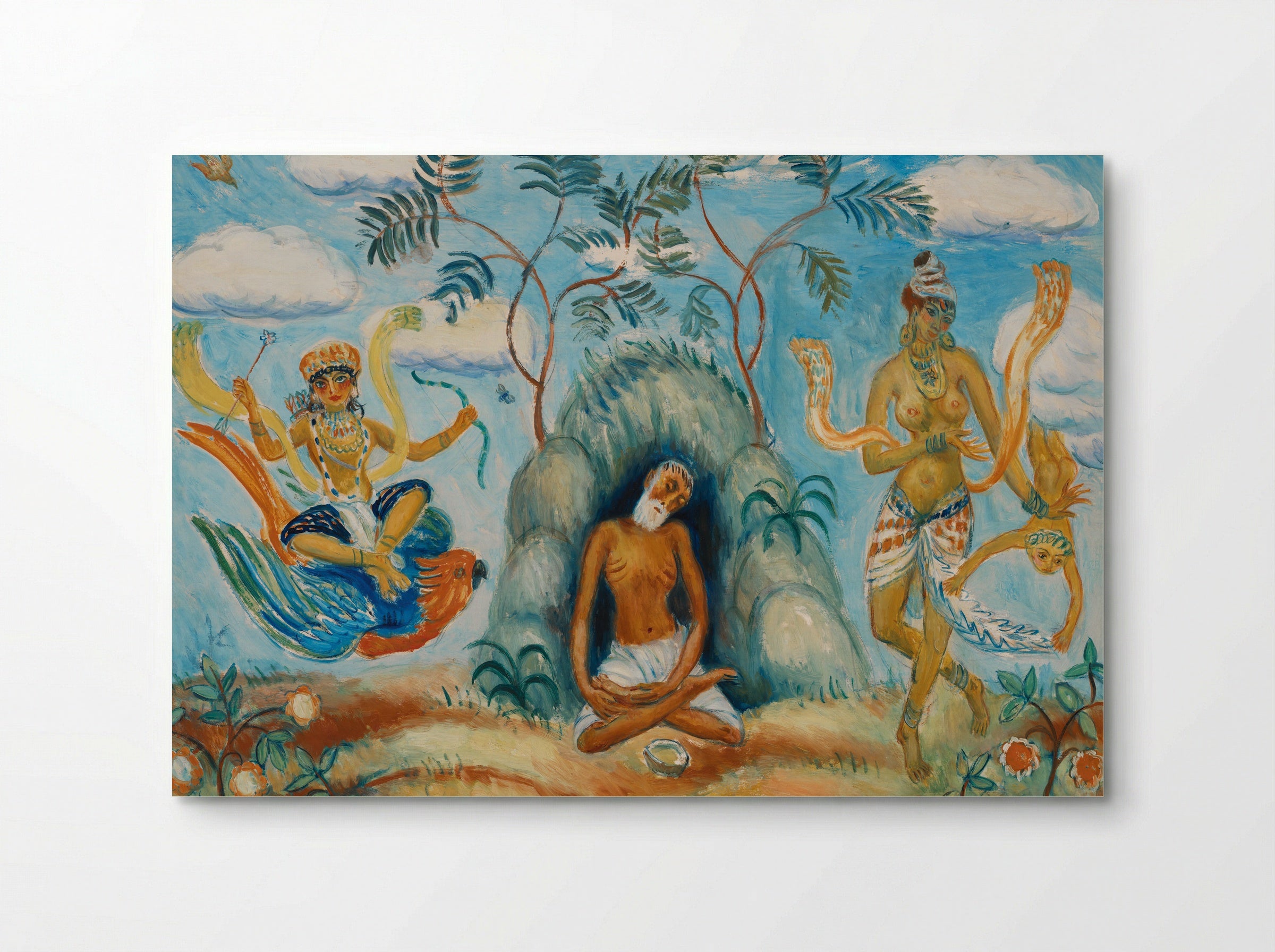
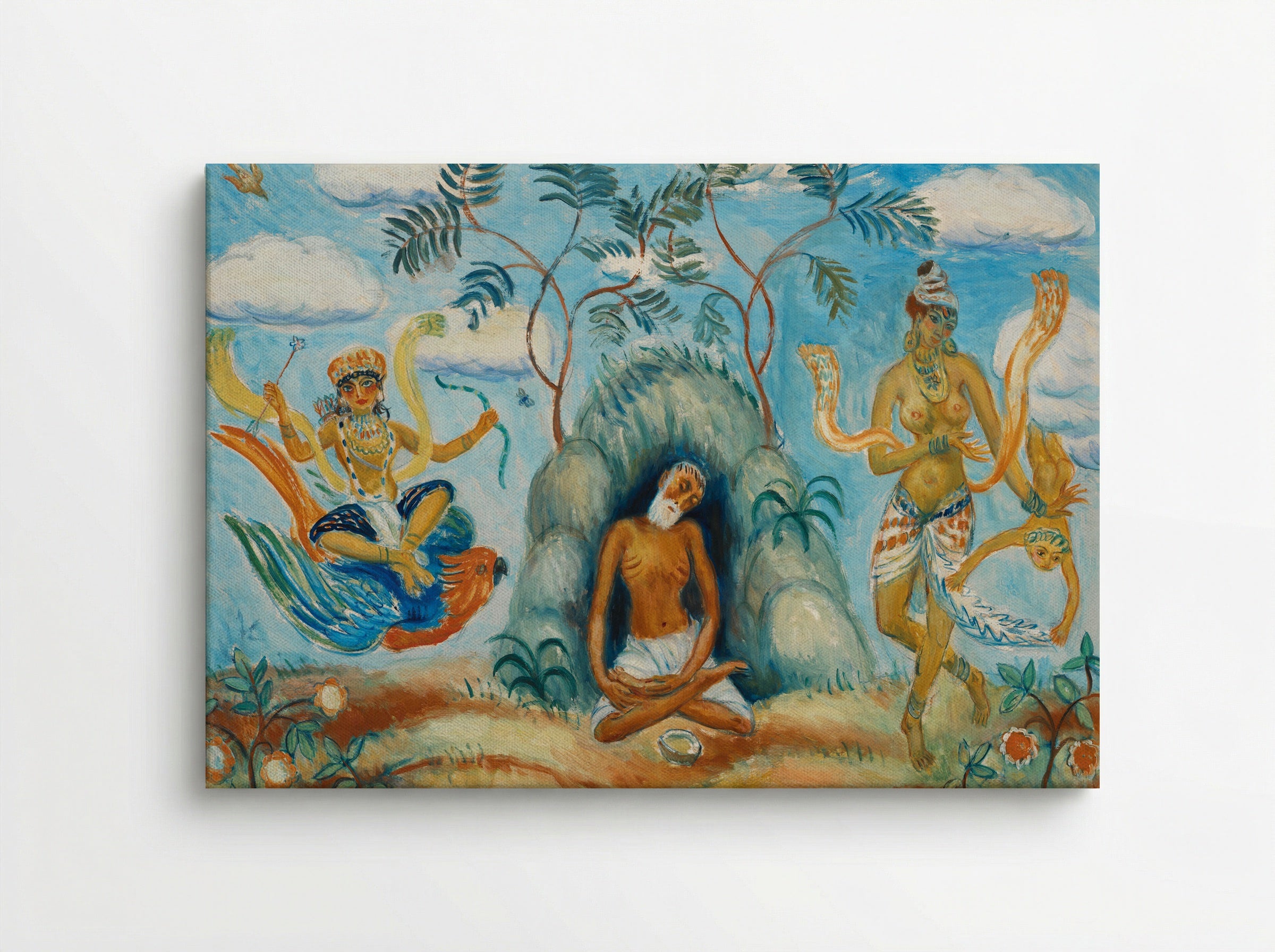
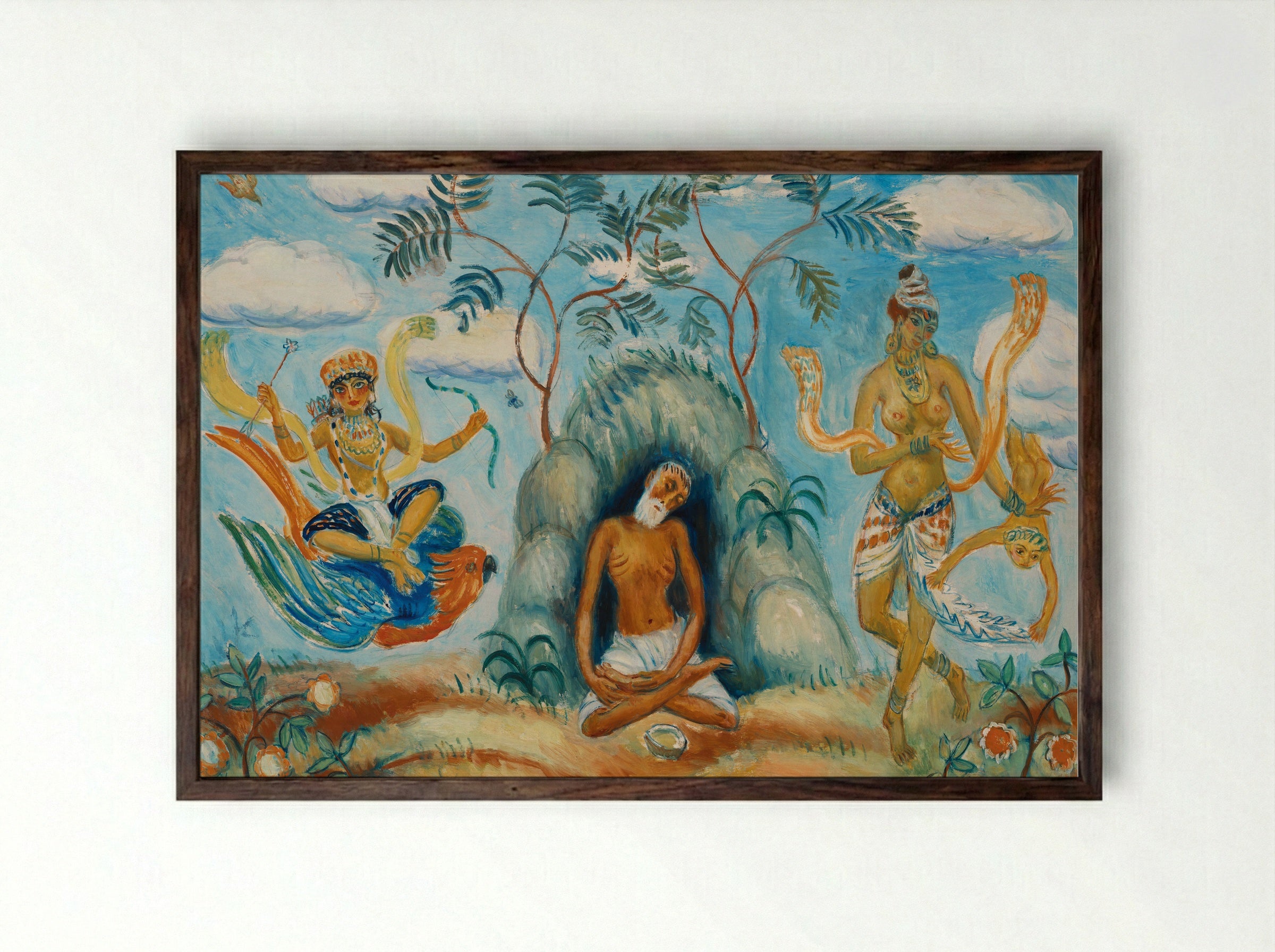
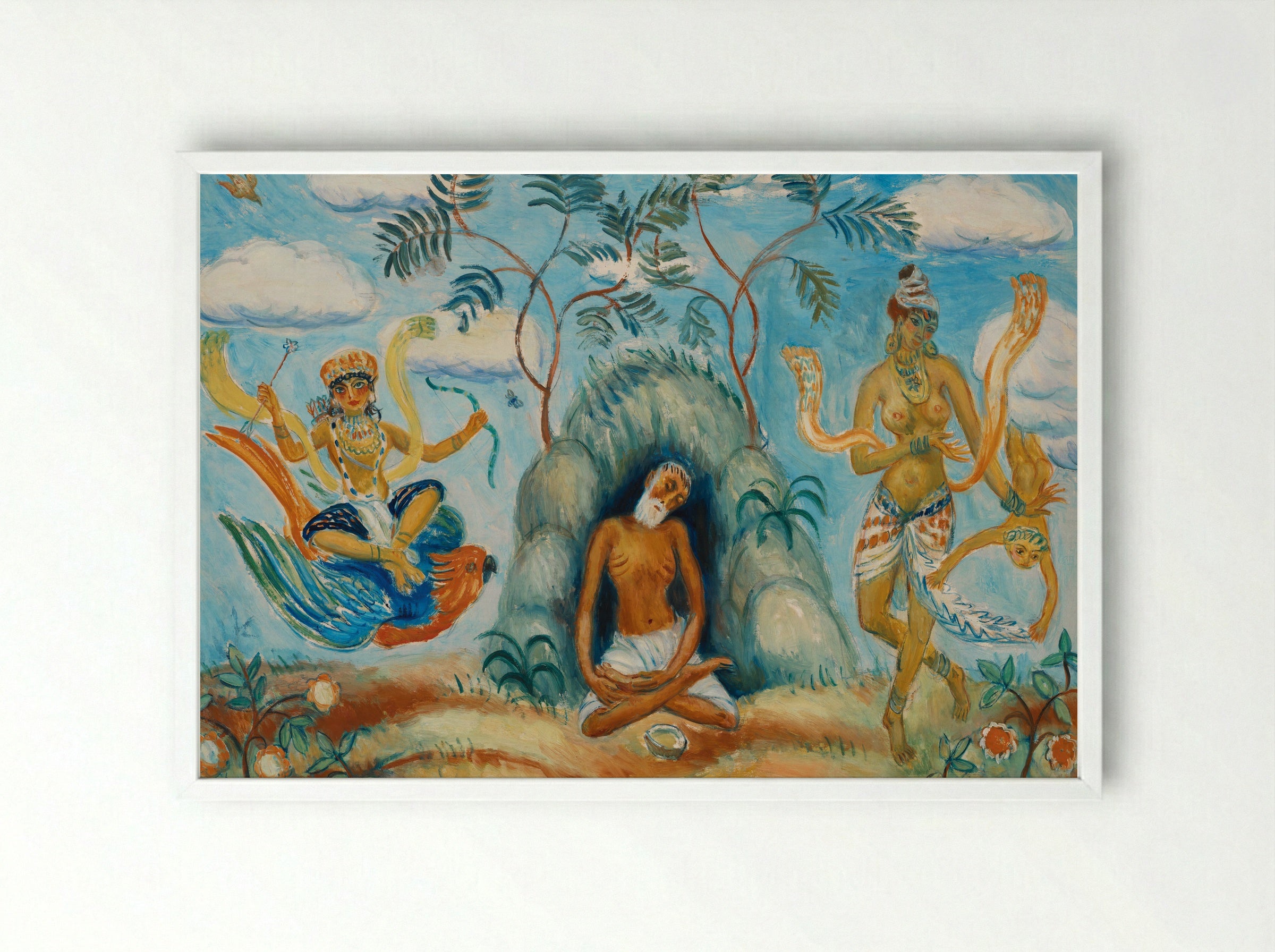
A vibrant and imaginative work by William Glackens, 'Decoration' showcases figures reminiscent of Indian deities and ascetics, set against a backdrop of stylised foliage and a bright, cloud-filled sky. A captivating piece for any space.
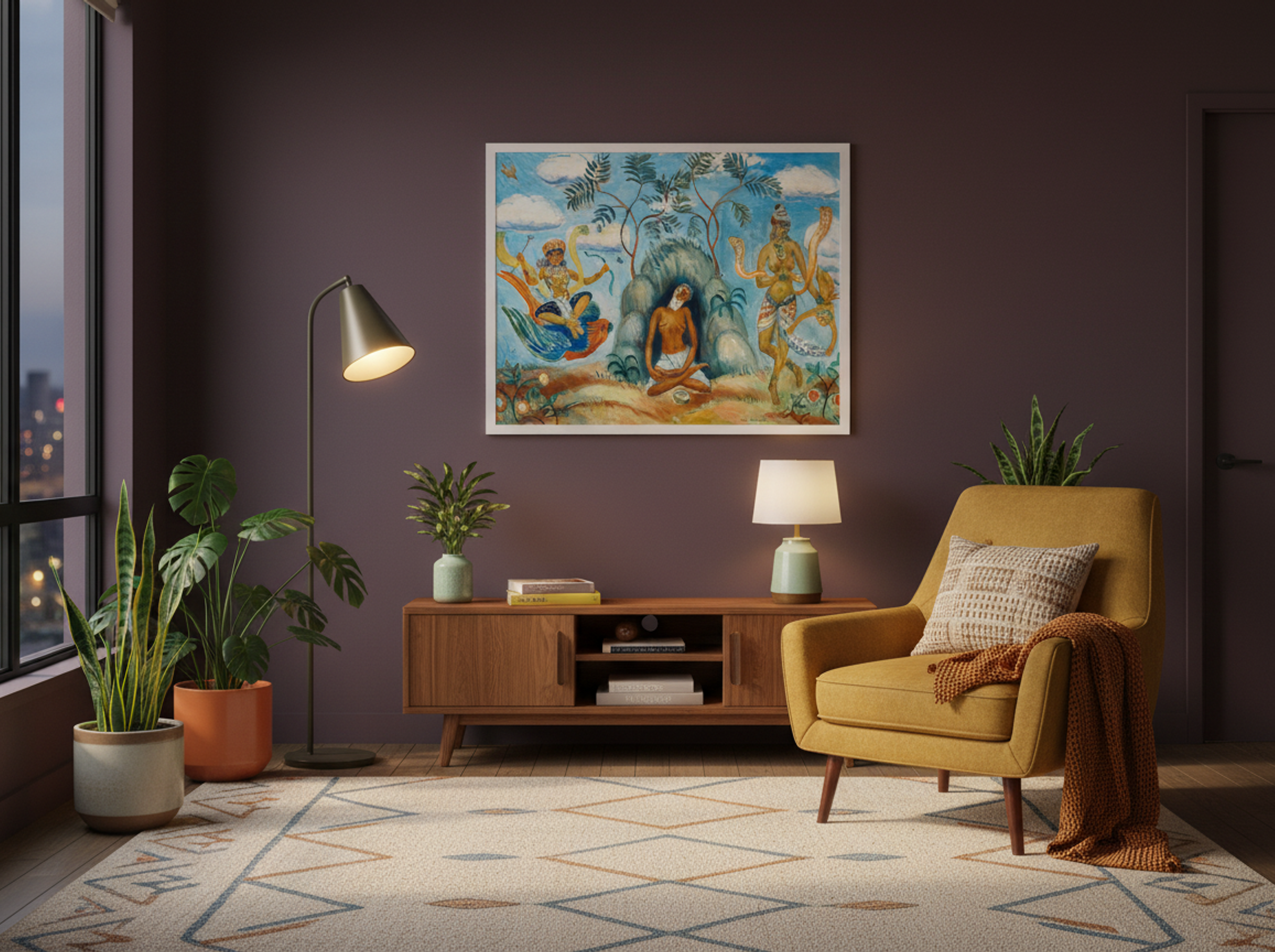
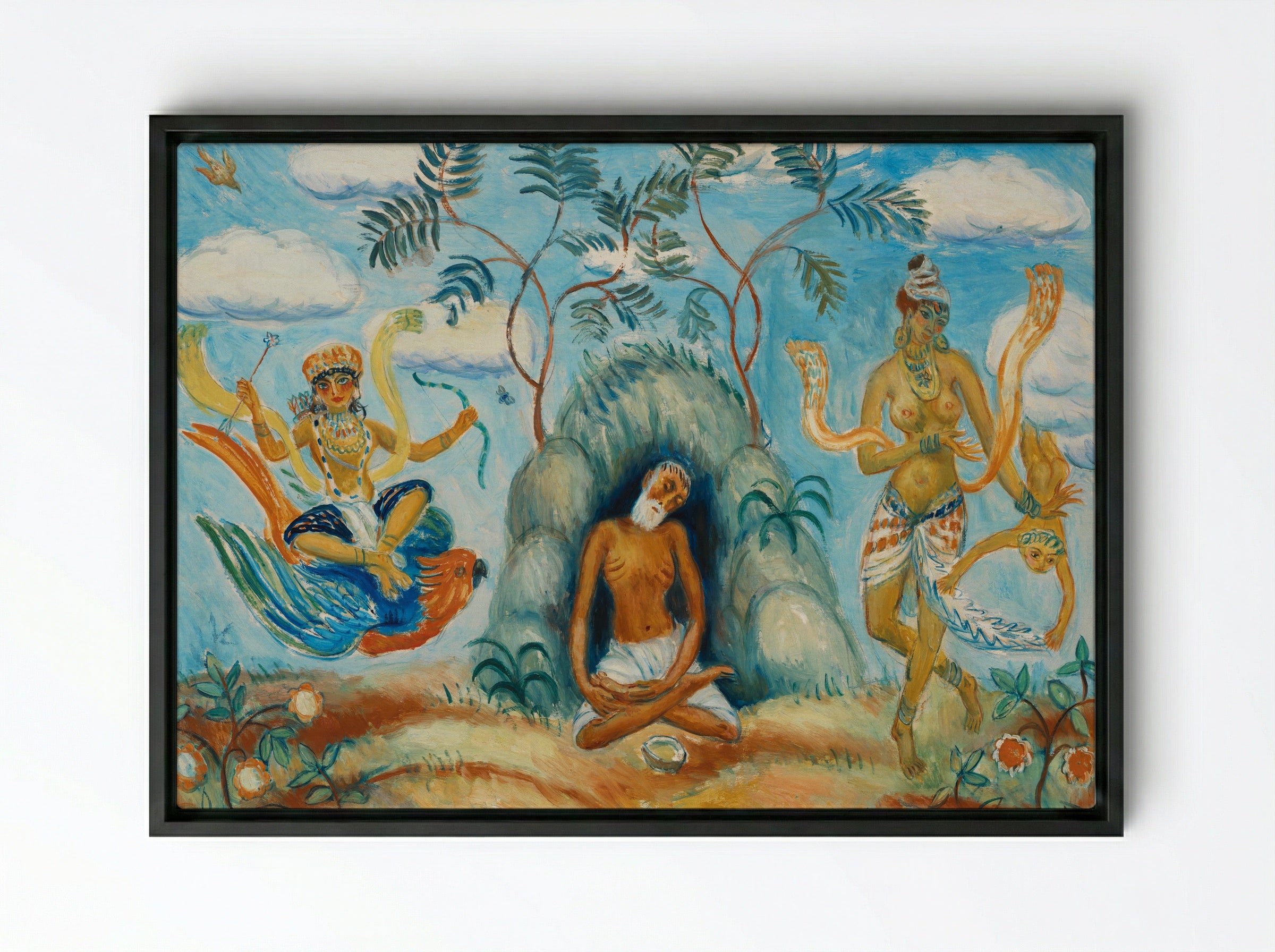
William Glackens, a key figure in the Ashcan School, demonstrates a departure from his typically urban realist scenes with this vibrant and imaginative work, 'Decoration'. Painted in 1914, the piece showcases Glackens's evolving style and his interest in decorative and allegorical subjects. The composition features figures reminiscent of Indian deities and ascetics, set against a backdrop of stylised foliage and a bright, cloud-filled sky. The colour palette is rich and varied, with blues, oranges, and yellows creating a sense of exoticism and fantasy. The painting's loose brushwork and flattened perspective contribute to its decorative quality, making it a captivating piece for any space. As a fine art print, 'Decoration' brings a touch of bohemian flair and artistic curiosity to the home. Its unique subject matter and vibrant colours make it a conversation starter, perfect for adding character to a living room, study, or hallway. The print captures the essence of Glackens's experimental phase, offering a glimpse into the artist's broader artistic vision beyond his well-known cityscapes.
Return policy
Because every print is made to order, we don't offer change-of-mind returns, refunds or exchanges. If your order arrives faulty, damaged or incorrect, we'll replace it free of charge — just contact us within 48 hours of delivery. EU customers have a 14-day cooling-off right. See our refunds page for full details.
Shipping
We ship worldwide, printing at the production hub nearest to your delivery address. Delivery times and costs vary by destination — you'll see the options available to you at checkout.
Manufacturing
Each print is produced to order using 12-colour giclée printing on FSC-certified archival paper. Designed in Britain and printed at your nearest production hub to reduce waste and speed up delivery.
Decoration - William James Glackens
Our Features
Designed for Lasting Impact
Specific Features
Every Solis piece is made to order with archival, gallery-quality materials built to last.
- Museum-grade giclée printing for rich, fade-resistant colour
- Archival matte fine-art paper, FSC-certified
- Choose poster, framed print, canvas or framed canvas
- Frames in black, natural wood, dark wood or white
- Framed prints arrive ready to hang
Care & Cleaning
To keep your artwork looking its best:
- Dust gently with a soft, dry cloth
- Avoid prolonged direct sunlight
- Never use liquid cleaners on the print or canvas surface
- Keep in a dry, room-temperature space
- Handle prints with clean, dry hands
Materials & Sizing
Museum-grade giclée on FSC-certified archival matte paper, with framed and canvas options.
- Paper sizes: A4, A3, A2, A1, A0 and B2 (50×70 cm)
- Canvas: XS (20×30 cm) to Large (60×90 cm)
- Frames: black, natural wood, dark wood or white
Why Choose Us ?
100% Satisfaction Guarantee
Fast Shipping
Museum-Quality Materials

Artist Biography
William James Glackens
Glackens's move to fine art saw him embrace the gritty realism of the Ashcan School. Unlike the more romanticised depictions of the era, Glackens plunged into the streets, depicting bustling marketplaces, crowded beaches, and lively theatre scenes. Works like 'Hammerstein's Roof Garden' and 'Chez Mouquin' are testaments to his ability to capture the energy and diversity of urban life. Though initially influenced by European Impressionism, Glackens developed a distinctly American style, full of movement and a keen sense of narrative.
While some critics initially dismissed the Ashcan School's focus on the mundane, Glackens's work has since been recognised for its historical and artistic significance. He wasn't just painting scenes; he was documenting a pivotal moment in American history, capturing the spirit of a nation on the cusp of modernity. William Glackens died in 1938, leaving behind a body of work that continues to resonate with its honesty, energy, and enduring charm.
You May Also Like