

Fine Art Poster
From £28
A giclée print on 200gsm matte fine art paper, using a twelve-colour process for accurate, fade-resistant colour. Supplied unframed, delivered flat or rolled.



Archival giclée
Frames arrive ready to hang
Secure checkout
Made to order
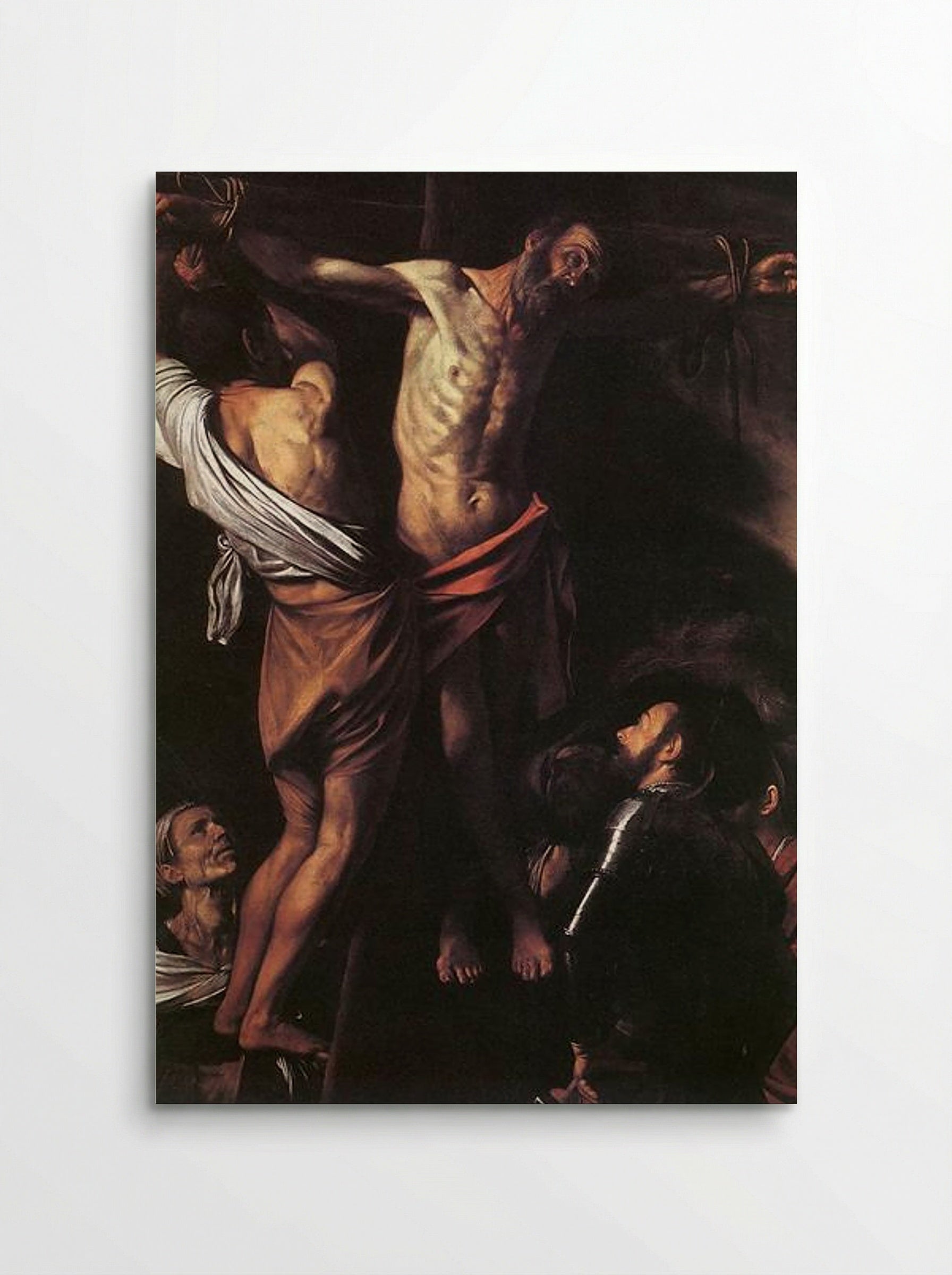
Caravaggio's "Crucifixion of Saint Andrew" captures the martyrdom of Saint Andrew with stark realism and dramatic lighting. Painted between 1606 and 1607, this oil on canvas exemplifies the artist's mastery of tenebrism and his ability to convey intense human emotion.
Painted between 1606 and 1607, Caravaggio's "Crucifixion of Saint Andrew" depicts the martyrdom of Saint Andrew the Apostle. The painting is a significant example of the artist's mature Roman period, characterised by its dramatic use of light and shadow (tenebrism) and its naturalistic, often gritty, portrayal of religious subjects. Originally commissioned for the chapel of the Cardinal in the church of Sant'Andrea al Quirinale in Rome, it now resides at the Cleveland Museum of Art. The composition centres on the figure of Saint Andrew, bound to an X-shaped cross, his body illuminated against a dark background. Several figures surround him: some are actively involved in the execution, while others look on with expressions of grief or morbid curiosity. Caravaggio's skill in capturing human emotion is evident in the faces of the onlookers, each reacting in their own way to the scene unfolding before them. The artist's use of chiaroscuro heightens the drama, casting deep shadows that obscure details and focus attention on the key elements of the narrative. The stark realism and emotional intensity of the work are typical of Caravaggio's style, which had a considerable influence on the development of Baroque painting.
Explore more from our Caravaggio collection.
Because every print is made to order, we don't offer change-of-mind returns, refunds or exchanges. If your order arrives faulty, damaged or incorrect, we'll replace it free of charge — just contact us within 48 hours of delivery. See our refunds page for full details.
We ship worldwide, printing at the production hub nearest to your delivery address. Delivery times and costs vary by destination — you'll see the options available to you at checkout.
Each print is produced to order using 12-colour giclée printing on FSC-certified archival paper. Designed in Britain and printed at your nearest production hub to reduce waste and speed up delivery.

Artist Biography
Our Features
Designed for Lasting Impact
Every Solis piece is made to order with archival, gallery-quality materials built to last.
To keep your artwork looking its best:
Museum-grade giclée on FSC-certified archival matte paper, with framed and canvas options.
Made to order
Every piece is printed to order. These are the five finishes, and what makes each one different.
From £28
A giclée print on 200gsm matte fine art paper, using a twelve-colour process for accurate, fade-resistant colour. Supplied unframed, delivered flat or rolled.

From £45
The same fine art print in a solid wood frame with UV-protective acrylic glaze and rigid backing. Five frame colours. Arrives ready to hang.
Why Choose Us ?
Damage-free delivery guarantee
Fast Shipping
Museum-Quality Materials
Artist Biography
Caravaggio
You May Also Like
Cookies show us which prints people love, so we hang the right art. Help us fill it?
Essential cookies only if you prefer · Privacy Policy