

Fine Art Poster
From £37
A giclée print on 200gsm matte fine art paper, using a twelve-colour process for accurate, fade-resistant colour. Supplied unframed, delivered flat or rolled.


Archival giclée
Frames arrive ready to hang
Secure checkout
Made to order
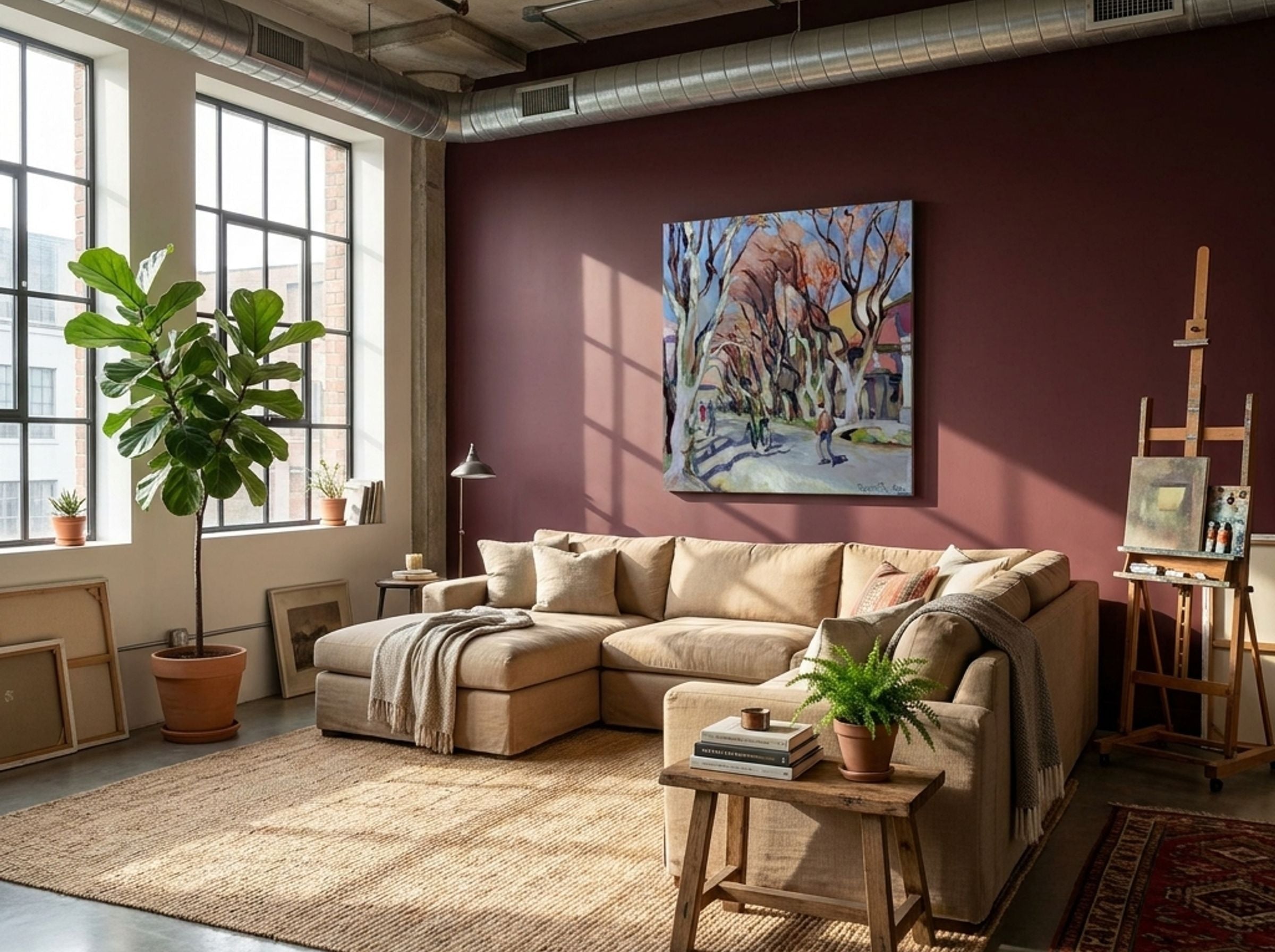
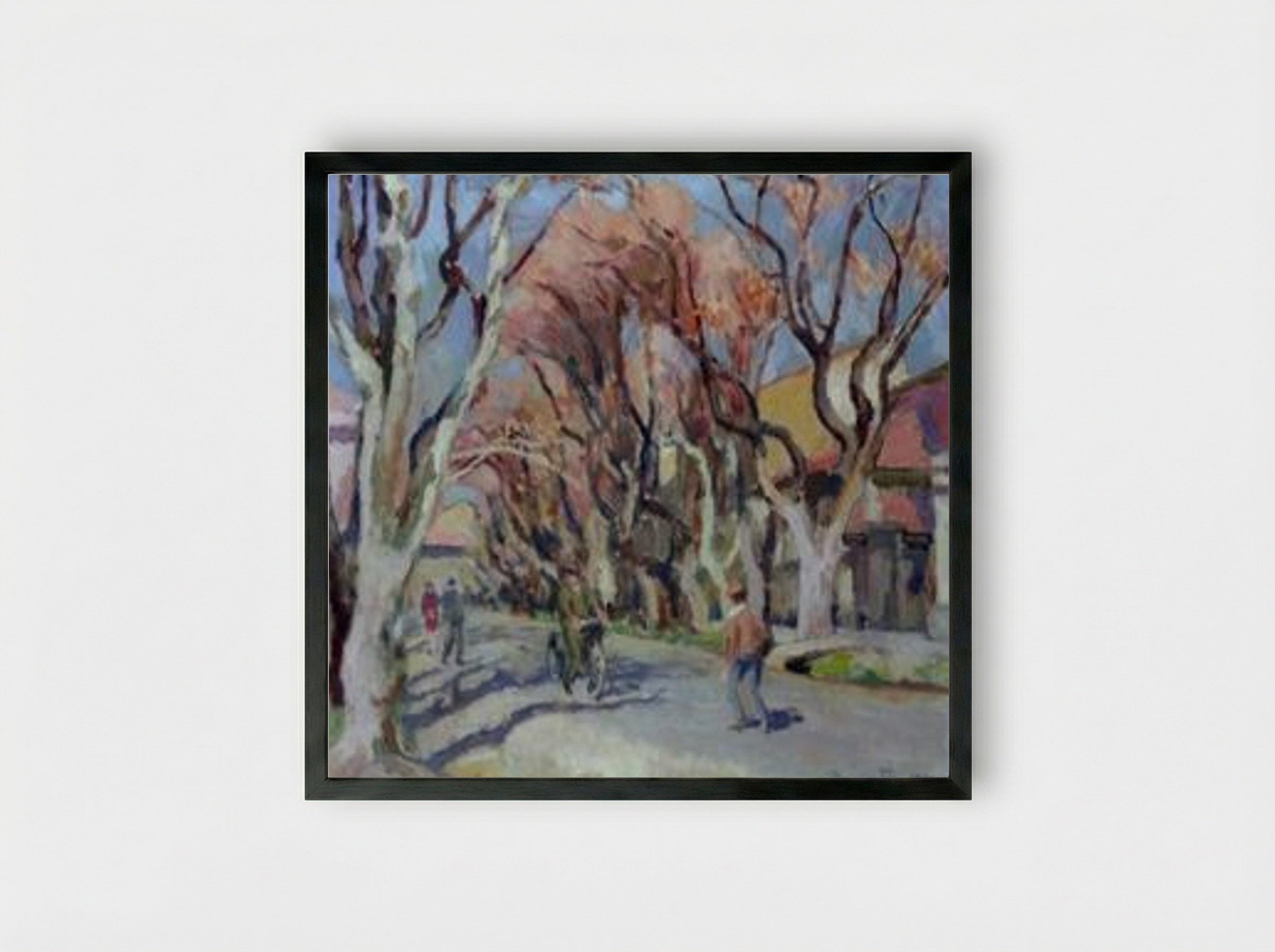
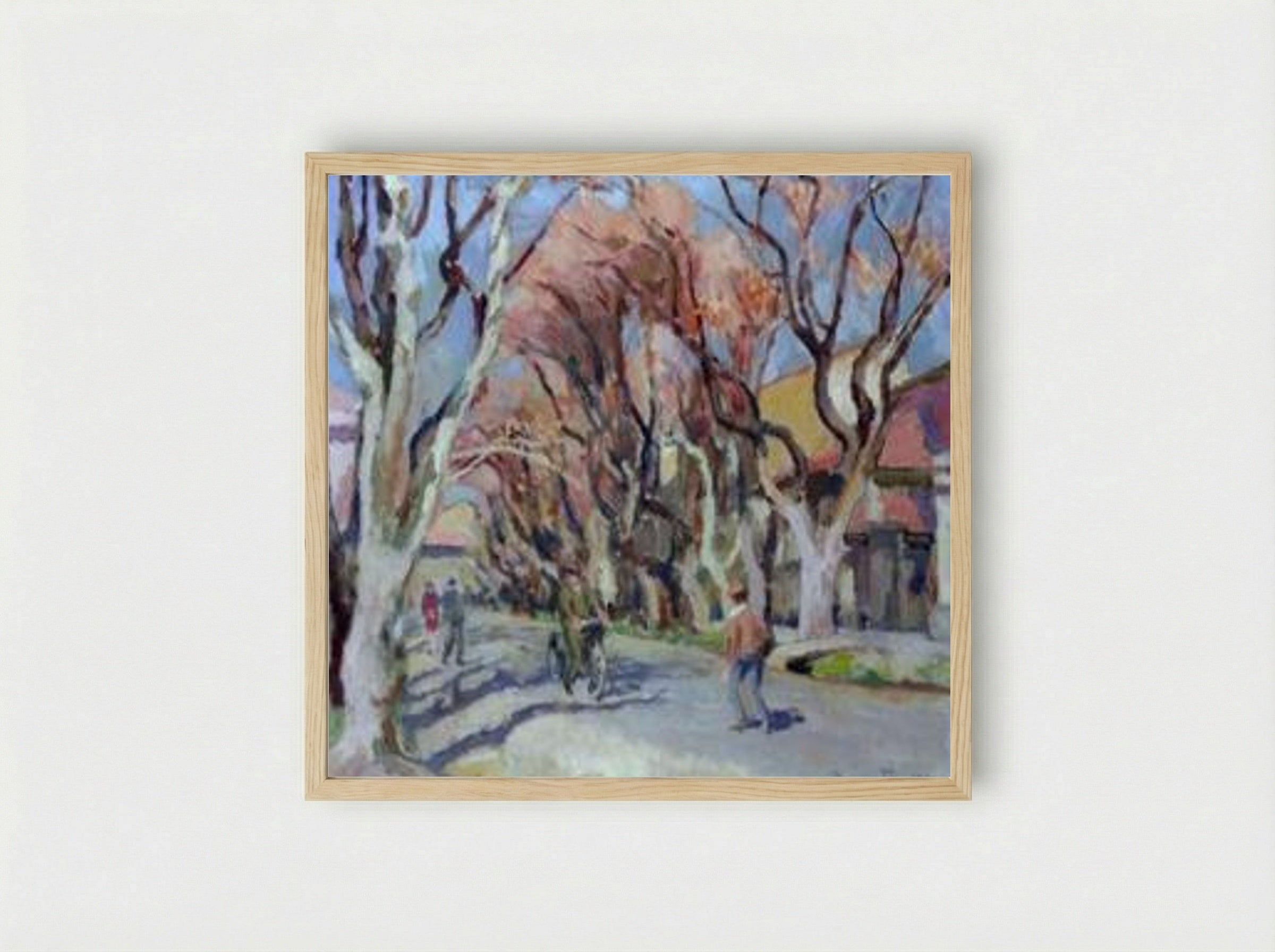
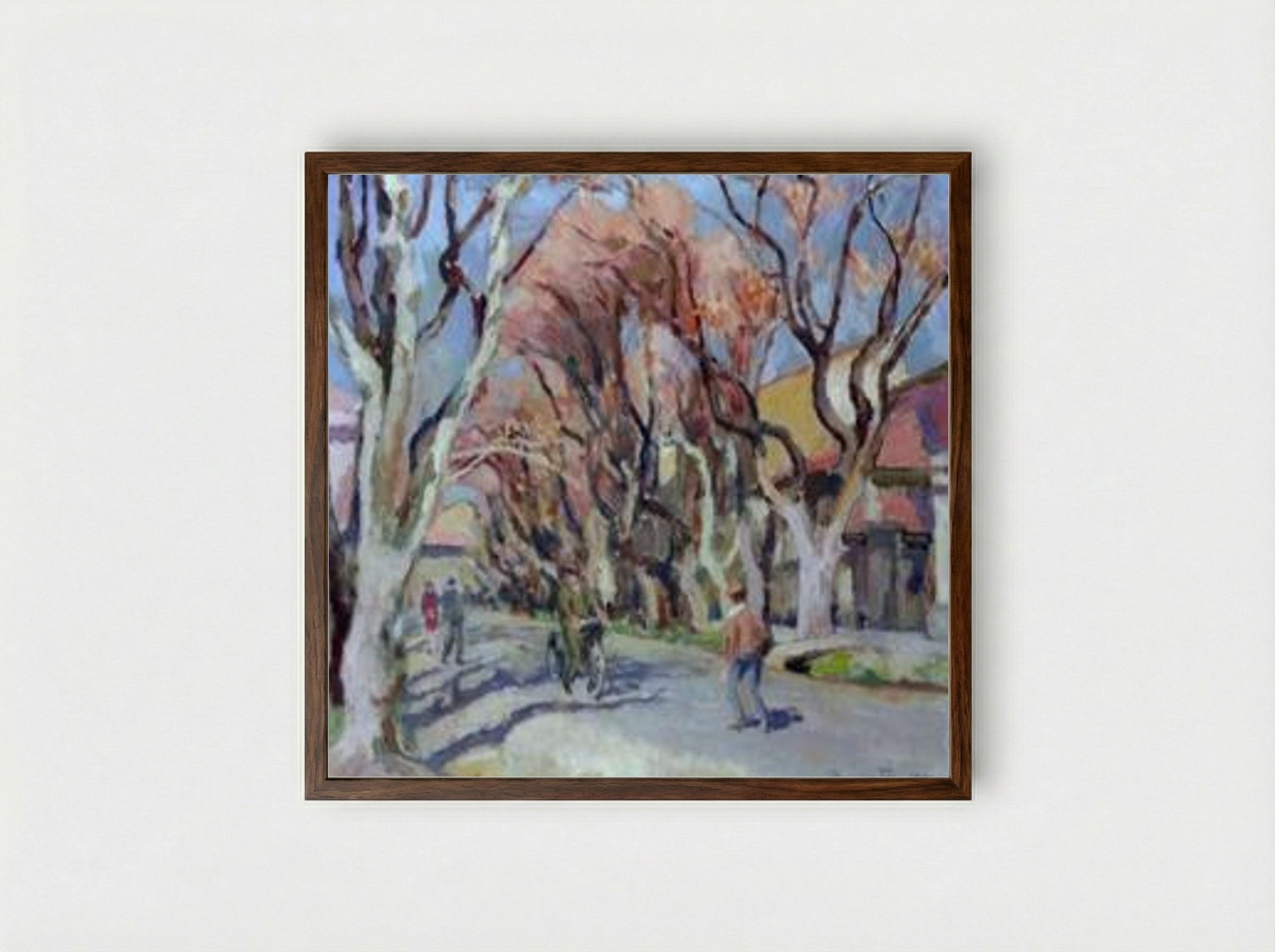
A street scene in the south of France by British artist Roger Fry, 'Carpentras, Provence' features bare trees, figures, and buildings rendered with visible brushstrokes and a muted colour palette.
Roger Fry (1866-1934) was a British artist and art critic, influential as a promoter of modern art. As a member of the Bloomsbury Group, Fry championed Post-Impressionism in Britain, organising the 1910 exhibition 'Manet and the Post-Impressionists' at the Grafton Galleries. His own artistic output, though less known, reflects his engagement with the avant-garde movements of his time. 'Carpentras, Provence' is an oil painting that captures a street scene in the south of France. The composition is dominated by a row of bare trees lining the road, their branches creating a canopy overhead. The trunks are rendered with thick, visible brushstrokes, giving them a tactile quality. Figures populate the scene: a cyclist, pedestrians, and a lone figure walking away from the viewer. The colour palette is muted, with soft blues, pinks, and browns creating a hazy, atmospheric effect. The buildings in the background are suggested with simple, blocky forms, adding to the overall sense of immediacy and spontaneity. The painting's loose brushwork and emphasis on light and colour demonstrate Fry's Post-Impressionist style.
Because every print is made to order, we don't offer change-of-mind returns, refunds or exchanges. If your order arrives faulty, damaged or incorrect, we'll replace it free of charge — just contact us within 48 hours of delivery. See our refunds page for full details.
We ship worldwide, printing at the production hub nearest to your delivery address. Delivery times and costs vary by destination — you'll see the options available to you at checkout.
Each print is produced to order using 12-colour giclée printing on FSC-certified archival paper. Designed in Britain and printed at your nearest production hub to reduce waste and speed up delivery.

Artist Biography
Our Features
Designed for Lasting Impact
Every Solis piece is made to order with archival, gallery-quality materials built to last.
To keep your artwork looking its best:
Museum-grade giclée on FSC-certified archival matte paper, with framed and canvas options.
Made to order
Every piece is printed to order. These are the five finishes, and what makes each one different.
From £37
A giclée print on 200gsm matte fine art paper, using a twelve-colour process for accurate, fade-resistant colour. Supplied unframed, delivered flat or rolled.

From £59
The same fine art print in a solid wood frame with UV-protective acrylic glaze and rigid backing. Five frame colours. Arrives ready to hang.
Why Choose Us ?
Damage-free delivery guarantee
Fast Shipping
Museum-Quality Materials
Artist Biography
Roger Fry
You May Also Like
We use cookies to measure our marketing and see which prints people love.We use cookies to measure our marketing.
By continuing to browse, you agree · Privacy Policy