

Fine Art Poster
From £28
A giclée print on 200gsm matte fine art paper, using a twelve-colour process for accurate, fade-resistant colour. Supplied unframed, delivered flat or rolled.

Archival giclée
Frames arrive ready to hang
Secure checkout
Made to order
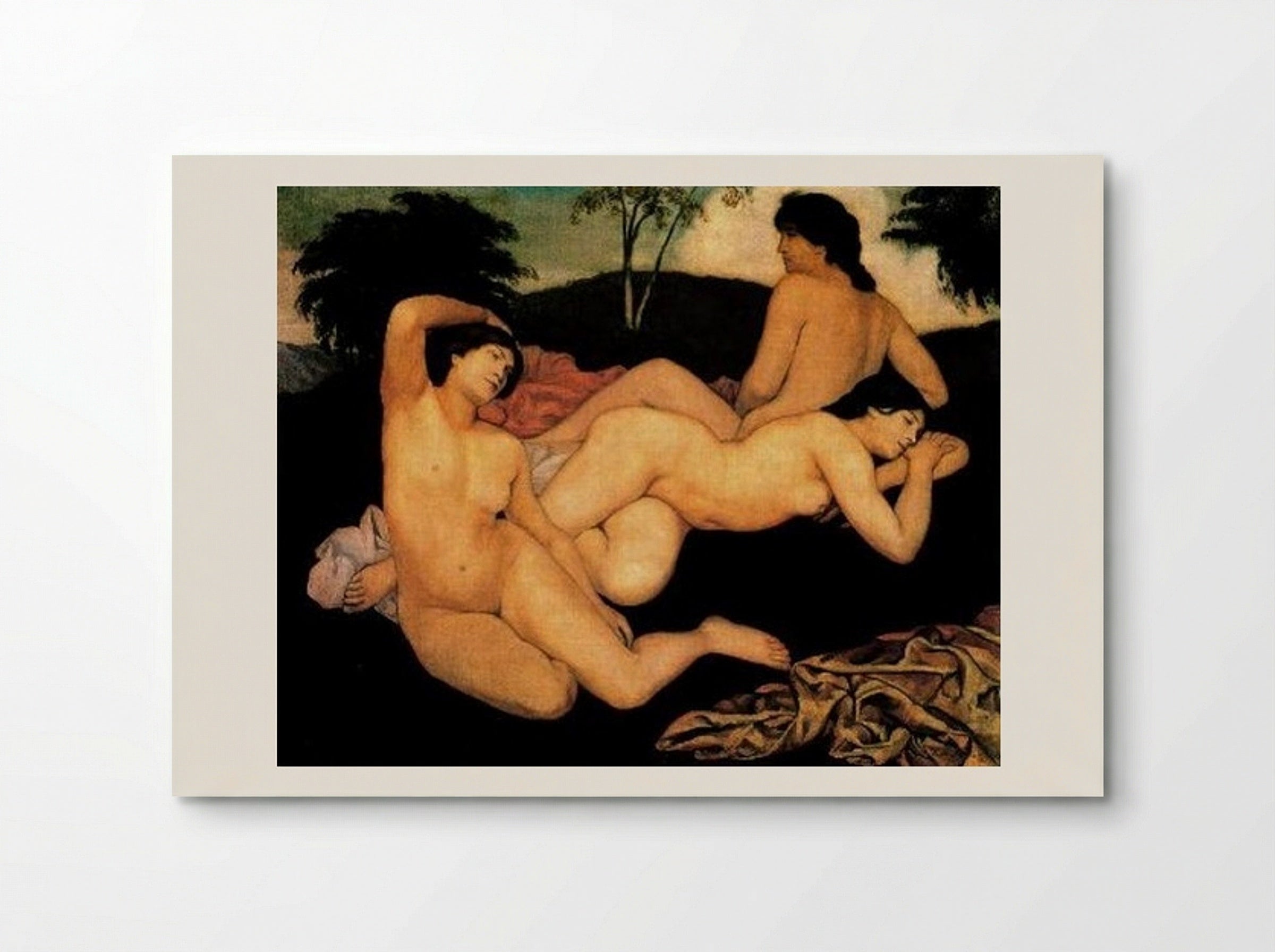
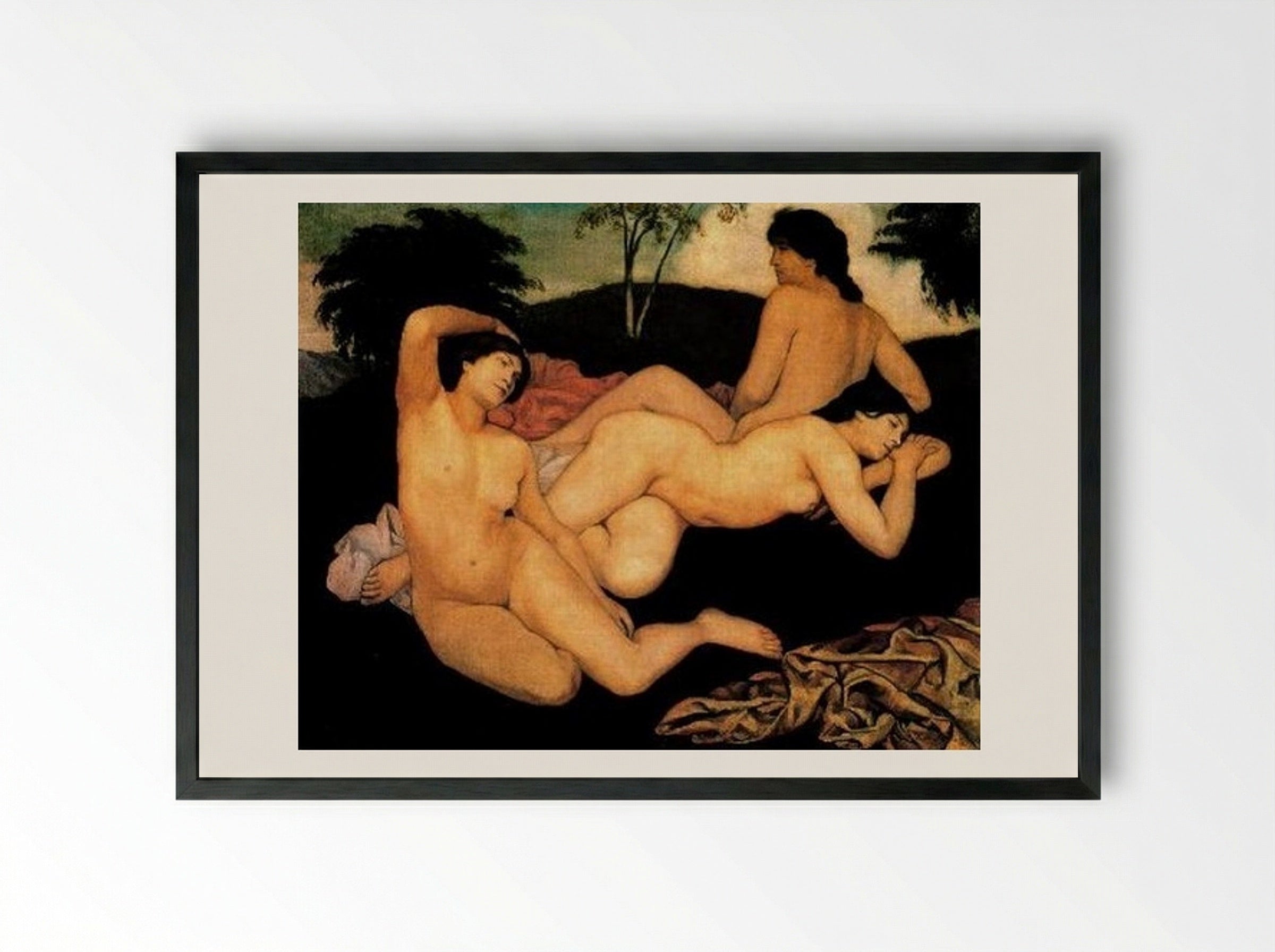
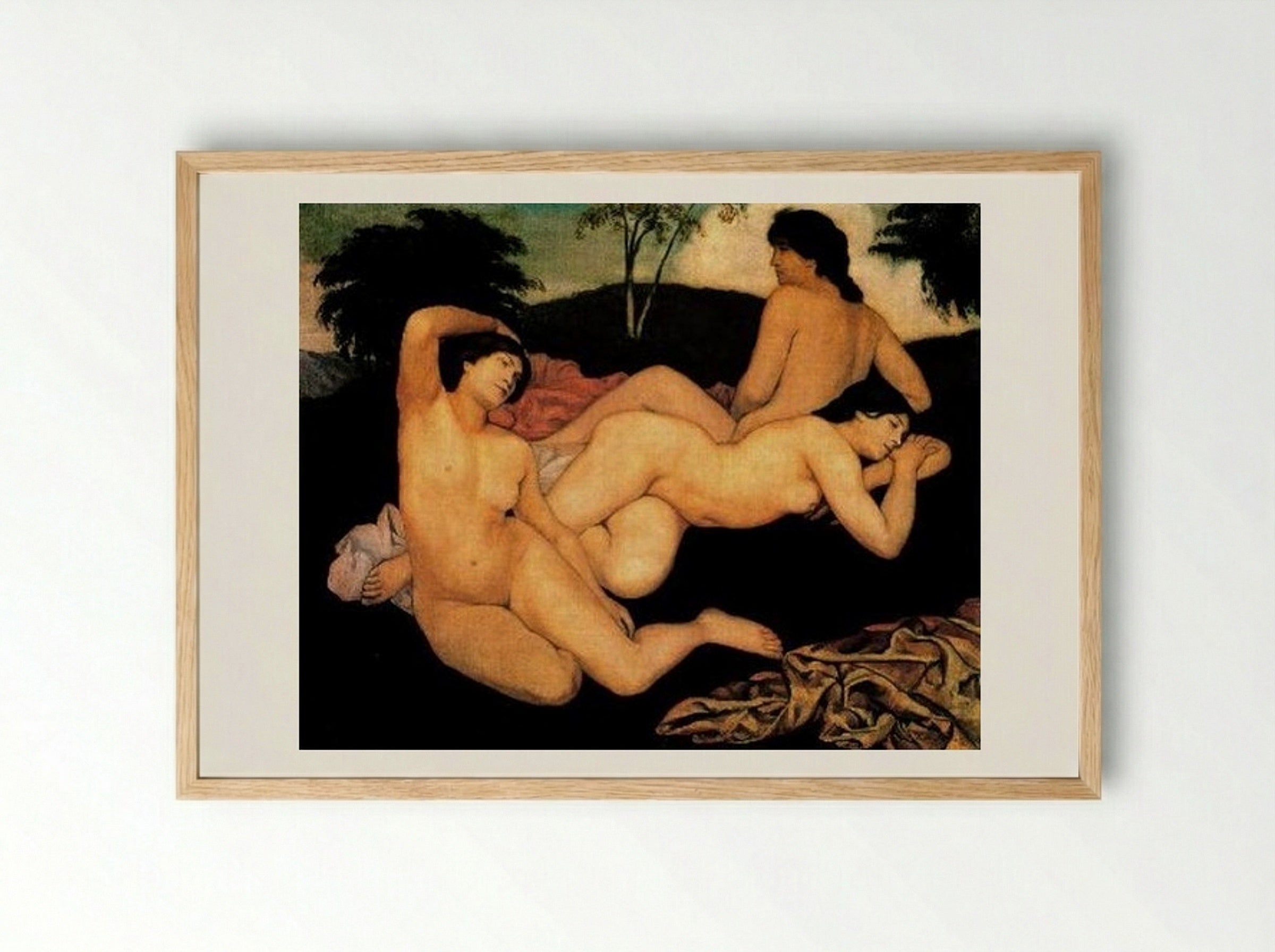
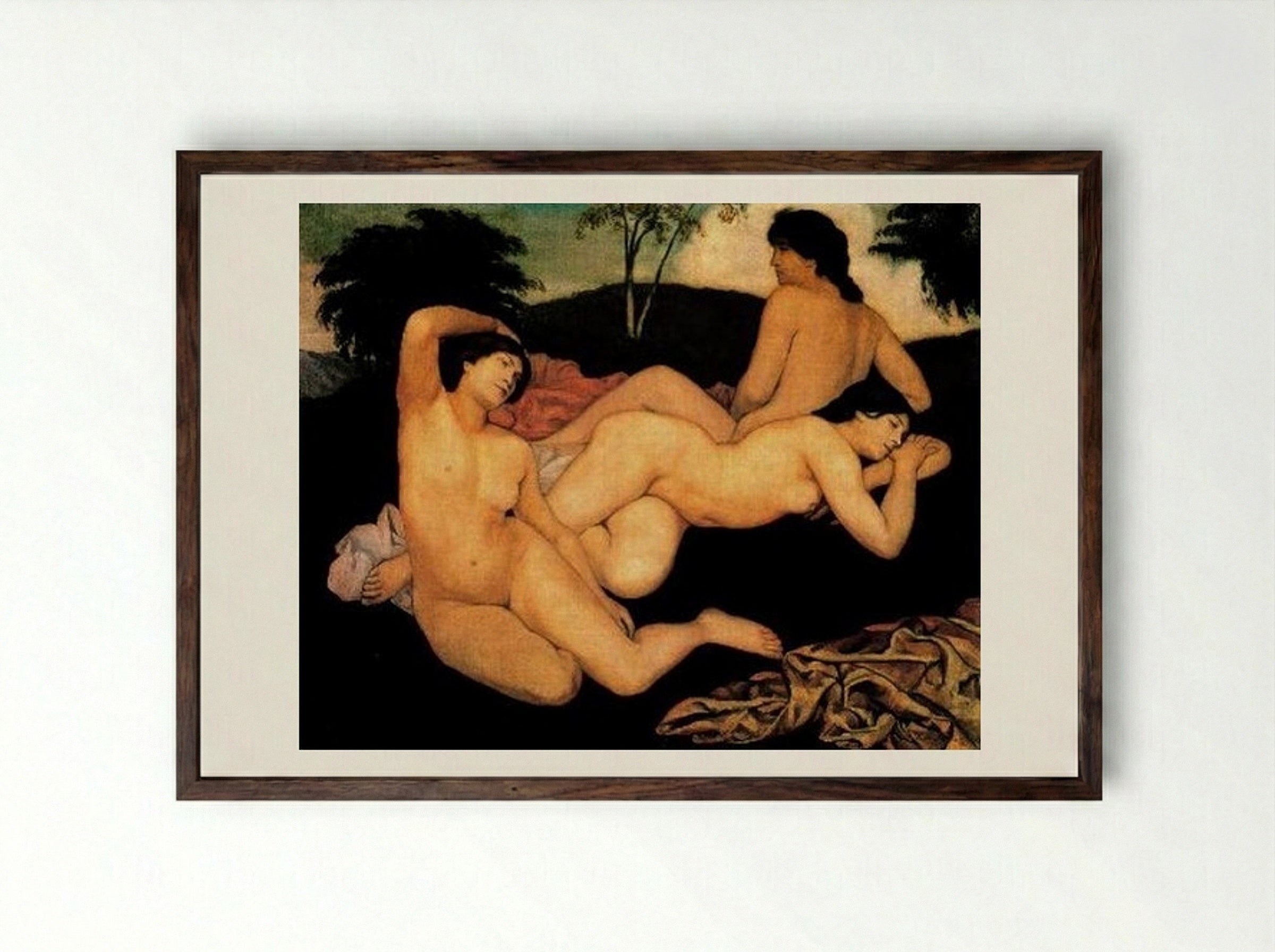
Émile Bernard's "After the Bath (The Nymphs)" presents a modern take on a classical theme, depicting three nude figures in a serene landscape with simplified forms and a restrained palette, characteristic of Post-Impressionism.
Émile Bernard's "After the Bath (The Nymphs)" presents a scene of classical repose rendered with a modern sensibility. Bernard, a French artist associated with the Post-Impressionist movement, departs from strict academic tradition, employing simplified forms and a flattened perspective. This approach aligns him with the artistic currents of his time, which sought to move beyond mere representation towards a more subjective and expressive mode of painting. The painting depicts three nude figures reclining in a landscape. Their bodies are rendered with smooth, rounded forms and a limited tonal range, giving them a sculptural quality. The composition is carefully arranged, with the figures overlapping and intertwining to create a sense of unity and harmony. The background is minimal, consisting of a dark, undefined space that throws the figures into sharp relief. The palette is restrained, dominated by warm flesh tones and cool greens, which contribute to the overall sense of serenity and contemplation. Bernard's work reflects an interest in synthetism, a style that emphasised simplified forms, bold colours, and symbolic content. "After the Bath (The Nymphs)" exemplifies these principles, offering a modern interpretation of a classical theme.
Because every print is made to order, we don't offer change-of-mind returns, refunds or exchanges. If your order arrives faulty, damaged or incorrect, we'll replace it free of charge — just contact us within 48 hours of delivery. See our refunds page for full details.
We ship worldwide, printing at the production hub nearest to your delivery address. Delivery times and costs vary by destination — you'll see the options available to you at checkout.
Each print is produced to order using 12-colour giclée printing on FSC-certified archival paper. Designed in Britain and printed at your nearest production hub to reduce waste and speed up delivery.
Specific Features
Every Solis piece is made to order with archival, gallery-quality materials built to last.
Care & Cleaning
To keep your artwork looking its best:
Materials & Sizing
Museum-grade giclée on FSC-certified archival matte paper, with framed and canvas options.

Artist Biography
Made to order
Every piece is printed to order. These are the five finishes, and what makes each one different.
From £28
A giclée print on 200gsm matte fine art paper, using a twelve-colour process for accurate, fade-resistant colour. Supplied unframed, delivered flat or rolled.

From £45
The same fine art print in a solid wood frame with UV-protective acrylic glaze and rigid backing. Five frame colours. Arrives ready to hang.
Why Choose Us ?
Damage-free delivery guarantee
Fast Shipping
Museum-Quality Materials
You May Also Like
We use cookies to measure our marketing and see which prints people love.We use cookies to measure our marketing.
By continuing to browse, you agree · Privacy Policy