

Fine Art Poster
From £28
A giclée print on 200gsm matte fine art paper, using a twelve-colour process for accurate, fade-resistant colour. Supplied unframed, delivered flat or rolled.


Archival giclée
Frames arrive ready to hang
Secure checkout
Made to order
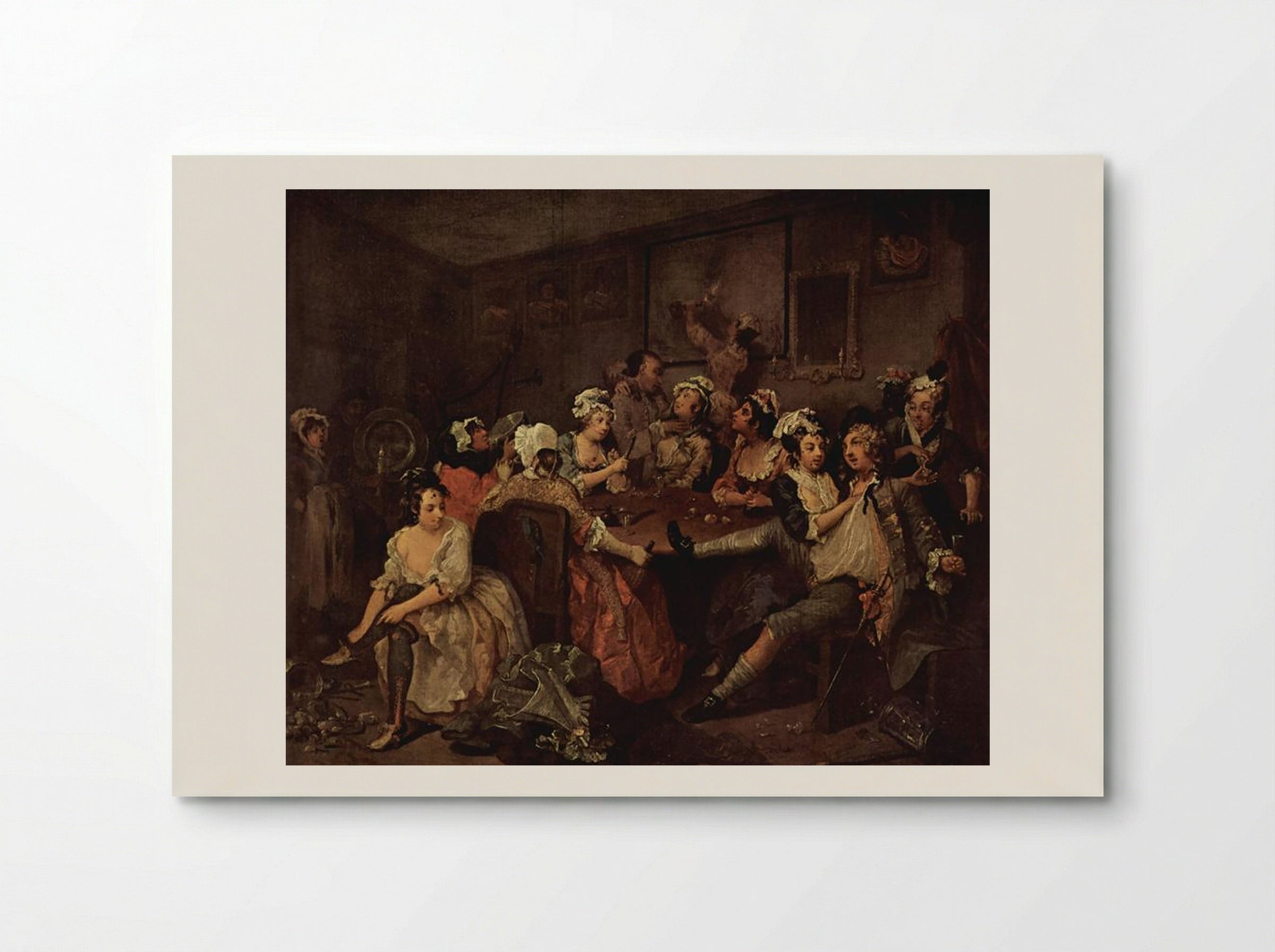
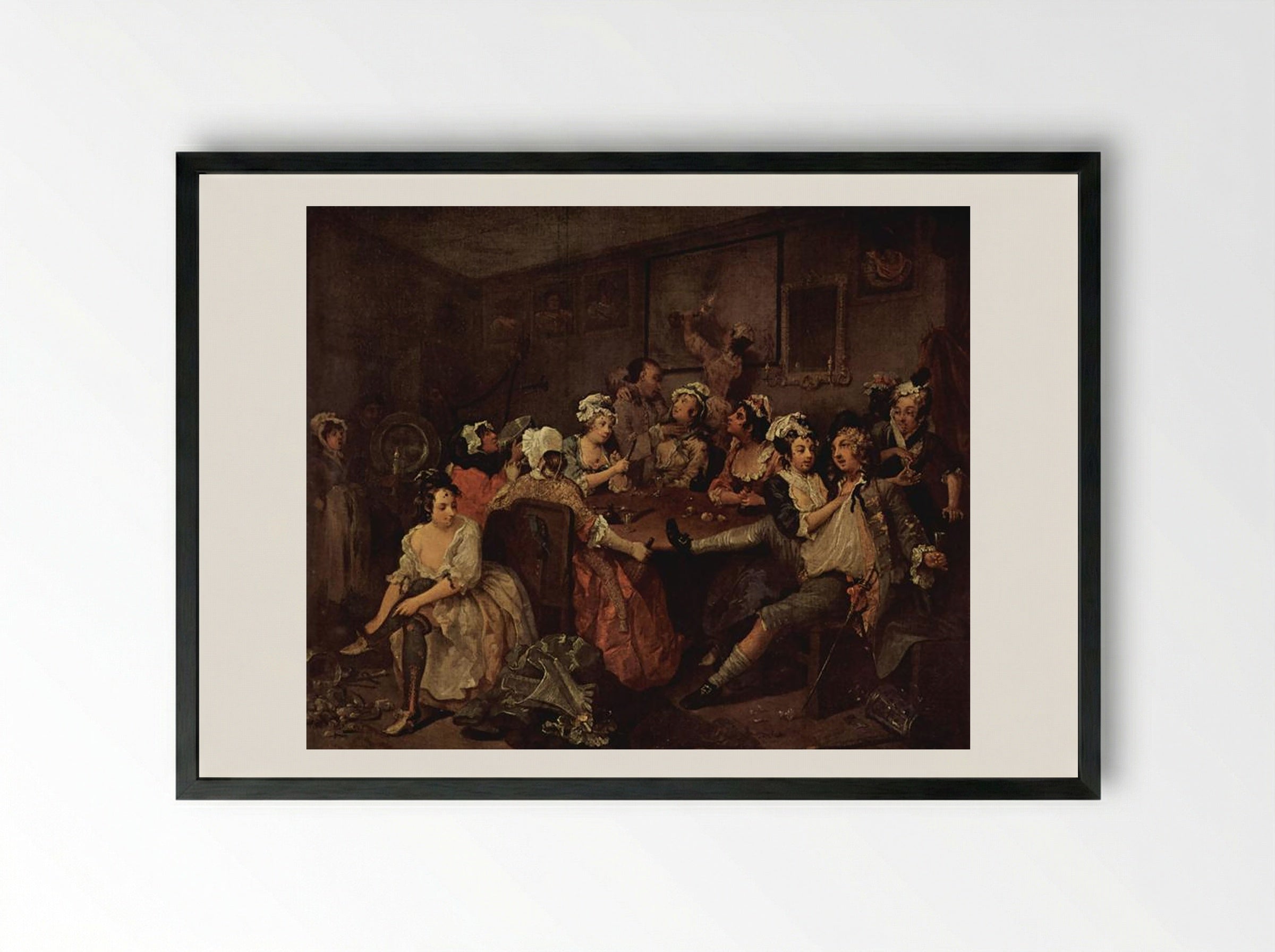
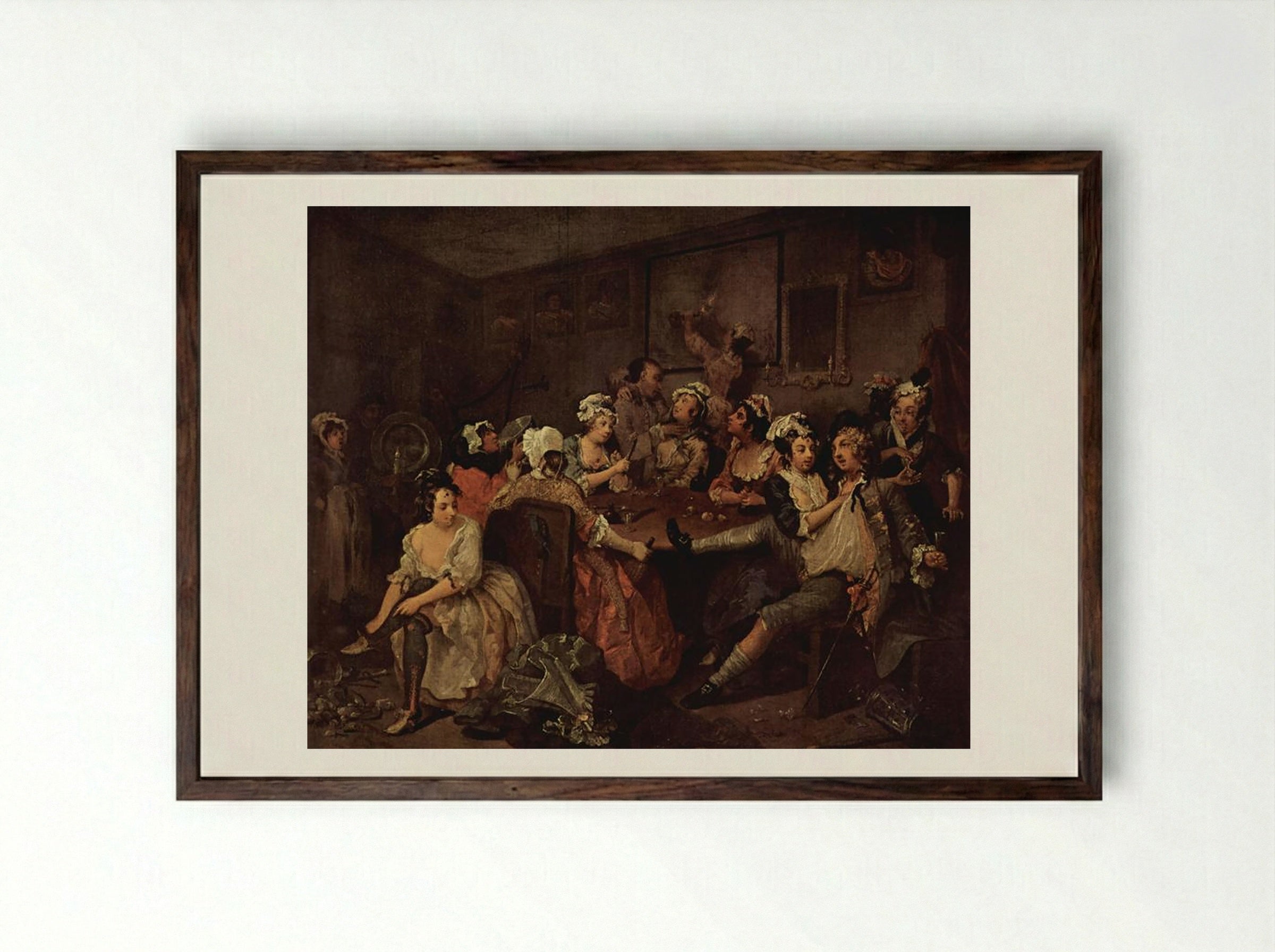
William Hogarth's "A Midnight Modern Conversation" is a satirical genre painting depicting a raucous tavern scene, offering a critique of upper-class society in 18th-century England.
William Hogarth's "A Midnight Modern Conversation" (1732-1733) presents a satirical view of upper-class revelry in early 18th-century England. Hogarth, known for his moralising series of paintings and prints, uses this scene to critique the excesses and follies of the elite. The painting depicts a group of men gathered around a table in a dimly lit tavern, their faces flushed and expressions ranging from vacant to animated. The composition is crowded, with figures overlapping and gesturing wildly, creating a sense of chaotic energy. The scene is filled with details that point to the characters' inebriated state: overturned chairs, discarded clothing, and empty bottles litter the floor. The figures themselves are caricatured, with exaggerated features and postures that emphasise their lack of restraint. One woman in the foreground is pulling up her stocking, seemingly oblivious to the surrounding chaos. The overall effect is one of dissipation and moral decay, a pointed commentary on the social mores of the time. Hogarth's skill in capturing the nuances of human behaviour and his keen eye for social satire make this painting a compelling and insightful work.
Because every print is made to order, we don't offer change-of-mind returns, refunds or exchanges. If your order arrives faulty, damaged or incorrect, we'll replace it free of charge — just contact us within 48 hours of delivery. See our refunds page for full details.
We ship worldwide, printing at the production hub nearest to your delivery address. Delivery times and costs vary by destination — you'll see the options available to you at checkout.
Each print is produced to order using 12-colour giclée printing on FSC-certified archival paper. Designed in Britain and printed at your nearest production hub to reduce waste and speed up delivery.

Artist Biography
Our Features
Designed for Lasting Impact
Every Solis piece is made to order with archival, gallery-quality materials built to last.
To keep your artwork looking its best:
Museum-grade giclée on FSC-certified archival matte paper, with framed and canvas options.
Made to order
Every piece is printed to order. These are the five finishes, and what makes each one different.
From £28
A giclée print on 200gsm matte fine art paper, using a twelve-colour process for accurate, fade-resistant colour. Supplied unframed, delivered flat or rolled.

From £45
The same fine art print in a solid wood frame with UV-protective acrylic glaze and rigid backing. Five frame colours. Arrives ready to hang.
Why Choose Us ?
Damage-free delivery guarantee
Fast Shipping
Museum-Quality Materials
Artist Biography
William Hogarth
You May Also Like
Cookies show us which prints people love, so we hang the right art. Help us fill it?
Essential cookies only if you prefer · Privacy Policy