



About Enrico Castellani
Italian · 1930–2017
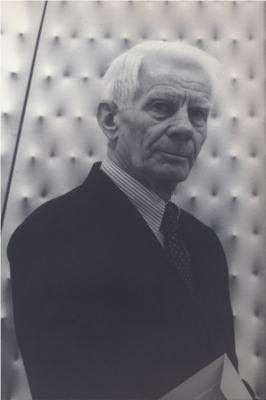
Italian[2] artist known for monochrome canvases textured by protruding nails, creating shifting patterns of light and shadow.
Museums3
Countries2
Most worksVictoria and Albert Museum, London · 8 works
Loading map…
Where to see Enrico Castellani
Ranked by works you can see in person.
-
 8 works
Victoria and Albert Museum
London, United Kingdom
-
1 works
Solomon R. Guggenheim Museum
New York City, United States

-
1 works
Yale University Art Gallery
New Haven, United States

Frequently Asked Questions
Where can I see Enrico Castellani's work?
Enrico Castellani's work has been featured in many exhibitions. A 1985[2] show at the Art Gallery of Ontario (Toronto) included his pieces. His art has appeared at the Kunstmuseum (Basel), the Hirshhorn Museum (Washington), and the Musée National d’Art Moderne, Centre Georges Pompidou (Paris). Several galleries in Italy have also displayed his work, including the Galleria Civica d’Arte Moderna (Turin), the Pinacoteca di Brera (Milan), and the Galleria Nazionale d’Arte Moderna (Rome). His art has been held in collections in cities such as Cologne, Frankfurt am Main, and Zurich. Examples of his work are held by the Tate Gallery in London, the Museum of Modern Art in New York, and the Menil Collection in Houston. These collections, along with various private owners, have loaned Castellani's pieces to exhibitions.What should I know about Enrico Castellani's prints?
Enrico Castellani (1930[2]-2017[2]) is best known for shaped canvas paintings that explore surface, shadow, and three-dimensionality. His prints share some of these concerns, often using embossing or unusual papers to create subtle effects. Castellani began his career in Milan in the late 1950s. He initially painted in a gestural style, but soon moved toward monochrome, structured surfaces. With Piero Manzoni, he founded the Galleria Azimut in 1959[2] and the associated journal Azimuth, which promoted new artistic directions beyond traditional painting. His most recognisable works feature a system of projecting and receding nail heads under canvas, creating regular patterns of light and shadow. These ideas translate into his printmaking, where he used techniques to manipulate the surface of the paper. Some are screenprints on shaped supports. Others use embossing to create a raised, tactile quality similar to his paintings. The prints offer a more accessible way to engage with Castellani's minimalist aesthetic and his interest in spatial relationships. They are often monochrome, typically using white, black, or red.Why are Enrico Castellani's works important today?
Enrico Castellani, along with Piero Manzoni, sought purity and simplicity in art. They founded the journal Azimuth and the Azimut gallery in 1959[2]. These championed a rational, analytical method, rejecting the rhetoric of irrational gestures and chaotic material use on canvas. Castellani's work aimed at an art of ideas, turning away from gesturality. His Superficie bianca (White Surface No. 5, 1964) uses protruding points to create rhythms of light and shadow, achieving a virtual three dimensionality centred on optical and purist effects. Castellani held a mystical belief in art as a tabula rasa. His practice embodies a desire to change the world, reflecting the impassioned hopes of the 1960s. He pursued this idea with austerity. His influence can be seen in the Arte Povera movement, which sought to strip art of all superstructures and historical authority.What techniques or materials did Enrico Castellani use?
Enrico Castellani is known for his innovative use of materials and techniques. In 1957[2], he created "achromes" using cloth soaked in kaolin and glue. By 1959, he was using sewing-machine seams for the screens of these works. The following year, Castellani experimented with cotton-wool and expanded polystyrene, as well as phosphorescent materials and cobalt chloride, which changed colour over time. Other materials used in 1961 included straw, plastic, cotton-wool balls, fur, and natural or artificial fibres; he even made a sculpture of rabbit skin. Castellani's work moved away from chaotic piling of material, instead defining a rational, analytical method. He aimed to create an art of optical and perceptive processes. His Superficie bianca, 11 (White Surface No. 5, 1964) uses protruding points, both positive and negative, to create rhythms of light and shadow, achieving a virtual three-dimensionality centred around optical effects.Who did Enrico Castellani influence?
Enrico Castellani's influence can be seen in the work of several artists associated with the anti-Informale movement. This movement gained momentum in the late 1950s, with connections between artists in Paris, Milan, and Düsseldorf. Castellani, along with Piero Manzoni, established the journal Azimuth and the gallery Azimut in 1959[2]. These venues promoted the purity and simplicity of artistic expression, challenging the gestural art and accumulation of materials on canvas that characterised Informale. Although influenced by Alberto Burri and Lucio Fontana, Castellani and Manzoni sought to move away from gestural techniques and return to an art of ideas. Castellani's approach involved a rational, analytical method, initially reducing painting to a blank slate, as seen in his monochromes. He then experimented with art as an optical and perceptive process. His Superficie bianca (White Surface No. 5, 1964) demonstrates this, using simple sequences of protruding points to create rhythms of light and shadow, achieving a virtual three-dimensionality focused on optical effects. His work, along with Fontana's, influenced artists like Günther Uecker, who developed similar methods of disrupting the surface to create light and shadow.Who influenced Enrico Castellani?
El Greco admired several Italian[2] Renaissance artists. He discussed them in his notes to Giorgio Vasari’s 1568 edition of the *Vite*, and in his marginalia to Daniele Barbaro’s translation of Vitruvius’s *Ten Books on Architecture*. El Greco felt contemporary artists could surpass the achievements of the ancients; he singled out Michelangelo for his admirable taste. He praised Titian’s skill in imitating nature, and Parmigianino for his figural agility. El Greco also admired Raphael and Correggio. Caravaggio also exerted influence in the art world. Although some were excited by his innovations, others criticised his reliance on direct observation, claiming he lacked imagination because he needed live models. Despite this, his restoration of naturalism to Italian art was acknowledged by some, such as Giovan Pietro Bellori. Followers of Caravaggio include Ribera and Baglione.What is Enrico Castellani's most famous work?
Enrico Castellani is best known for his 'Superficie' (Surface) series of paintings. These works, begun in the late 1950s, moved away from the gestural style of Art Informel. Instead, Castellani and his colleague Piero Manzoni pursued an objective art of ideas. They founded the Azimuth gallery and Azimut journal in 1959[2] to promote their approach. Castellani's 'Superfici' are characterised by a monochrome canvas surface stretched over a structure with protruding points. These sequences of positive and negative protrusions create rhythms of light and shadow. The effect is a virtual three-dimensionality, achieved through optical means. In 'Superficie bianca, n. 5' (White Surface No. 5), 1964, Castellani uses simple, repeated forms to create movement on the canvas. He described the repetition of 'punctuation' as a major characteristic of his work. He also made reliefs on paper, related to the 'Superfici' on canvas.What style or movement did Enrico Castellani belong to?
Enrico Castellani is associated with the Azimuth group and gallery, which he co-founded with Piero Manzoni in 1959[2]. This project championed a move towards artistic purity and simplicity. Castellani, along with Manzoni, aimed to move away from the gestural style of previous movements, instead promoting an art of ideas. Their method involved a rational, analytical approach, initially reducing the painting to a blank canvas, seen in Castellani's monochrome works and Manzoni's Achromes. They then explored art as an optical and perceptive process. Castellani's work, such as *Superficie bianca* (1964), uses simple sequences of protruding points to create rhythms of light and shadow, achieving a virtual three-dimensionality centred on optical effects. The Nuova concezione artistica (New Artistic Conception) announced these objectives in the pages of the Milan magazine *Azimuth*. Castellani maintained a belief in art as a *tabula rasa*, pursuing this idea with austerity.
Sources
Where to See guide aggregates verified holdings of Enrico Castellani's works across the following collections.
- [1] museum Victoria and Albert Museum Used for: museum holdings.
- [2] wikipedia Wikipedia: Enrico Castellani Used for: biography.
- [3] book guggenheim-luciofo00solo Used for: biography.
- [4] book guggenheim-metph00cela Used for: biography.
- [5] book Braun, Emily, 1957-; Asor Rosa, Alberto; Royal Academy of Arts (Great Britain), Italian art in the 20th century : painting and sculpture, 1900-1988 Used for: biography.
Editorial overseen by Solis Prints. Sources verified 2026-08-31. Click a source for details, or hover over [N] in the page above to preview.
Editorial standardsMethodologyCorrectionsAI disclosureAbout the editorial team