

About Eduardo Viana
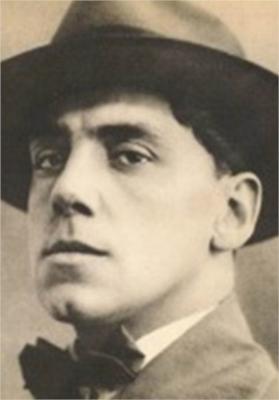
Where to see Eduardo Viana
Collection holdings are reported here; current display varies. Check with each museum before visiting.
Frequently Asked Questions
Where can I see Eduardo Viana's work?
Eduardo Viana's work can be viewed in several museums, particularly those with collections of Art Deco or Modern art. In Portugal, his work is held in the Museu Calouste Gulbenkian (Lisbon). In Spain, visit the Museo Art Nouveau y Art Deco (Salamanca) or the Museu d’Art Modern (Barcelona). Other European museums include the Brangwyn Museum (Brugge, Belgium), the Clockarium Museum (Brussels), the Musée d’Art et d’Industrie (Roubaix, France), the Musée de l’Ecole de Nancy (Nancy, France), the Musée des Arts Décoratifs (Paris), and the Musée des Beaux-Arts (Nancy, France). In the United Kingdom, you might find his pieces at the Brighton Museum & Art Gallery, the Geffrye Museum (London), the Manchester Art Gallery, the National Museums of Scotland (Edinburgh), or the Victoria & Albert Museum (London). In the United States, museums include the Charles Hosmer Morse Museum of American Art (Winter Park, Florida), the Los Angeles County Museum of Art, the Metropolitan Museum of Art (New York), the Minneapolis Institute of Arts, the Museum of Modern Art (New York), the Royal Ontario Museum (Toronto), the Virginia Museum of Fine Arts (Richmond), and the Wolfsonian at Florida International University (Miami Beach).What should I know about Eduardo Viana's prints?
Eduardo Viana (1881[1]-1967[1]) was a Portuguese artist, primarily known as a painter. He is associated with the first wave of Portuguese modernism. Viana began his artistic career in the early 20th century, studying in Lisbon. He then travelled extensively in Europe, including time in Paris. These travels exposed him to contemporary movements such as Cubism and Futurism, which influenced his developing style. He exhibited with the Independents in 1911[1]. Although Viana is not primarily known as a printmaker, he did produce some works in this medium. These prints often reflect the same stylistic concerns as his paintings, incorporating elements of abstraction and geometric forms. They are not well documented as a distinct body of work within his larger artistic output. His paintings are more widely available for study. These show his interest in colour and form. They demonstrate the assimilation of avant-garde ideas into a personal artistic vision. Viana's prints offer a smaller, but related, insight into his experimentation with modernist aesthetics.Why are Eduardo Viana's works important today?
Eduardo Viana (1881[1]-1967[1]) is important for his role in introducing modern art movements to Portugal. He was among the first Portuguese artists to engage with Cubism and other avant-garde styles of the early 20th century. Viana studied painting in Lisbon before travelling to Paris and, later, Germany. These travels exposed him to new artistic ideas that he then brought back to his home country. His early work shows the influence of Fauvism, seen in his use of colour and simplified forms. Later, he adopted a Cubist style, fragmenting objects and space in his compositions. Although Viana's Cubist period was relatively brief, it marked a significant moment in Portuguese art history. His willingness to experiment with abstraction helped pave the way for later generations of Portuguese modernists. His work provides insight into the international exchange of ideas that shaped European art in the early 20th century. He is recognised as a figure who helped to modernise Portuguese painting.What style or movement did Eduardo Viana belong to?
Eduardo Viana is associated with Orphism[1], a movement named by the poet Apollinaire. The name references the mythical Greek poet Orpheus, and it reflects the desire of artists to bring lyricism into their work. Orphism is seen as a fusion of Cubism, Fauvism, and Futurism. It is considered a forerunner to abstract art. Apollinaire used the term to describe painters of different kinds who were all animated by a more internal, popular, and poetic vision of life. He saw it as a slow and logical evolution from Impressionism, Divisionism, the works of the Fauves, and Cubism. One characteristic of Orphism is an attempt at pure painting divorced from all other considerations; this does not necessarily involve pure colours but rather colour as they come out of the tube. Frantisek Kupka's work has been associated with Orphism, although he himself was never happy with the label. Kupka saw a connection between his paintings and music, and he wished to communicate the stirring of the spirit he experienced upon hearing music.What is Eduardo Viana known for?
Eduardo Viana is known for his paintings and for being among the first Portuguese modernists. He received a public commission to create the decorative cycle for the Café A Brasileira on the Rua Garrett, completed in 1925[1].What was Eduardo Viana's art style?
The Delaunays' Orphist colour theory, and their experiments with simultaneous contrasting hues, left a visible mark on Viana's canvases that would persist for the remainder of his long career. He painted figures and landscapes of Sintra and the Algarve.
Sources
Where to See guide aggregates verified holdings of Eduardo Viana's works across the following collections.
- [1] wikipedia Wikipedia: Eduardo Viana Used for: biography.
- [2] book Beard, Lee, 1973- author, Butler, Adam, author; Van Cleave, Claire, author; Fortenberry, Diane, author; Stirling, Susan, author, Beard, Lee, 1973- author, Butler, Adam, author; Van Cleave, Claire, author; Fortenberry, Diane, author; Stirling, Susan, author - The Art Book_ New Edition, Mini Format Used for: biography.
- [3] book Masterpieces of western art : a history of art in 900 individual studies from the Gothic to the present day Used for: biography.
- [4] book Leonor de Oliveira;, Portuguese Artists in London Used for: biography.
- [5] book Post-impressionism : cross-currents in European painting Used for: biography.
Editorial overseen by Solis Prints. Sources verified 2026-10-14. Click a source for details, or hover over [N] in the page above to preview.
Editorial standardsMethodologyCorrectionsAI disclosureAbout the editorial team