

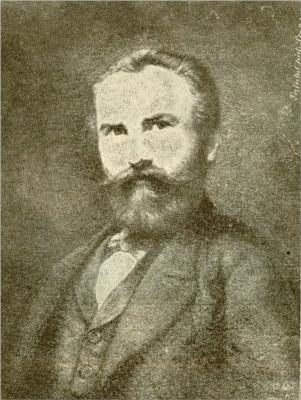
About Constantin Stahi
Where to see Constantin Stahi
Ranked by works you can see in person.
Frequently Asked Questions
Where can I see Constantin Stahi's work?
Constantin Stahi (1844[1]-1920[1]) was a Romanian[1] painter and illustrator. He is best known for genre scenes and depictions of Romanian history. Stahi's paintings are primarily held in Romanian public collections. The National Museum of Art of Romania (MNAR) in Bucharest holds a number of his important works; these include historical paintings and portraits. The Brukenthal National Museum in Sibiu also possesses examples of his art. Smaller museums throughout Romania may also have pieces by Stahi. These include regional art museums and historical societies. Viewing opportunities outside Romania are limited. Some works may occasionally appear in international art auctions or temporary exhibitions of Romanian art. However, there is no permanent display of his work outside his home country. Catalogues of Romanian art may provide further information on the location of specific paintings.What should I know about Constantin Stahi's prints?
Information regarding Constantin Stahi's prints is scarce. However, prints, particularly woodcuts, experienced a surge in popularity in Germany during the Expressionist movement. Artists like Ernst Ludwig Kirchner, Erich Heckel, and Karl Schmidt-Rottluff embraced the medium, influencing painting through their bold forms and angularity. Printmaking became a direct means of expressing inner agitation, with artists such as Nolde elevating the art of black and white to a symbolic language. During this period, Paul Cassirer's Pan-Presse revitalised hand-printed graphics and illustrated books, publishing works by notable artists including Max Beckmann and Oskar Kokoschka. Similarly, Der Sturm gallery and periodical promoted avant-garde art, featuring original prints by Brücke artists and others. These movements collectively contributed to a shift in print collecting, with a focus on artistic content over rarity or technical refinement.Why are Constantin Stahi's works important today?
Constantin Stahi was a Romanian[1] painter and illustrator, active in the late 19th and early 20th centuries. He is remembered for his contributions to Romanian art, particularly his genre scenes and depictions of rural life. Stahi's importance lies in his realistic portrayal of Romanian society during a period of significant change. His paintings offer insights into the daily lives, customs, and traditions of the Romanian people. They document a specific time in the nation's history. His illustrations, often featured in periodicals, helped to shape public opinion and national identity. Stahi's work provides a valuable visual record of Romania's cultural heritage. His art also reflects the influence of academic realism and naturalism, popular styles in Europe at the time. Stahi's legacy is secured by his contribution to the development of Romanian national art.What techniques or materials did Constantin Stahi use?
Constantin Stahi's techniques involved a combination of drawing and painting methods. In his finished pieces, the paint film is generally thin and even, with virtually no impasto. He often started with preliminary sketches and oil studies. A pencil under-drawing was common, with masses then established using washes of subdued colour. Stahi would build up the surface with thin but opaque layers, adding details as he progressed. He used glazes of burnt red lakes and transparent earths to deepen shadows and foregrounds. Freely applied touches of off-white gave the effect of reflective light. Stahi's approach included both absorbent and non-absorbent surfaces, glazes and opaque colour, and painting wet-in-wet. He considered colour to be either sensuous or functional. He also ground his own pigments and used egg tempera. However, he did not always adhere to careful construction methods, sometimes interposing an isolating egg-white glaze between layers of pigment, a technique that could lead to brittleness over time.Who did Constantin Stahi influence?
Constantin Stahi's direct influence is difficult to trace, as Romanian[1] Expressionism lacked manifestos or organised groups. Instead, it was a wider phenomenon affecting artists of differing styles. However, Expressionist ideas did reach Romanian artists who had studied in Germany before World War I. These intellectuals introduced Expressionism, which then resonated primarily in the plastic arts. Romanian Expressionism tended towards realism, with an anti-bourgeois and anti-militarist ideology. Artists such as N.N. Tonitza, Aurel Mărculescu, Nicolae Cristea, and Aurel Jiquidi all used Expressionist devices in their work. Gheza Vida and Béla Gy. Szabó also approached Expressionist aesthetics. Mattis-Teutsch, who had been part of Western European Expressionist circles, explored the social functions of art. Lascăr Vorel evolved towards an Expressionism that traced the moral profile of the upper-middle class. Ion Țuculescu's Expressionist works are considered to carry the greatest weight in his oeuvre. These artists, while not directly influenced by Stahi, demonstrate the broader impact of Expressionism on Romanian art.Who influenced Constantin Stahi?
Constantin Stahi's influences are difficult to pin down. Expressionism was a broad, international phenomenon that touched many artists and writers. A large number of figures were associated with it, any of whom might have had some impact on Stahi. Figures from the visual arts include Adolphe Appia, Alexander Archipenko, Hans Arp, Rudolf Bauer, Max Beckmann, Willi Baumeister, Ernst Barlach, Aubrey Beardsley, Constantin Brancusi, Georges Braque, Pieter Breughel, Heinrich Campendonk, Paul Cézanne, Marc Chagall, Lovis Corinth, Gustave Courbet, Gordon Craig, Honoré Daumier, Edgar Degas, André Derain, Otto Dix, Raoul Dufy, James Ensor, Jacob Epstein, Lyonel Feininger, Henri Gaudier-Brzeska, Paul Gauguin, Albert Gleizes, El Greco, George Grosz, Mathias Grünewald, Erich Heckel, Adolf Hölzel, and Edmund Husserl. Other possible influences are Henrik Ibsen, Maurice Maeterlinck, Arthur Rimbaud, and Walt Whitman.What style or movement did Constantin Stahi belong to?
Constantin Stahi (1844[1]-1920[1]) was a Romanian[1] painter and illustrator. He is best known for his contributions to academic art and his realistic depictions of Romanian life. Stahi's artistic training took place at the Academy of Fine Arts in Munich. This institution promoted a style rooted in precise observation and technical skill. His work often featured historical or genre scenes rendered with careful attention to detail. These qualities align him with academic realism. Academic realism was a dominant style in European art during the 19th century. It emphasised technical proficiency, historical accuracy, and moralising subject matter. Artists working in this mode often sought official recognition and patronage through state-sponsored exhibitions and commissions. Stahi's career reflects this pattern. He received commissions for portraits and historical paintings. His illustrations also appeared in various publications. These activities secured his position within the Romanian art world of his time.What was Constantin Stahi known for?
Constantin Stahi (1844[1]-1920[1]) was a Romanian[1] painter and illustrator. He is best known for his depictions of military subjects and genre scenes. Stahi studied at the Academy of Fine Arts in Munich. He returned to Romania and became a professor at the National School of Fine Arts in Bucharest. Many of his paintings document the Romanian War of Independence (1877[1]-1878[1]). He also produced works showing everyday life in the Romanian countryside. His paintings are characterised by a realistic style and attention to detail. He often included many figures in his compositions. Stahi's work can be found in the collections of the National Museum of Art of Romania and other museums in Romania. He also worked as an illustrator for various publications.
Sources
Where to See guide aggregates verified holdings of Constantin Stahi's works across the following collections.
- [1] wikipedia Wikipedia: Constantin Stahi Used for: biography.
- [2] book Masterpieces of western art : a history of art in 900 individual studies from the Gothic to the present day Used for: biography.
- [3] book Post-impressionism : cross-currents in European painting Used for: biography.
- [4] book Post-impressionism : cross-currents in European painting Used for: biography.
- [5] book Cheynet, Jean-Claude(Editor), Studies in Byzantine Sigillography : Studies in Byzantine Sigillography. Volume 9 Used for: biography.
- [6] book Nancy P. Sevcenko;, The Celebration of the Saints in Byzantine Art and Liturgy Used for: biography.
- [7] book The glory of Byzantium Used for: stylistic analysis.
- [8] book Unknown Used for: stylistic analysis.
Editorial overseen by Solis Prints. Sources verified 2026-09-02. Click a source for details, or hover over [N] in the page above to preview.
Editorial standardsMethodologyCorrectionsAI disclosureAbout the editorial team