



About Carlo Marochetti
Italian · 1805–1867
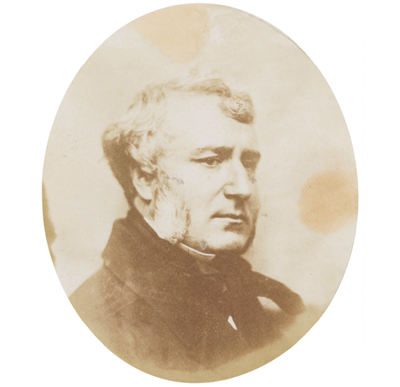
Italian[1]-born sculptor favoured by Queen Victoria, best known for the equestrian bronze of Richard Coeur de Lion outside Westminster.
Museums2
Countries1
Most worksMuseum of Fine Arts of Rennes, Rennes · 4 works
Loading map…
Where to see Carlo Marochetti
Ranked by works you can see in person.
-
4 works
Museum of Fine Arts of Rennes
Rennes, France


Frequently Asked Questions
Where can I see Carlo Marochetti's work?
Carlo Marochetti (1805[1]-1867[1]) was an Italian[1] sculptor who worked in Britain and France. To view his work, several locations may have pieces on display. In London, the Victoria & Albert Museum holds a few relevant works. The Wallace Collection has some sculpture, though it is not specified whether any are by Marochetti. Other museums in the United Kingdom with sculpture collections include the Brighton Museum & Art Gallery, Manchester Art Gallery, and the National Museums of Scotland in Edinburgh. Outside the UK, American museums such as the Los Angeles County Museum of Art (LACMA), the Metropolitan Museum of Art in New York, and the Minneapolis Institute of Arts may hold examples of his sculpture. The Royal Ontario Museum in Toronto also has sculpture holdings.What should I know about Carlo Marochetti's prints?
Print collecting was fashionable in the late 19th century. Etchings were particularly admired. Publications such as *The Etcher* (1879-1883[1]) and *English Etchings* (1881-1891) were dedicated to the form. The Printsellers’ Association tracked declared editions of prints. They distinguished between Artist Proofs, Lettered Proofs, Presentation Proofs, Proofs before letters, and Remarque Artist Proofs. Artist Proofs sometimes included signatures by the artist and engraver. By 1880, the Printsellers’ Association did not require declaration of the number of proof impressions for etchings. Therefore, full edition details are not always available, unlike for mezzotint or line engravings. Prints are categorised by when they were made. A vintage print is made around the time the negative was taken. A period print is made within approximately 10 to 15 years after. An old print is one with an unknown printing date, or one made more than 15 years after the image was taken. A modern print is a recent print from the original negative. An original print is one made by the artist or under their supervision. A facsimile is a print made by re-photographing a print, or using the original negative, with base and processing as close as possible to a reference print.Why are Carlo Marochetti's works important today?
Carlo Marochetti (1805[1]-1867[1]) was an Italian[1]-French sculptor who worked in Britain. He is significant for his contributions to British public sculpture during the Victorian era, particularly his equestrian statues and portrait busts. Marochetti's statue of Richard Coeur de Lion (1851[1]-1860[1]), outside the Palace of Westminster, is one of his most recognisable works. It demonstrates his skill in bronze casting and his ability to create dramatic, heroic compositions. This sculpture, along with his other public commissions, helped shape the visual identity of Victorian London. His portrait busts, such as those of Queen Victoria and other members of the British aristocracy, reveal his talent for capturing likeness and character in marble. These works offer insights into the social and political elite of the time. Marochetti's influence extended beyond his own creations. His studio served as a training ground for other sculptors, and he played a role in promoting the development of sculpture in Britain. Although his reputation declined somewhat after his death, recent scholarship has recognised his importance in the history of British sculpture. His works continue to be studied and appreciated for their artistic merit and historical value.Who was Carlo Marochetti?
Carlo Marochetti was a sculptor born in Turin in 1805[1], but he was raised in Paris. He trained at the École des Beaux-Arts and built a reputation on large-scale bronze monuments.What techniques or materials did Carlo Marochetti use?
Carlo Marochetti, an Italian[1]-born sculptor who worked in France and Britain, employed a variety of materials and methods in his practice. He is best known for his bronze statues, such as the equestrian statue of Richard the Lionheart (1860[1]) outside the Palace of Westminster. Marochetti trained in Rome, where he learned classical sculptural techniques. He often worked in marble, producing portrait busts and idealised figures. Examples include his marble bust of Camillo Benso, Count of Cavour (c. 1862). He also experimented with new casting methods for bronze sculpture. He patented a technique that allowed for larger, more complex bronze casts to be produced in fewer sections. This innovation was significant for the production of monumental public sculptures. Marochetti's use of this technique can be seen in his bronze statues of Queen Victoria and Prince Albert in Glasgow (1866). His work demonstrates a command of traditional sculptural materials, alongside an interest in technical innovation in bronze casting.Who did Carlo Marochetti influence?
Carlo Marochetti (1805[1]-1867[1]) was a Turin-born sculptor who worked in France and Britain. While it is difficult to identify specific artists directly influenced by Marochetti, his impact can be understood through his contributions to British sculpture and the dissemination of his artistic ideas. Marochetti's work on public monuments, such as the equestrian statue of Richard Coeur de Lion outside the Palace of Westminster, helped to shape Victorian-era tastes for grand, historical sculpture. His involvement in large-scale projects, like the Wellington Monument (erected 1856[1]) in Hampshire, exposed many assistant sculptors and craftsmen to his methods. These assistants likely absorbed elements of his style and technique, which they then carried into their own careers. His use of new technologies, such as the mechanical pointing device for replicating sculptures, also had an effect on sculptural practice. This device allowed for more efficient production and distribution of sculptures, influencing how sculpture was created and disseminated in the 19th century. Though not directly influencing specific artists, Marochetti's broader effect on British sculpture is evident in the adoption of his techniques and the continuation of the monumental style he helped popularise.Who influenced Carlo Marochetti?
Carlo Marochetti's artistic development occurred in a milieu influenced by several sculptors. Antonio Canova, with his emphasis on idealised forms and refined surfaces, had a considerable impact on the artists of the early 19th century. Sculptors like Chaudet and Bosio reflect Canova's influence. Also important was the classical aesthetic promoted by Antoine-Chrysostonie Quatremère de Quincy. Marochetti's career also coincided with a renewed interest in earlier French sculpture, particularly that of Jean Goujon. Some critics compared other contemporary sculptors, such as Antonin Moine, to Goujon. These comparisons suggest a broader appreciation for French sculpture and its potential to rival classical models. It is likely that Marochetti's work was shaped by these various, sometimes competing, artistic currents.What is Carlo Marochetti's most famous work?
Carlo Marochetti was an Italian[1] sculptor who worked extensively in Britain. While it is difficult to name a single "most famous" work, several pieces are particularly well known. One notable example is the equestrian statue of Richard the Lionheart, which stands outside the Palace of Westminster in London. This bronze sculpture, completed in 1860[1], depicts the king on horseback, sword raised, and is a prominent example of Victorian-era public sculpture. Marochetti also created the Crimean War Memorial in St James's Park, London, which commemorates the British soldiers who died in the conflict. Other significant works include the statues of Queen Victoria in Glasgow and Newcastle, as well as numerous portrait busts and funerary monuments. His work can be found in various locations throughout Britain and Europe, demonstrating his wide-ranging output and popularity during his lifetime.
Sources
Where to See guide aggregates verified holdings of Carlo Marochetti's works across the following collections.
- [1] wikipedia Wikipedia: Carlo Marochetti Used for: biography.
- [2] book Alison West, From Pigalle to Préault Used for: biography, stylistic analysis.
- [3] book Allison Lee Palmer, Historical Dictionary of Neoclassical Art and Architecture Used for: stylistic analysis.
- [4] book Palmer, Allison Lee, Historical Dictionary of Neoclassical Art and Architecture Used for: biography, stylistic analysis.
- [5] book Neoclassicism and romanticism : architecture, sculpture, painting, drawings, 1750-1848 Used for: biography.
- [6] book Irving Lavin;, Visible Spirit Used for: biography.
Editorial overseen by Solis Prints. Sources verified 2026-08-29. Click a source for details, or hover over [N] in the page above to preview.
Editorial standardsMethodologyCorrectionsAI disclosureAbout the editorial team