

About Basuki Abdullah
Indonesian · 1915–1993
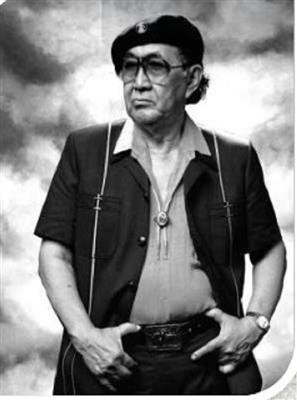
Indonesian[1] realist painter who trained in The Hague and became one of the most celebrated figurative artists in Southeast Asia.
Where to see Basuki Abdullah
Collection holdings are reported here; current display varies. Check with each museum before visiting.
Frequently Asked Questions
Where can I see Basuki Abdullah's work?
Basuki Abdullah's paintings are displayed in several locations, although a comprehensive catalogue is not available. Many works are held in private collections, making public viewing difficult. However, significant holdings can be found in Indonesian[1] state collections, most notably the Presidential Palace Collection (Istana Kepresidenan) and the National Gallery of Indonesia (Galeri Nasional Indonesia) in Jakarta. These institutions occasionally display his paintings as part of thematic or retrospective exhibitions. Smaller museums throughout Indonesia may also possess examples of his art. These include regional museums in the areas where he lived and worked. Examining museum websites or contacting them directly is advisable before planning a visit. Outside Indonesia, it is harder to find his works on display, although auction houses that specialise in Southeast Asian art sometimes handle his paintings. Keep an eye on their catalogues.What should I know about Basuki Abdullah's prints?
Basuki Abdullah (1915[1]-1993[1]) was an Indonesian[1] artist known for his academic realist paintings. He gained recognition for portraiture and depictions of Indonesian life. When considering prints of Abdullah's work, bear in mind that his original paintings were executed in oil on canvas. Abdullah's artistic training in the Western tradition influenced his style, which often combined realism with elements of romanticism. His prints offer an accessible way to engage with his artistic vision. Keep in mind that the prints' colour and texture may vary from the original paintings. Factors such as printing techniques and paper quality can affect the final appearance. Examining the print's provenance and production details can give insight into its quality and faithfulness to Abdullah's original work. Collectors should seek prints from reputable sources to ensure authenticity and value.Why are Basuki Abdullah's works important today?
Basuki Abdullah (1915[1]-1993[1]) was a popular Indonesian[1] painter, known for his academic realist style and portraits. Although his artistic approach was not avant-garde, his works are significant for several reasons. Abdullah helped to shape Indonesian modern art by bridging Western academic painting techniques with Indonesian subject matter. His portraits, often of prominent figures, offer insights into the socio-political context of his time. In the mid-20th century, many artists in postcolonial nations grappled with questions of national identity and the impact of modernisation. Abdullah's art provides a view into this period, showing how artists navigated these issues. His focus on both technique and subject matter reflects broader trends in the development of art in South Asia, where artists sought to create works that resonated with local audiences while engaging with international styles. His legacy resides in his contribution to the development of modern Indonesian art and his reflections on the cultural shifts of his era.What techniques or materials did Basuki Abdullah use?
Basuki Abdullah worked primarily in oil paint. When preparing a canvas, he favoured primed cotton duck with a medium texture. He would apply two additional coats of white gesso over the primed surface. Abdullah stretched his own canvases, although pre-made canvases were acceptable. In some instances, he used Masonite, cut to a specific size, as a support. When using Masonite, he applied three or four coats of gesso. Technique extends beyond materials; it encompasses the artist's intentions and methods. Some artists favour instinct over formula. As Pierre Auguste Renoir noted, no single process can be made into a formula; even something as simple as the amount of oil added to paint had to be estimated each time.Who did Basuki Abdullah influence?
It is difficult to identify specific artists directly influenced by Basuki Abdullah. Artistic influence is a complex phenomenon; it is not simply a matter of direct imitation. Some sources propose that influence is reciprocal: contemporary artists can alter how we view artists of the past. Willem de Kooning's admiration for Courbet, for example, invites viewers to see Courbet's art in a new light. Similarly, the rise of Picasso led to the emergence of "Picassoites", young painters who followed his style. However, the art world has become so pluralistic that no single artist or movement dominates completely. In the Chinese art world, figures such as Zhao Wuji and Liu Guosong have had an impact. Zhao's work gave access to abstract painting, while Liu's combination of expressionist brushwork and geometric forms has appealed to younger artists in China. These artists provide material to fill gaps in artistic development.What is Basuki Abdullah's most famous work?
Basuki Abdullah (1915[1]-1993[1]) was a popular Indonesian[1] painter, known for his portraits and figurative works. Identifying a single "most famous work" is difficult, as popularity and recognition can shift. However, several paintings are particularly well known. One such painting is "Diponegoro Leads His Army". This work depicts Prince Diponegoro, an Indonesian national hero, leading his troops during the Java War (1825-1830[1]). The painting captures a sense of Indonesian nationalism, as well as the artist's skill in portraying historical subjects. Abdullah was also Indonesia's official palace painter. He painted portraits of Sukarno, Indonesia's first president, and other prominent figures. These portraits contributed to his fame and solidified his position as a leading artist in Indonesia. His portraiture, with its academic realism, was widely admired. In addition to his Indonesian subjects, Abdullah painted portraits of international figures, including Queen Elizabeth II. His international commissions added to his reputation. While pinpointing one definitive work is challenging, "Diponegoro Leads His Army" and his portraits of influential figures remain among his most recognised creations.What style or movement did Basuki Abdullah belong to?
Basuki Abdullah (1915[1]-1993[1]) was an Indonesian[1] artist known for his academic and realistic paintings, especially portraits and figurative works. He did not align with any particular art movement, rather developing a style that blended Western academic techniques with Indonesian subject matter. Abdullah received his formal art training at the Académie Royale des Beaux-Arts in The Hague. This education instilled in him a strong foundation in traditional European painting methods, which emphasised accurate representation and attention to detail. After his studies, he returned to Indonesia and became a prominent figure in the nation's art scene. While many of his contemporaries explored modern and abstract styles, Abdullah remained committed to realism. He was particularly celebrated for his portraits of prominent figures, including members of the Indonesian elite and international leaders. His ability to capture likenesses and convey a sense of dignity made him a sought-after portraitist. Although his style was not revolutionary, his skill and dedication to traditional techniques earned him recognition and a place in Indonesian art history.
Sources
Where to See guide aggregates verified holdings of Basuki Abdullah's works across the following collections.
- [1] wikipedia Wikipedia: Basuki Abdullah Used for: biography.
- [2] book Yan Zhou, A History of Contemporary Chinese Art Used for: biography.
- [3] book guggenheim-guhe00solo Used for: biography.
- [4] book guggenheim-twopri00weis Used for: biography.
- [5] book Masterpieces of western art : a history of art in 900 individual studies from the Gothic to the present day Used for: biography.
- [6] book Iftikhar Dadi, Modernism and the Art of Muslim South Asia (Islamic Civilization & Muslim Networks) Used for: stylistic analysis.
- [7] book Sophie Junge; Erin Hyde Nolan, Survey Practices and Landscape Photography Across the Globe Used for: stylistic analysis.
Editorial overseen by Solis Prints. Sources verified 2026-10-14. Click a source for details, or hover over [N] in the page above to preview.
Editorial standardsMethodologyCorrectionsAI disclosureAbout the editorial team