



About Albert Flamm
German · 1823–1906
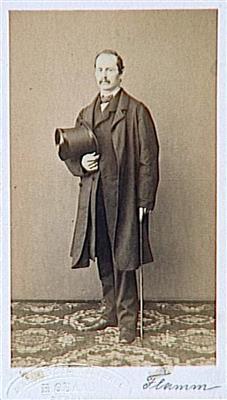
German[1] Dusseldorf School painter who devoted his career to Italian landscapes, particularly the Roman Campagna and the coast near Cumae.
Museums1
Countries1
Most worksAlte Nationalgalerie, Berlin · 1 works
Loading map…
Where to see Albert Flamm
Ranked by works you can see in person.
-
1 works
Alte Nationalgalerie
Berlin, Germany

Frequently Asked Questions
Where can I see Albert Flamm's work?
It is difficult to pinpoint exactly where Albert Flamm's work is on display, as the sources available do not mention him specifically. However, many major museums hold collections of nineteenth-century European painting. These include institutions in the United States, such as the Metropolitan Museum of Art in New York, the Los Angeles County Museum of Art, the Minneapolis Institute of Arts, and the Virginia Museum of Fine Arts in Richmond. In Canada, the Royal Ontario Museum in Toronto may hold examples of his work. In the United Kingdom, museums with relevant collections include the Brighton Museum & Art Gallery, Manchester Art Gallery, the National Museums of Scotland (Royal Museum) in Edinburgh, and the Victoria & Albert Museum in London. Checking the collections catalogues of these and similar institutions would be the best method for locating works by Flamm.What should I know about Albert Flamm's prints?
Albert Flamm (1823[1]-1906[1]) was a German[1] painter known for his Italianate paintings. He spent most of his career in Düsseldorf. He is associated with the Düsseldorf school of painting. Flamm studied at the Düsseldorf Academy. There, he was a student of Johann Wilhelm Schirmer. Schirmer taught historical painting, but he encouraged his students to paint from nature. Andreas Achenbach also influenced Flamm. Achenbach’s atmospheric and dramatic style is apparent in Flamm’s work. Flamm travelled to Italy in the 1850s. This trip had a significant effect on his artistic output. He produced many paintings of Italian subjects. These often feature ruins or peasants. His paintings often present an idealised view of the Italian countryside. He received several awards and medals during his lifetime. He became a professor at the Düsseldorf Academy in 1861[1]. Prints of Flamm's paintings reproduce his atmospheric handling of light. They also show his skill in composing appealing views. Prints of his work allow one to study his technique. They also provide affordable access to his vision of Italy.Why are Albert Flamm's works important today?
Albert Flamm (1823[1]-1906[1]) was a German[1] artist associated with the Düsseldorf school of painting. He is best known for his Italian scenes. Flamm's importance rests on his contribution to the development of a particular style of Romantic painting. His works often depict dramatic skies, ruins, and a sense of nostalgia for the past. These elements appealed to collectors during the 19th century, and they continue to hold interest for those studying the art of that period. His technical skill in rendering atmospheric effects and architectural details is also noteworthy. Flamm's paintings offer insight into the aesthetic preferences of his time, as well as the cultural fascination with Italy among northern European artists. His works are held in various museum collections, and they appear regularly at auction. They provide valuable examples of the Düsseldorf school's approach to Romanticism.What techniques or materials did Albert Flamm use?
Albert Flamm (1823[1]-1906[1]) was a German[1] painter known for his Italianate paintings. He employed traditional oil-painting techniques, often working on canvas. Flamm studied at the Düsseldorf Academy, where he later became a professor. The Düsseldorf school favoured detailed realism and dramatic lighting effects. These characteristics are apparent in Flamm's works. He often depicted scenes with strong contrasts between light and shadow, creating a sense of depth and atmosphere. His approach involved careful observation and meticulous brushwork. He built up layers of paint to achieve luminosity. He paid close attention to detail, particularly in his depictions of architecture and foliage. Flamm's colour palette typically consisted of earth tones, with occasional brighter colours used to draw attention to specific elements within the composition. His skill in capturing the effects of light and atmosphere contributed to the popularity of his paintings among collectors.Who did Albert Flamm influence?
It is difficult to identify specific artists who were directly influenced by Albert Flamm. More research is needed to establish clear connections. However, one can examine the artistic context of his time. Flamm's work falls within a period that saw the rise of Impressionism and other modern movements. While Flamm's style remained more traditional, these broader trends affected the art world. In California, where many artists sought new directions, one can see the interplay between Impressionism and early Modernism. Artists such as Donna Norine Schuster and Mabel Alvarez incorporated elements of both into their work. These artists, active in the early 20th century, represent a generation exploring different artistic paths. Some were part of the Los Angeles Modern Art Society. Examining their influences reveals the complex relationships between different styles and movements.Who influenced Albert Flamm?
It is difficult to summarise influences on Albert Flamm. A list of names associated with Expressionism includes artists, writers, and composers; however, it is not possible to say which, if any, had a direct impact on Flamm. Some of the names on the list who may have had an impact are: Hans (Jean) Arp, Charles Baudelaire, Max Beckmann, William Blake, Umberto Boccioni, Georges Braque, Pieter Breughel, Paul Cézanne, Marc Chagall, Gustave Courbet, Honoré Daumier, Edgar Degas, André Derain, Otto Dix, James Ensor, Paul Gauguin, El Greco, George Grosz, Mathias Grünewald, Erich Heckel, Hieronymus Bosch, Wassily Kandinsky, Ernst Ludwig Kirchner, Paul Klee, Gustav Klimt, Alfred Kubin, Wilhelm Leibl, August Macke, Edouard Manet, Franz Marc, Henri Matisse, Ludwig Meidner, Michelangelo Buonarroti, Amedeo Modigliani, Claude Monet, Edvard Munch, Emil Nolde, Pablo Picasso, Raphael (Raffaele Santo), Rembrandt, Auguste Renoir, Henri Rousseau, Georges Rouault, Karl Schmidt-Rottluff, Franz von Stuck, Henri de Toulouse-Lautrec, Vincent van Gogh, and William Wauer.What style or movement did Albert Flamm belong to?
Albert Flamm (1823[1]-1906[1]) was a German[1] painter associated with the Düsseldorf school of painting. This movement, which gained momentum in the early to mid-19th century, was centred at the Düsseldorf Academy. It was known for its detailed, often romanticised depictions of nature and historical subjects. Flamm's artistic training at the Düsseldorf Academy under Johann Wilhelm Schirmer shaped his style, which often featured dramatic lighting and atmospheric effects. Although Flamm's work aligns with the Düsseldorf school's emphasis on detailed representation and emotional engagement, he also incorporated elements of realism into his paintings. He moved away from purely romanticised depictions toward a more objective portrayal of nature. This blend of romanticism and realism is a characteristic feature of much 19th-century German painting, reflecting a broader European trend toward greater naturalism in art.What is Albert Flamm known for?
Albert Flamm is known for his Italian scenery paintings. His best-known work is *Approaching Storm in the Campagna* (1862[1]), and other notable works include *Via Appia* and *View of Cumae*.
Sources
Where to See guide aggregates verified holdings of Albert Flamm's works across the following collections.
- [1] wikipedia Wikipedia: Albert Flamm Used for: biography.
- [2] book guggenheim-refigur00kren Used for: biography.
- [3] book Husslein-Arco, Agnes, editor; Koja, Stephan, editor; Law, Rebecca (Translator), translator; McInnes, Robert (Translator), translator; Somers, Nick, translator; Monet, Claude, 1840-1926. Paintings. Selections; Österreichische Galerie Belvedere, h Used for: biography.
- [4] book Masterpieces of western art : a history of art in 900 individual studies from the Gothic to the present day Used for: biography.
Editorial overseen by Solis Prints. Sources verified 2026-08-21. Click a source for details, or hover over [N] in the page above to preview.
Editorial standardsMethodologyCorrectionsAI disclosureAbout the editorial team