

About Adalbert Erdeli
Hungarian · 1891–1955
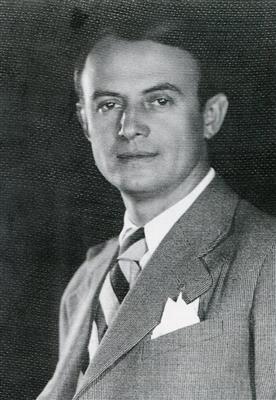
- portrait
A Transcarpathian painter who co-founded the regional artists' association in 1931[1], Erdeli was publicly denounced as a formalist in 1949 and posthumously rehabilitated.
Where to see Adalbert Erdeli
Collection holdings are reported here; current display varies. Check with each museum before visiting.
Frequently Asked Questions
Where can I see Adalbert Erdeli's work?
Adalbert Erdeli's artwork has been shown in various locations, primarily in Hungary. He exhibited at the Vigadó multiple times between 1840 and 1847. Later, his work appeared at the Nádor utcza in 1851, the Nemzeti Múzeum in 1852, and the Diana Baths between May 1853 and October 1854. Later exhibition venues include the Uránia in 1908[1] and the Műcsarnok, where he typically displayed around four paintings, including at the 1910 Spring exhibition. These venues hosted numerous exhibitions featuring a range of artists and styles during the late 19th and early 20th centuries. Other exhibition spaces of the period include the Ernst Muzeum and the Kéve. While specific current locations holding Erdeli's work are not detailed, these historical exhibition sites provide a context for understanding where his art was accessible during his lifetime.Why are Adalbert Erdeli's works important today?
Adalbert Erdeli (1891[1]-1955[1]) was a Ukrainian painter, important for his role in developing modern art in the Transcarpathian region. He is remembered both as an artist and an educator. Erdeli studied at the Hungarian[1] Royal Drawing School in Budapest. After training, he returned to his native region in Western Ukraine. In 1927[1], Erdeli, along with fellow artist Joseph Bokshay, founded the first art school in Uzhhorod. This institution became a centre for artistic development in the area. The school helped to cultivate a new generation of Transcarpathian artists. Erdeli's own artistic output included a range of genres: portraits, still lifes, and scenes of daily life. His style incorporated elements of impressionism and post-impressionism. Erdeli's work is appreciated for its contribution to Ukrainian modernism. He helped to move Transcarpathian art away from traditional, academic styles. His influence can be seen in the work of many later Ukrainian artists. Erdeli's art remains significant for its historical value and artistic merit.What techniques or materials did Adalbert Erdeli use?
Adalbert Erdeli (1891[1]-1955[1]) was a Ukrainian painter who worked in a variety of media. He is known to have produced works in oil paint, watercolour, and tempera. Erdeli's early artistic training occurred at the Budapest School of Applied Arts, where he acquired skills in drawing and design. Later, he studied at the private art school of Béla Iványi-Grünwald in Kecskemét. These formative experiences provided him with a solid foundation in traditional techniques, which he then adapted to his own artistic vision. Throughout his career, Erdeli explored different styles, from impressionism to expressionism, and his choice of materials often reflected these stylistic shifts. His oil paintings display a concern with colour and light, while his watercolours often possess a more spontaneous quality. Erdeli also experimented with mixed media, combining different materials to achieve particular textural effects.Who did Adalbert Erdeli influence?
Adalbert Erdeli (1891[1]-1955[1]) was a Hungarian[1] modernist painter from what is now western Ukraine. He helped establish modern art in the region. Erdeli's pupils included Fedor Manailo and Zoltan Sholtes; these artists carried Erdeli's stylistic principles into the second half of the twentieth century. Manailo is known for his scenes of the Carpathian region. Sholtes worked as a theatre designer in addition to his painting. Erdeli taught at the Uzhhorod School of Applied Arts. This school, founded in 1927[1], became a centre for artistic innovation. It promoted a synthesis of various styles, including post-impressionism, expressionism, and constructivism. Erdeli's instruction there helped shape the artistic direction of many local artists. His emphasis on colour and form had a particular impact on his students' development. The school played a significant part in integrating modern art into the cultural output of the area.Who influenced Adalbert Erdeli?
Adalbert Erdeli (1891[1]-1955[1]) was a Ukrainian painter with a complex artistic background. He synthesised various Central European influences during a career that spanned several art movements. Erdeli's early work shows the impact of impressionism and post-impressionism. These styles were circulating through European art centres at the start of the 20th century. He studied at the Budapest Academy of Fine Arts, which exposed him to current trends in Western art. Some scholars suggest he was also influenced by the art of the Secession movement, particularly its decorative qualities. Later, Erdeli engaged with cubism and constructivism. These interests aligned him with the broader European avant-garde. His move towards these abstract forms reflects his engagement with debates about art's role in a modernising world. Although a somewhat isolated figure due to geography, Erdeli absorbed and reinterpreted many styles. He created a personal artistic language that blended modernism with regional traditions.What is Adalbert Erdeli's most famous work?
Although Adalbert Erdeli created many paintings, his most well-known work is generally considered to be "In the Mountains" (1930s). Erdeli is a significant figure in Ukrainian art history. He combined various styles, such as impressionism and expressionism, in his paintings. Erdeli was born in 1891[1] in Carpatho-Ukraine and died in 1955[1] in Uzhhorod. He studied at the Budapest Academy of Fine Arts. Later, he became a professor at the Uzhhorod College of Applied Arts, where he taught many students who went on to become well-known artists themselves. His artwork often depicted scenes from Transcarpathia, including portraits and still lifes, in addition to his mountain scenes. Erdeli's paintings are recognisable for their bold colours and expressive brushstrokes. His art is displayed in museums and galleries, and he is remembered as an important contributor to the development of Ukrainian modernism.What style or movement did Adalbert Erdeli belong to?
Adalbert Erdeli (1891[1]-1955[1]) was a Ukrainian artist who worked in a variety of styles. He is associated with movements such as impressionism, expressionism, and cubism; however, he is not easily categorised. Erdeli studied at the Hungarian[1] Royal Drawing School in Budapest. His early work shows the influence of impressionism, with its emphasis on light and colour. Later, his style shifted towards expressionism, characterised by distorted forms and strong emotional content. Some of his works also incorporate elements of cubism, with fragmented objects and geometric shapes. Erdeli's artistic development occurred during a period of significant change and experimentation in the art world. Many artists were exploring new ways of representing reality, moving away from traditional academic styles. Erdeli's willingness to experiment with different approaches reflects this broader trend. While it is difficult to assign him to a single movement, his art demonstrates a synthesis of various modern styles.What was Adalbert Erdeli known for?
Adalbert Erdeli (1891[1]-1955[1]) was a Ukrainian painter, sometimes grouped with Hungarian[1] artists due to his place of birth and training. He is known for helping to establish modern art in the region of Subcarpathian Ruthenia, now part of Ukraine. Erdeli's work displays a number of influences, including Impressionism, Post-Impressionism, and Expressionism. His paintings often feature bold colours and expressive brushwork. He explored various genres, such as portraits, still lifes, and scenes of everyday life. Erdeli studied at the Hungarian Royal Drawing School in Budapest. After completing his studies, he returned to his native region and became involved in the local art scene. He co-founded an art school in Uzhhorod, where he taught for many years. His contribution to art education and promotion of modern styles had an impact on the artistic community in Subcarpathian Ruthenia.
Sources
Where to See guide aggregates verified holdings of Adalbert Erdeli's works across the following collections.
- [1] wikipedia Wikipedia: Adalbert Erdeli Used for: biography.
- [2] book Masterpieces of western art : a history of art in 900 individual studies from the Gothic to the present day Used for: biography.
- [3] book Cuttler, Charles D, Northern painting from Pucelle to Bruegel: fourteenth, fifteenth, and sixteenth centuries Used for: biography.
- [4] book Charles D. Cuttler, Northern Painting From Pucelle to Bruegel Fourteenth, Fifteenth, and Sixteenth Centuries Used for: biography.
Editorial overseen by Solis Prints. Sources verified 2026-10-14. Click a source for details, or hover over [N] in the page above to preview.
Editorial standardsMethodologyCorrectionsAI disclosureAbout the editorial team