





1784–1849 · British
Peter De Wint
.jpg?width=800)
Notable Works
Tap to view larger.
Next stop
Browse the movements →
Every movement in the collection, from the Renaissance to Pop art.
Related Artists



Frequently Asked Questions
What is Peter De Wint's most famous work?
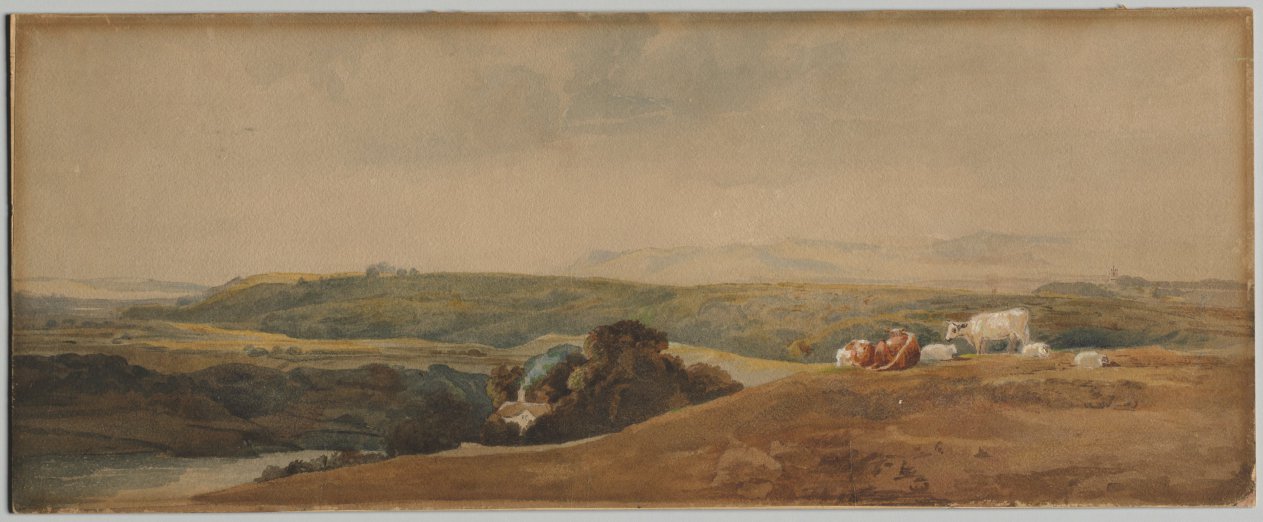
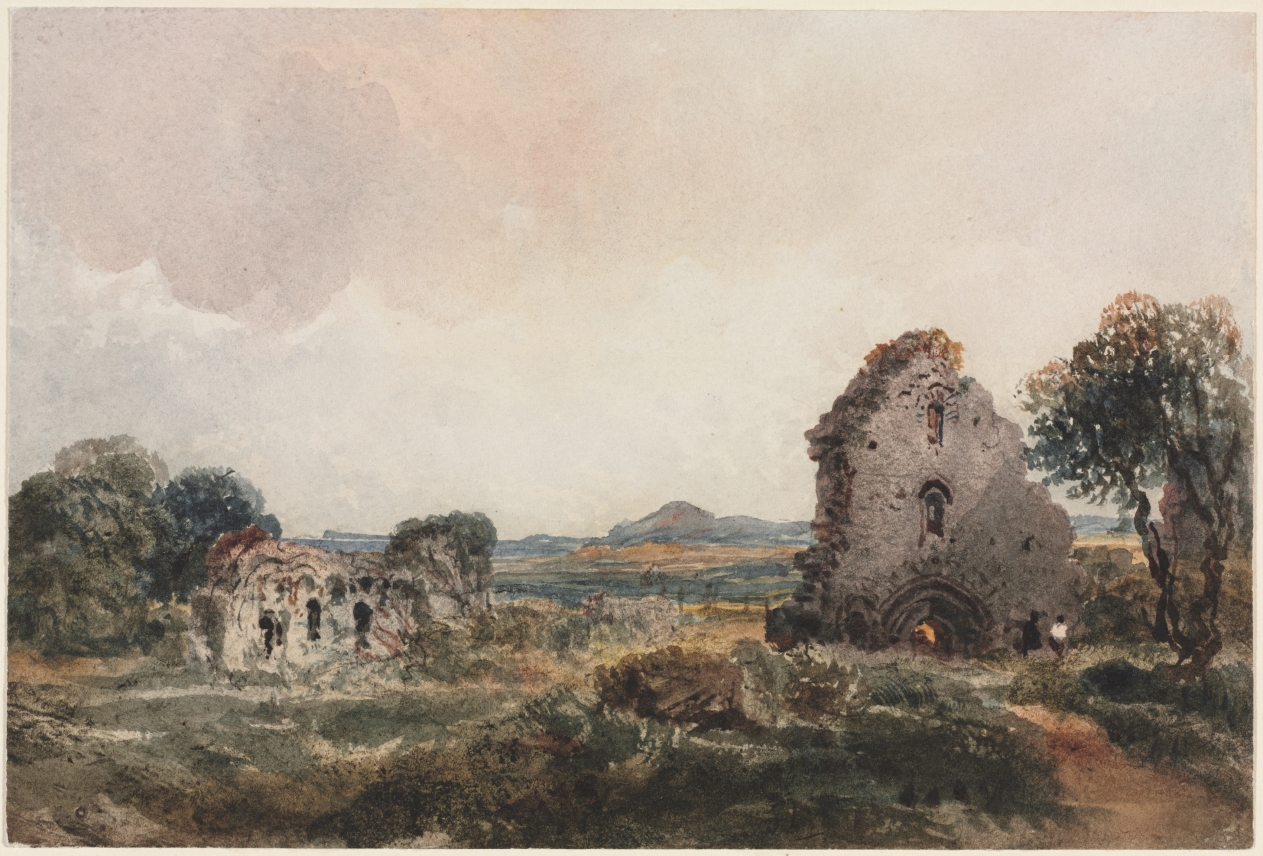
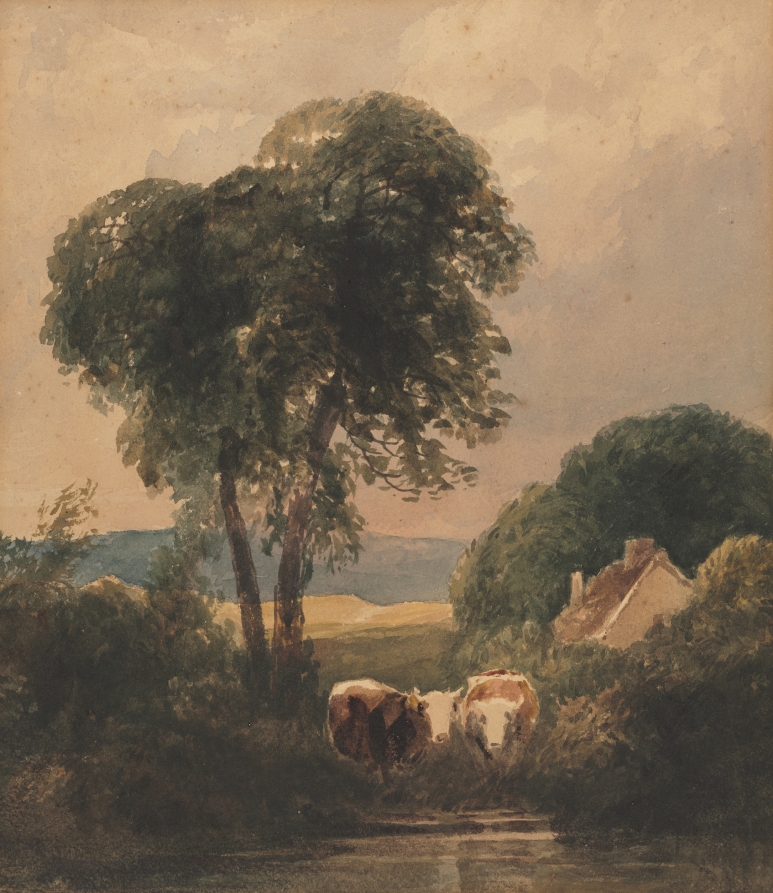
It is difficult to name one single work as Peter De Wint's "most famous". He was a prolific painter, mainly in watercolours, and his reputation rests on the large body of work he produced, rather than one specific piece. De Wint (1784-1849) is admired for his pure English style and his dedication to depicting the British countryside. He captured the rural scenery and agricultural life of England, particularly in Lincolnshire and other areas. Although he exhibited at the Royal Academy, he did not achieve widespread public recognition during his lifetime. His work was more appreciated by fellow artists and collectors who admired his skill and his ability to capture the atmosphere of the English countryside. After his death, his reputation grew, and he is now considered one of the great English watercolourists. His works are held in many public and private collections.What should I know about Peter De Wint's prints?
Peter De Wint (1784-1849) was a painter known for his watercolours of the English countryside. While he was not a printmaker himself, some of his works were reproduced as prints after his death. These prints were typically made using engraving or mezzotint methods. Mezzotint, in particular, was a popular technique for reproducing watercolour paintings, as it allowed for subtle tonal gradations. The prints after De Wint's work would have made his art accessible to a wider audience, as original watercolours were more expensive. When looking at prints after De Wint, it is important to note that the quality can vary depending on the skill of the engraver and the printing process used. Some prints may be more faithful to the original watercolours than others. Also, the size of the edition can affect the value of a print. Although there is no technical limitation to edition size, most printmakers limit their editions. The edition claim is usually written as a pair of numbers on the left bottom margin of the print. The title of the print is written in the middle of the bottom margin, and the signature is on the right.What style or movement did Peter De Wint belong to?
Peter De Wint (1784-1849) is usually associated with British watercolour painting and the Picturesque movement. The Picturesque was less a formal group than a shared aesthetic sensibility. It valued natural scenery, but not necessarily in a purely representational way. The Picturesque, developing from the mid-18th century, emphasised qualities like roughness and irregularity. Theorists articulated these preoccupations, providing a language for artists and the public. Artists like Richard Wilson, who worked in Italy in the 1750s, applied a Claudian vision to British scenery, often modifying it with a more disturbed surface. Alexander Cozens anticipated theoretical texts through both practice and writing, suggesting artists rely less on individual scenes and more on nature's general principles. De Wint's style often involved broad washes and a focus on capturing the atmosphere of the British countryside. His work shares some characteristics with artists interested in the Picturesque; however, he is best understood as an individual talent working within a broader tradition of British landscape art.What techniques or materials did Peter De Wint use?
Peter De Wint was primarily a watercolourist. Before using oil paints, J.M.W. Turner spent at least ten years as a watercolourist, developing techniques he would continue to use in oils. In his earlier watercolours, transparent washes were applied over the white paper, except where highlights were reserved. Greens were achieved by mixing or overlaying washes of brown and blue. Very little underdrawing was used; instead, the mental image was transferred directly to the support. Turner stated he had "no settled process but drives the colour about till he has expressed the ideas in his mind". He produced over 20,000 pencil sketches and watercolours, but few have a direct counterpart in oil. He hardly ever produced a detailed oil sketch, even for commissions. Turner seems to have experimented with nearly all materials and methods. He liked light-toned, absorbent surfaces and honed his skills in applying optical greens and blacks. Some eighteenth-century artists used white grounds to lend luminosity to their oil paintings, but many of Turner's contemporaries used thicker paint and warm-toned grounds up to 1820. After 1820, more British artists tended to use white grounds.What was Peter De Wint known for?
Peter De Wint (1784-1849) was an English painter known for his watercolour art. He is associated with the English school of painting. His style is often compared to that of John Constable; both artists shaped our conceptions of beauty and nature. Constable's naturalistic, vivid greens, for instance, totally upended these formulas, which were based on the use of warm browns in the foreground and pale blues in the far distance. Constable's depiction of the random aspects of the countryside went against accepted standards of composition and the conventions of appropriate subject matter. When Delacroix visited England in 1825, he was very impressed with Constable's animated brushwork and the optical freshness that resulted from his use of broken colour to create tone. On his return, Delacroix reworked his large Massacre at Chios, enlivening the surface of the painting to make it echo its emotive subject.When did Peter De Wint live and work?
Peter De Wint was born in Stone, Staffordshire, on 21 January 1784. He died in London on 30 June 1849. De Wint came from a medical family; his father was a physician of Dutch extraction. He was educated at grammar schools in Penkridge and Shrewsbury. In 1802, he was apprenticed to an engraver in London, but he took drawing lessons from John Varley. By 1806, De Wint was exhibiting at the Royal Academy. Two years later, he was elected an Associate of the Old Watercolour Society, becoming a full member in 1810. Throughout his career, he concentrated on watercolour painting, favouring rural subjects, especially the English Midlands and Lincolnshire. He made frequent sketching tours and developed a close relationship with Lincolnshire, where he often stayed with his wife's family. From 1810, De Wint taught drawing, and from 1818 until his death, he was a popular drawing master at the Royal Military College, Sandhurst. He exhibited regularly, and his work was admired for its naturalism and quiet beauty.Where can I see Peter De Wint's work?
You can find Peter De Wint's work in several public collections. In the United Kingdom, many museums hold examples of his art. These include the Brighton Museum & Art Gallery, Manchester Art Gallery, the National Museums of Scotland (Royal Museum) in Edinburgh, and the Victoria and Albert Museum in London. Outside the UK, several museums in the United States own pieces by De Wint. These are the Metropolitan Museum of Art in New York, the Los Angeles County Museum of Art, the Minneapolis Institute of Arts, the Charles Hosmer Morse Museum of American Art in Winter Park, Florida, the Virginia Museum of Fine Arts in Richmond, and the Wolfsonian in Miami Beach, Florida. You can also find his work at the Royal Ontario Museum in Toronto.Where was Peter De Wint from?
Peter De Wint was English. John Robert Cozens was born in London. His father, Alexander Cozens, was a painter who was said to be the son of Peter the Great and his English mistress, Mary Davenport. George Dance the Elder was an English architect, the official surveyor of the city of London for more than 40 years. His son, Sir Nathaniel Dance, was an English portrait painter born in London. He travelled to Italy to study art, then returned to London to establish a successful portrait studio. He was one of the founding members of the Royal Academy in 1768. Leo von Klenze, a German architect, was born in Schladen, near Brunswick, in Germany. He studied with Friedrich David Gilly in Berlin, and in 1808 he was hired as court architect to Jérôme Bonaparte, the king of Westphalia.Who did Peter De Wint influence?
Peter De Wint seems to have taken lessons from the art of the past. His drawing after Ruisdael's *La Forêt* (The Forest) gave him a foundation for his later works *Drinkstone Park* and likely also inspired *Cornard Wood*. This influence appears in the careful depiction of foliage and grass, in the chiaroscuro effects, and in the overall conception of the painting. De Wint employed compositional schemata from Ruisdael's woodland pictures, including a break in the dense trees, which opens a view toward the horizon, with a rural road leading into the forest, and with traveller and peasant figures doing chores. His *Wooded Landscape with Shepherd and Sheep* also reworks the Ruisdael/Wijnants model.Who influenced Peter De Wint?
Peter De Wint drew lessons from earlier masters. He copied Ruisdael's La Forêt in a drawing; this provided a foundation for his later Drinkstone Park and probably also inspiration for Cornard Wood. This influence appears in the meticulous rendering of the foliage and grass, in the chiaroscuro effects, and in the general conception of the painting. De Wint made use of the compositional schemata of Ruisdael’s wood scenes; he suggested depth by means of a break in the dense mass of trees, opening up a view towards the horizon, with a rural road turning into the forest and with the figures of a traveller and peasants. His Wooded is a reworking of the Ruisdael/Wijnants model as well.Who was Peter De Wint?
Peter De Wint (1784-1849) was an English painter, particularly known for his watercolours. Born in Stone, Staffordshire, his father was a physician of Dutch extraction. De Wint was initially apprenticed to a draughtsman in London. In 1802, he began studying at the Royal Academy Schools, where he met William Hilton, who became his friend and, later, his brother-in-law. De Wint's early work included portraits and religious pictures; however, he devoted himself almost exclusively to painting views. He focused on the scenery of England, especially Lincolnshire and the countryside around his wife's home. He exhibited at the Royal Academy, and was elected an Associate of the Old Water-Colour Society in 1810, and a full member in 1812. De Wint taught drawing, and he travelled around England and Wales in search of subjects for his art. His style is characterised by its broad washes of colour and an interest in capturing the effects of light and atmosphere.Why are Peter De Wint's works important today?
Peter De Wint (1784-1849) was an English painter known mainly for his watercolours and oil paintings showing British countryside. He occupies an important place in the history of British art, particularly for his contribution to landscape painting. De Wint's approach moved away from the established conventions of idealised views. He instead favoured a more direct, naturalistic style. His art captured the changing light and atmosphere of the British seasons. This dedication to representing nature as he saw it, rather than how it was expected to be seen, marks his importance. His influence can be observed in the work of later artists who also sought to capture the subtleties of the natural world. Although his style owes more to 17th-century colour impressionism than analytical Impressionism, De Wint's art helped to shape our conceptions of beauty in the English countryside.