


Isaac de Moucheron
Isaac de Moucheron spent three years in Rome during the late 1690s. While there, he joined the Bentvueghels, a society of Dutch and Flemish artists. His peers gave him the nickname "Ordonnantie" because he was exceptionally skilled at arranging complex compositions. This technical ability allowed him to transition from traditional canvas painting to large-scale interior decorations for Amsterdam townhouses. He frequently collaborated with Jacob de Wit, designing architectural frames that surrounded ceiling paintings.

Biography
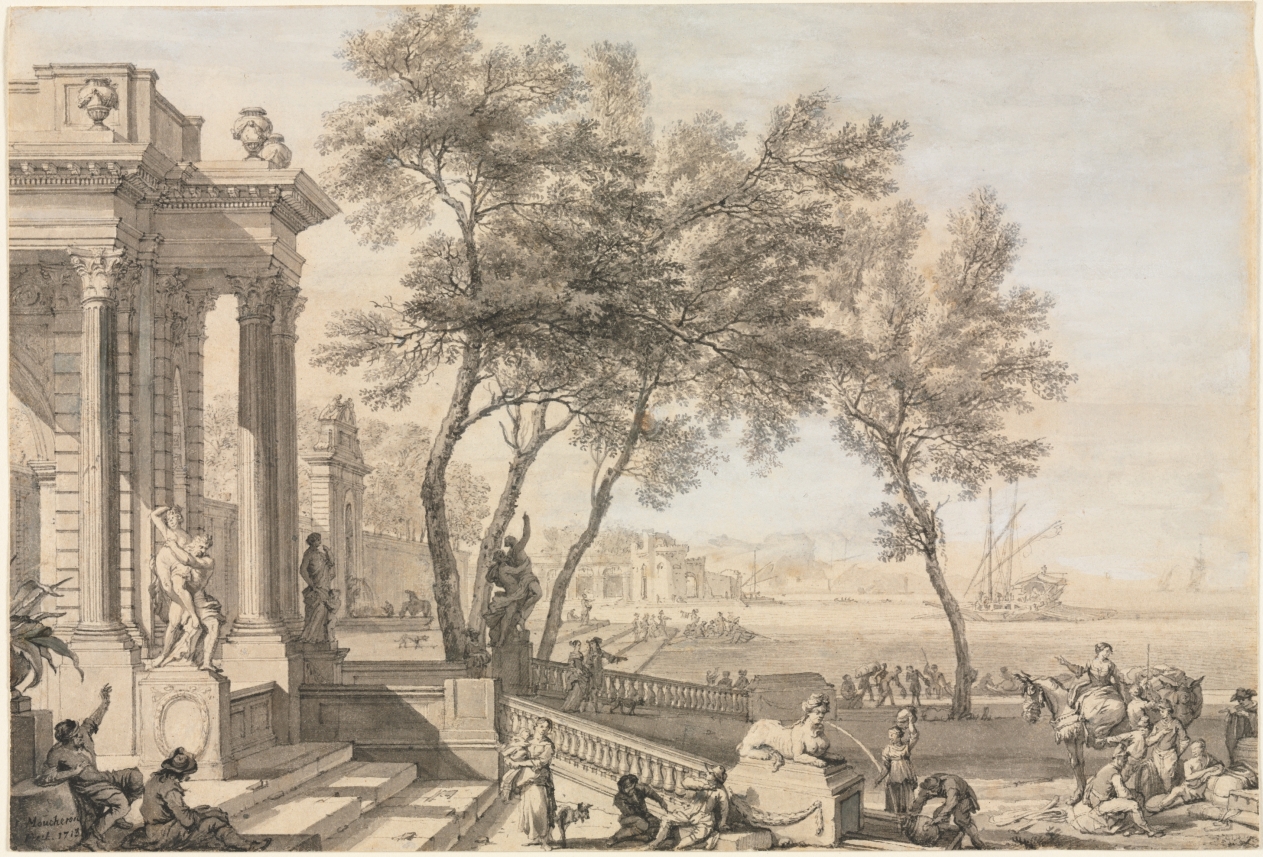
His style defines the Dutch Italianate movement of the early 18th century. Unlike earlier Dutch masters who focused on local terrain, Moucheron favoured idealised scenes of the Roman Campagna. Works like Landscape with a Formal Garden and A Capriccio of Classical Buildings demonstrate his interest in order. He used precise perspective to integrate statues and fountains alongside grand porticos. His watercolours and sketches often functioned as blueprints for physical garden designs or wall hangings.
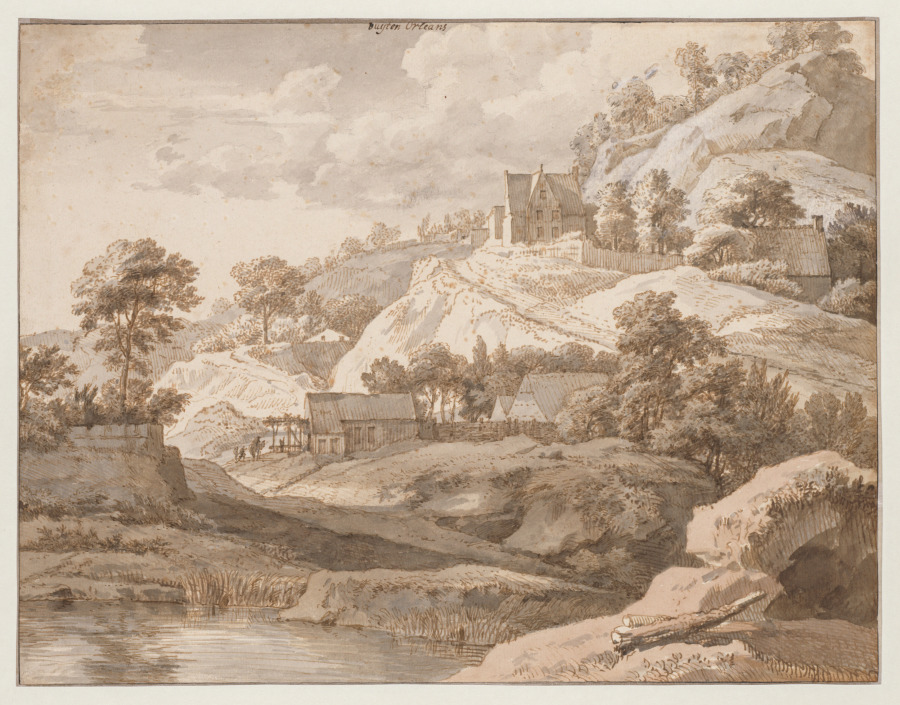
Modern collectors value the sense of space and structure in his work. His drawings, such as Gezicht op het kasteel van Bentheim, offer a clean aesthetic that fits well in contemporary interiors. The combination of classical architecture and soft greenery provides a calm atmosphere. These prints provide a window into the era of the Enlightenment, where nature was viewed through a lens of reason and symmetry.
Notable Works
Tap to view larger.
Next stop
Browse the movements →
Every movement in the collection, from the Renaissance to Pop art.
Isaac de Moucheron prints
Hand-finished archival prints from Isaac de Moucheron's body of work.

Related Artists


Take Isaac de Moucheron home.
See all Isaac de Moucheron prints →Frequently Asked Questions
When was Isaac de Moucheron born?
Isaac de Moucheron was born in 1667 and died in 1744.What is Isaac de Moucheron known for?
Isaac de Moucheron is known for isaac de Moucheron was an 18th-century Dutch master known for his structured Italianate landscapes and grand architectural capriccios.