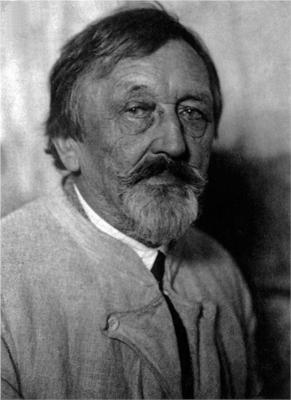
Hermann Struck
Hermann Struck was the foremost technical expert of his generation. In 1908, he published "Die Kunst des Radierens" (The Art of Etching), which became the definitive manual for the medium. He personally instructed major figures like Marc Chagall and Lovis Corinth in the technicalities of the copper plate. Struck was a strictly observant Jew who balanced his secular success in Berlin with his religious identity.

Biography
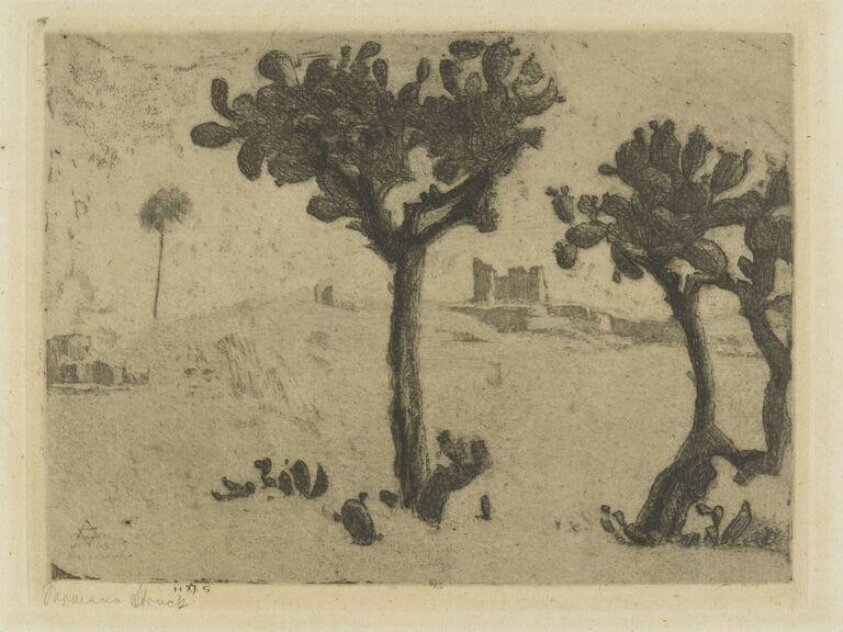
Struck focused on the human face and the physical weight of experience. His portraits, such as Sitzender Jude and Tired Old Woman, use precise lines to record specific personalities. He often worked with drypoint and etching to create textures that suggest age. His travels to the Middle East introduced new subjects to his work. In Yemenite Jew, he captured specific dress and features with documentary accuracy.
Modern collectors value Struck for his technical skill and his honest portrayal of identity. His prints offer a direct connection to early twentieth-century portraiture. The works do not rely on colour to convey emotion. They use the stark contrast of ink on paper to create a sense of presence. These etchings suit contemporary interiors that favour monochromatic art.
Notable Works
Tap to view larger.
Next stop
Browse the movements →
Every movement in the collection, from the Renaissance to Pop art.
Frequently Asked Questions
When was Hermann Struck born?
Hermann Struck was born in 1876 and died in 1944.What is Hermann Struck known for?
Hermann Struck is known for hermann Struck was a master etcher and teacher to Marc Chagall, known for his precise and empathetic portraits of Jewish life in the early twentieth century.