



Filippo Brunelleschi
Filippo Brunelleschi lost a competition in 1401 and, in losing it, changed the direction of Western art. The contest was for the bronze doors of the Florence Baptistery. Both he and Lorenzo Ghiberti produced panels depicting the Sacrifice of Isaac; the judges found themselves unable to separate the two and suggested they share the commission. Brunelleschi refused. He walked away from the project entirely, left Florence with the sculptor Donatello, and spent the next years in Rome studying ancient ruins with an obsessive precision that nobody had brought to the task before.
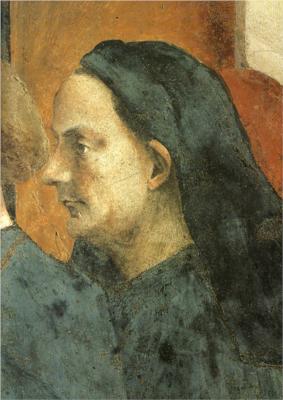
Biography
Born in Florence in 1377[1], he had trained as a goldsmith and earned his master's qualification in 1398. The Rome years transformed him into something harder to categorise. Between 1415 and 1420, back in Florence, he conducted a series of experiments in linear perspective, creating demonstration paintings of Florence landmarks with geometrically calculated scale relationships. The technique he codified governed pictorial depictions of space for the next four centuries.
In 1420, he began the project he is remembered for: the dome of Florence Cathedral. The octagonal base measured almost 42 metres in diameter, at a height of more than 80 metres, and had to be raised without the flying buttresses that Gothic architecture would have required. His solution — a double shell, herringbone brick-laying, wooden tension rings acting as hoops — was so outside existing practice that he kept parts of it deliberately obscure to prevent competitors from copying or undercutting him. The dome was consecrated in 1436.
In the years around the dome, he also built the Ospedale degli Innocenti (1419), San Lorenzo Basilica (1421), the Pazzi Chapel (1430), and Santo Spirito (1434). In 1421 he received what is believed to be one of the first patents issued to an individual in European history, for a river transport vessel. He died in Florence on 15 April 1446[1] and was buried in the cathedral beneath the dome he had made possible.
Timeline
- 1377Born in Florence. He trained as a goldsmith.
- 1398Earned his master's qualification as a goldsmith.
- 1401Lost the competition for the bronze doors of the Florence Baptistery to Lorenzo Ghiberti; he refused to share the commission.
- 1401Left Florence with Donatello and spent several years in Rome studying ancient ruins.
- 1415Conducted experiments in linear perspective, creating demonstration paintings of Florence landmarks.
- 1419Began building the Ospedale degli Innocenti.
- 1420Began work on the dome of Florence Cathedral.
- 1421Began building San Lorenzo Basilica.
- 1421Received a patent for a river transport vessel.
- 1430Began building the Pazzi Chapel.
- 1434Began building Santo Spirito.
- 1436The dome of Florence Cathedral was consecrated.
Notable Works
Tap to view larger.
Next stop
Browse the movements →
Every movement in the collection, from the Renaissance to Pop art.
Frequently Asked Questions
How did Filippo Brunelleschi die?
Filippo Brunelleschi died in Florence on 15 April 1446[1]. He was buried in the cathedral beneath the dome that he had designed.What is Filippo Brunelleschi known for?
Filippo Brunelleschi is primarily known for designing and constructing the dome of Florence Cathedral, a feat of engineering that was completed in 1436. He also developed principles of linear perspective that influenced painting for centuries. In addition, he designed other buildings such as the Ospedale degli Innocenti, San Lorenzo Basilica, the Pazzi Chapel, and Santo Spirito.What was Filippo Brunelleschi's art style?
Brunelleschi's style is characterised by his innovative use of linear perspective and his departure from Gothic architectural norms. His architectural designs, such as the dome of Florence Cathedral, demonstrated a departure from existing practices. He also incorporated elements inspired by his study of ancient Roman ruins.When did Filippo Brunelleschi die?
Filippo Brunelleschi died in 1446[1] at the age of 69.Who was Filippo Brunelleschi?
Filippo Brunelleschi was a Florentine goldsmith and architect of the early Renaissance, best known for designing the dome of Florence Cathedral. He trained as a goldsmith, earned his master's qualification in 1398, and later developed an interest in ancient Roman ruins. His studies in Rome influenced his later architectural innovations.
Sources
Editorial draws on the following primary and tertiary references for Filippo Brunelleschi.
- [1] wikipedia Wikipedia: Filippo Brunelleschi Used for: biography, birth dates, death dates, identifiers, movement attribution, nationality.
- [2] book Horst Woldemar Janson; Anthony F. Janson, A Basic History of Art Used for: biography.
- [3] book Horst Woldemar Janson; Anthony F. Janson, A Basic History of Art Used for: biography.
- [4] book E. H. Gombrich, The Story of Art - 16th Edition Used for: biography.
Editorial overseen by Solis Prints. Sources verified 2026-09-02. Click a source for details, or hover over [N] in the page above to preview.
Editorial standardsMethodologyCorrectionsAI disclosureAbout the editorial team