

Skip to content Loading

Buy any 3 full-price artworks and save 15%

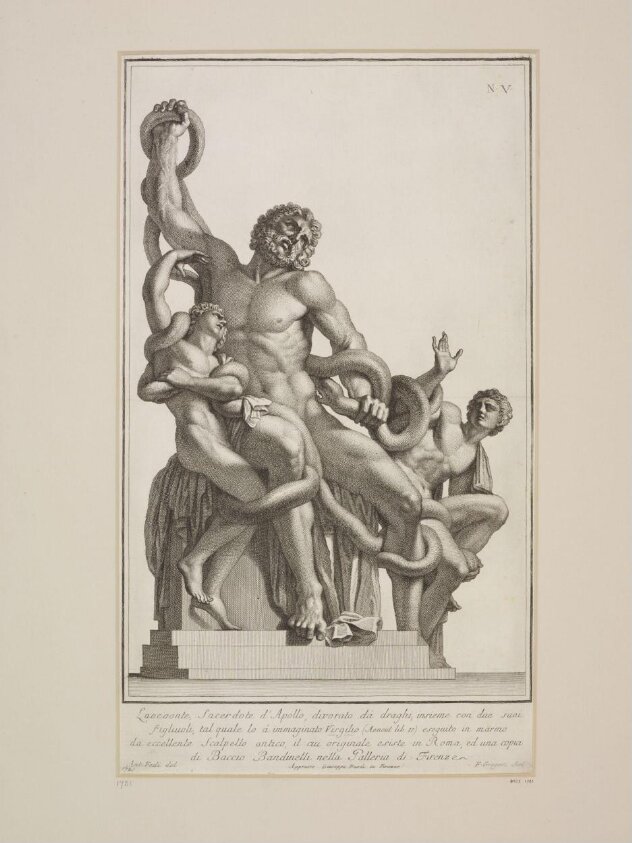
Laocoon (second half 18th - early 19th century) by Ferdinando Gregori
Holy Family with Attending Cherubs by Ferdinando Gregori
The Holy Family with a Sack by Ferdinando Gregori
Baccanale by Ferdinando Gregori
Saint Sebastian Tied to a Tree by Ferdinando Gregori
Stoning of S. Stephen by Ferdinando Gregori
The Sleep of Venus by Ferdinando Gregori
Le Parche by Ferdinando Gregori
1743–1804 · Italian

Ferdinando Gregori

Ferdinando Gregori operated at the intersection of scientific precision and classical art in eighteenth-century Florence. While many engravers of his era focused on original compositions, Gregori gained fame for his technical translations of Renaissance and Baroque masterpieces. He spent years refining plates based on the works of Lodovico Cardi, known as Cigoli, whose anatomical studies were once prized by Galileo. This connection allowed Gregori to bring a rigorous, almost mathematical clarity to his copperplate engravings.

Biography

Gregori utilised a refined burin technique to create depth without relying on heavy cross-hatching. His work on Le Parche and The Sleep of Venus demonstrates a mastery of soft tonal transitions. He prioritised the structural integrity of the human form, as seen in Saint Sebastian Tied to a Tree. By focusing on the interplay of light and shadow, he gave his prints a sculptural quality. His version of the Stoning of S. Stephen shows how he managed complex group dynamics through precise line work.

Modern collectors value Gregori for his ability to bridge the gap between historical documentation and fine art. His prints, such as the Baccanale, offer a window into the aesthetic preferences of the Grand Ducal court in Tuscany. These works provide a sense of classical order that fits well in contemporary interiors. The monochrome palette of his engravings ensures they remain versatile pieces for home galleries.

Next stop

Browse the movements →

Every movement in the collection, from the Renaissance to Pop art.

Frequently Asked Questions

  • When was Ferdinando Gregori born?
    Ferdinando Gregori was born in 1743 and died in 1804.
  • What is Ferdinando Gregori known for?
    Ferdinando Gregori is known for ferdinando Gregori was a master Florentine engraver who translated Renaissance masterpieces into precise copperplate prints, focusing on anatomical accuracy and sculptural light.

Keep exploring

Your cart
Rated 4.6 on Judge.me
Your cart is empty
Have an account? Log in to check out faster.
Continue shopping Continue shopping
Cart total £0.00 GBP
Product image Product information Quantity Product total