



Eugène Girardet
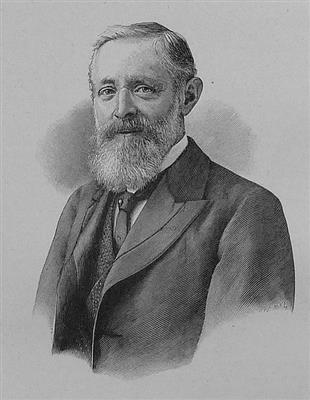
Eugène Girardet came from an entire family of artists. His father Paul was an engraver of some distinction, his siblings Jules, Léon, Paul Armand, Théodore, and Julia all made careers in the visual arts, and the household in Paris operated as an informal training ground long before he enrolled at the École des Beaux-Arts. There he entered Jean-Léon Gérôme's studio, a decisive encounter: Gérôme sent him to North Africa in 1874[1], and the experience redirected everything.
Biography
Girardet made eight trips to Algeria after 1879[1], returning repeatedly to the desert oases of Biskra, El Kantara, and Bou Saâda. What distinguished him from many contemporaries was a particular interest in nomadic and Bedouin life in open country rather than the enclosed domestic and harem scenes that other Orientalists favoured. His paintings show encampments at dusk, figures negotiating desert tracks, the particular quality of light at the desert edge where scrub gives way to sand. The palette is warm but measured, without the overheated exoticism that made some Orientalist painting fall out of fashion.
Back in France he taught at the Académie Julian and became a founding member of the Société des Peintres Orientalistes Français, the professional body that gave the genre institutional standing. A gold medal at the 1900[1] Exposition Universelle confirmed his reputation. He exhibited also at Munich's Glaspalast, reaching collectors across northern Europe.
He died in Paris in 1907[1] at fifty-three, two decades before his daughter Nelly's husband Louis Breguet would become one of the founding figures of French aviation. His work is held in French museums and international collections.
Timeline
- 1853Born into a family of artists; his father, Paul Girardet, was an engraver.
- 1874Sent to North Africa by Jean-Léon Gérôme, an experience that significantly influenced his artistic direction.
- 1879Made the first of eight trips to Algeria, focusing on nomadic and Bedouin life.
- 1900Awarded a gold medal at the Exposition Universelle in Paris, confirming his artistic reputation.
- 1907Died in Paris at 53.
Notable Works
Tap to view larger.
Next stop
Browse the movements →
Every movement in the collection, from the Renaissance to Pop art.
Frequently Asked Questions
What is Eugène Girardet's most famous work?
Eugène Girardet was a French artist, born in Paris in 1853[1], who gained recognition for his Orientalist paintings. He came from a family of artists; his father was the engraver Paul Girardet, and his siblings also pursued artistic careers. Girardet travelled extensively in North Africa and the Middle East, visiting Algeria, Morocco, Tunisia, and Palestine. These travels provided him with subject matter for his paintings, which often depicted scenes of daily life, landscapes, and religious practices in these regions. Although it is difficult to name one single "most famous" work, Girardet's paintings of North Africa are among his best-known. These works capture the atmosphere and light of the region, and they reflect the artist's interest in ethnographic detail. Girardet exhibited regularly at the Salon in Paris, and his works were popular with collectors during his lifetime. He died in 1907[1].What should I know about Eugène Girardet's prints?
When considering Eugène Girardet's prints, it's useful to know some basic print terminology. Original prints, such as woodcuts, engravings, etchings, or lithographs, are produced by hand by the artist, who creates the artwork directly on the plate, block, or stone. Each print is considered an original because of this direct involvement. These are often sold in specialist galleries. Offset reproductions, also known as posters, are created through photochemical means. Giclée prints are fine art prints made using inkjet technology. Canvas transfers involve transferring an image onto canvas to give it the appearance of a painting. The Professional Art Dealers Association of Canada defines an original print as an image conceived and executed solely as a print by the artist, usually in a numbered and signed edition. Each print is individually inked and pulled, making it a 'multi-original' medium, with the artist determining the edition size. A reproduction, on the other hand, is a copy of artwork originally created in another medium, typically made using photomechanical methods.What style or movement did Eugène Girardet belong to?
Eugène Girardet (1853[1]-1907[1]) was a French Orientalist painter. Orientalism was not a formal movement; instead, it describes the fascination of Western artists with the Middle East and North Africa during the 19th century. Girardet followed in his family's artistic tradition. Several of his brothers, including Jules, Paul, and Léon, were also painters. Eugène studied at the École des Beaux-Arts in Paris, training with Jean-Léon Gérôme, a prominent Orientalist. Girardet travelled extensively in North Africa, particularly Algeria, Morocco, and Tunisia. These travels provided him with first-hand experience of the region's cultures, which he then depicted in his paintings. His works often feature scenes of daily life, religious practices, and local architecture. He aimed to represent the people and places he encountered with accuracy. Girardet’s paintings were popular with European audiences, who were eager to see images of these regions. He exhibited regularly at the Salon in Paris, receiving several awards for his contributions.What techniques or materials did Eugène Girardet use?
Eugène Girardet (1853[1]-1907[1]) was a French Orientalist painter known for his depictions of North Africa and the Middle East. He employed a range of techniques and materials suited to capturing the light and atmosphere of these regions. Girardet primarily worked in oils on canvas. This allowed him to create detailed and realistic scenes, building up layers of colour to achieve luminosity. He was skilled in observational drawing, which provided a solid foundation for his paintings. Girardet also made use of watercolour, particularly for smaller works and studies done en plein air. Watercolour allowed him to quickly capture fleeting effects of light and shadow. Girardet's technique involved careful attention to detail, especially in his rendering of architecture, clothing, and the human figure. He often used photographs as reference material, which aided in his accuracy. He travelled extensively throughout Algeria, Morocco, Tunisia, and Palestine, directly observing the people, customs, and environments that he depicted. These travels provided him with first-hand knowledge that he translated into his art.What was Eugène Girardet known for?
Eugène Girardet (1853[1]-1907[1]) was a French Orientalist painter, one of several artists in the Girardet family. He is best known for his paintings depicting scenes of North Africa and the Middle East. Girardet travelled extensively to Algeria, Morocco, Tunisia, and Palestine. These travels provided him with first-hand source material for his compositions. He often depicted scenes of daily life, religious practices, and historical events. His paintings often feature detailed depictions of architecture, clothing, and local customs. Girardet's work gained popularity during his lifetime, and he exhibited regularly at the Salon in Paris. His paintings appealed to a European audience interested in the exoticism of the Orient. Like other Orientalist painters, his work is now analysed for its representation of non-Western cultures, and the colonial context in which it was produced. His paintings are held in numerous public and private collections.When did Eugène Girardet live and work?
Eugène Girardet was born in Paris on 31 May 1853[1]. He died there on 17 May 1907[1]. Girardet came from a family of Swiss artists who had settled in France. He was a painter and Orientalist; these artists depicted Middle Eastern and North African scenes. Girardet studied at the École des Beaux-Arts, and he travelled widely in Algeria, Morocco, Tunisia, and Palestine. He is known for his detailed depictions of daily life, architecture, and people in these regions. Girardet exhibited his works regularly at the Salon in Paris; he gained recognition for his skill in capturing the light and atmosphere of the Middle East. His paintings are held in collections around the world.Where can I see Eugène Girardet's work?
Eugène Girardet produced many Orientalist paintings, and examples of his work are held in several public collections. In France, the Musée d'Orsay holds Girardet's 1898[1] oil on canvas, *Le Soir, Biskra*. The Musée des Beaux-Arts de Nantes has his painting *Arab Encampment*. The Musée Baron Martin, in Gray, France, possesses Girardet's *Jewish Wedding in Algeria*. Other European museums include the Museo Nacional de Bellas Artes, in Buenos Aires, which has on display Girardet's oil painting *Pilgrims Going to Mecca*. The Leighton House Museum, in London, owns Girardet's watercolour *An Interesting Story*. Girardet's paintings occasionally appear at auction. These sales are listed in art indexes such as Artnet. Catalogues raisonnés are not known to exist, so tracking Girardet's complete output is difficult.Where was Eugène Girardet from?
Eugène Girardet was a French artist, born in Paris on 31 May 1853[1]. He came from a family of Swiss artists who had relocated to France. His father was Paul Girardet, an engraver, and his brothers Jules, Léopold, and Benjamin were also artists. Girardet specialised in Orientalist scenes, particularly those of North Africa and the Middle East. He travelled extensively to these regions, documenting the local cultures and daily life through his paintings. His travels included multiple trips to Algeria, Morocco, Tunisia, and Egypt. Girardet's artistic training began in the family workshop, and he later studied at the École des Beaux-Arts in Paris under Jean-Léon Gérôme. His work gained recognition during his lifetime, and he exhibited regularly at the Salon in Paris, receiving several awards. Girardet died in Paris on 19 February 1907[1].Who did Eugène Girardet influence?
Eugène Girardet's artistic influence is not well documented. However, his career coincided with a period of significant change in French sculpture, particularly regarding the appreciation of classical and Renaissance art. Sculptors like Joseph-Antoine Romagnesi and Antoine-Louis Barye were exploring new directions in classicism, moving beyond the styles of Canova and Thorvaldsen. These artists drew inspiration from Greek sculptures like the Elgin Marbles, seeking a more direct connection to nature and a departure from abstract idealism. Girardet's contemporaries, such as David d’Angers and James Pradier, also engaged with classical ideals in their work. They created powerful figures inspired by sculptures like the Theseus and the Illisos. This period saw a broader revisionary movement in sculpture, with artists reinterpreting classical forms and techniques. While Girardet's specific impact on these developments remains unclear, he worked within a milieu where artists were actively redefining classical sculpture.Who influenced Eugène Girardet?
Eugène Girardet's artistic development occurred in a milieu influenced by both classical art and contemporary trends. J. F. Giraud, who assembled a collection of antiquities and casts, provided the young Girardet with early exposure to classical qualities. Giraud assisted Emeric-David in formulating ideas that insisted on a balanced study of nature and antique art. This signalled a reluctance to pursue abstract idealism, contrasting with Quatremère’s dogma. Figures such as Jean Goujon and Glycon were also influential. Emeric-David considered Goujon and Moitte to be rivals of Glycon. Goujon, in particular, was seen as battling with Phidias in his Caryatids. This suggests that Girardet's influences included a blend of classical ideals and a French artistic tradition that saw itself in dialogue with antiquity.Why are Eugène Girardet's works important today?
Eugène Girardet (1853[1]-1907[1]) was a French Orientalist painter; he is remembered today for his detailed depictions of North Africa and the Middle East. Born into an artistic family, Girardet travelled extensively, particularly in Algeria, Morocco, Tunisia, and Palestine. Girardet's importance lies in his meticulous documentation of daily life, architecture, and cultural practices in these regions during the late 19th century. His paintings offer a window into a world undergoing significant transformation due to European colonialism and modernisation. He captured scenes of bustling marketplaces, religious ceremonies, and quiet domestic settings, providing valuable visual records of societies and customs. His work is appreciated for its attention to detail and ethnographic value. Girardet’s paintings are often used by historians and cultural researchers seeking to understand the social and cultural contexts of the regions he depicted. His artistic skill, combined with his interest in accurately portraying the people and places he encountered, makes his work a significant resource for understanding this period.How did Eugène Girardet die?
Eugène Girardet died in Paris in 1907[1].
Sources
Editorial draws on the following primary and tertiary references for Eugène Girardet.
- [1] wikipedia Wikipedia: Eugène Girardet Used for: biography, birth dates, death dates, identifiers, movement attribution, nationality.
- [2] book Harding, James, Artistes pompiers : French academic art in the 19th century Used for: biography.
- [3] book Brodskaya Nathalia, Brodskaya Nathalia - Symbolism Used for: biography.
- [4] book Post-impressionism : cross-currents in European painting Used for: biography.
Editorial overseen by Solis Prints. Sources verified 2026-08-29. Click a source for details, or hover over [N] in the page above to preview.
Editorial standardsMethodologyCorrectionsAI disclosureAbout the editorial team