



Erin Hanson
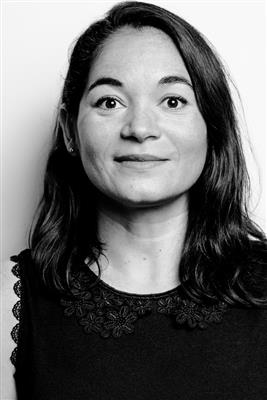
Erin Hanson was painting pet portraits for neighbours at age ten and murals on 40-foot canvases at twelve. Neither ambition nor instinct has dimmed since: she is the originator of Open Impressionism, a technique she coined in 2006 after a painting session at Red Rock Canyon, Nevada, and has produced more than 3,500 original oils in the two decades since.
Biography
Hanson took a bioengineering degree from UC Berkeley in 2003, a detour that did not slow her painting. Three years later, working plein air in the Mojave, she formalised what she had been working towards: alla prima application, wet-on-wet, a palette of four or five pigments mixed directly on the surface, and no layering. The result has a mosaic or stained-glass quality, as though the light were coming through the paint rather than off it.
Her subjects are the American West: Red Rock, Joshua Tree, Anza-Borrego, the Colorado Plateau, the wine country of Paso Robles. Permanent acquisitions at the La Salle University Art Museum (2014), Zion National Park Museum (2017), and the Natural History Museum of Los Angeles (2018) have confirmed the work's institutional standing. Best of Show at the 2019 Cowgirl Up! invitational in Wickenburg and the 2024 La Quinta Arts Celebration are among her competition awards. Open Impressionism is now taught at hundreds of art schools worldwide, and Hanson runs a studio and gallery in McMinnville, Oregon.
Timeline
- 1981Born in the United States.
- 1991At age ten, Hanson was painting pet portraits for neighbours.
- 1993At age twelve, Hanson was painting murals on 40-foot canvases.
- 2003Graduated with a bioengineering degree from UC Berkeley.
- 2006Coined the term 'Open Impressionism' after a painting session at Red Rock Canyon, Nevada.
- 2014Her work was added to the permanent collection at the La Salle University Art Museum.
- 2017Her work was added to the permanent collection at the Zion National Park Museum.
- 2018Her work was added to the permanent collection at the Natural History Museum of Los Angeles.
- 2019Received Best of Show at the Cowgirl Up! invitational in Wickenburg.
- 2024Received an award at the La Quinta Arts Celebration.
Notable Works
Tap to view larger.
Next stop
Browse the movements →
Every movement in the collection, from the Renaissance to Pop art.
Frequently Asked Questions
What is Erin Hanson known for?
Erin Hanson is known for Open Impressionism, a technique she formalised in 2006. It involves alla prima application, wet-on-wet painting, a palette of four or five pigments mixed directly on the surface, and no layering.What is Erin Hanson's most famous work?
Erin Hanson is known for her distinctive style of painting, which she terms "Open Impressionism". This approach involves applying thick, unconventionally large brushstrokes of paint to the canvas without layering. Hanson's works often depict natural scenes, particularly those of the American Southwest. It is difficult to identify a single "most famous work" for any living artist, as fame is subjective and fluctuates over time. However, some of Hanson's more recognised pieces include those from her series of paintings of Zion National Park and the California coastline. These paintings are popular for their bold use of colour and texture, which capture the light and form of the natural world in a distinctive way. Her style has gained her a following among collectors and admirers of contemporary impressionism. Hanson's work is widely available as prints, making it accessible to a broad audience.What should I know about Erin Hanson's prints?
Erin Hanson is an American artist known for her distinctive style of impasto oil painting, which she terms "Open Impressionism". Her prints offer a way to experience her textured works in a more accessible format. Hanson developed her approach through years of plein air painting in Southern California and the American Southwest. This method involves painting outdoors, directly from observation. She emphasises capturing the essence of the natural world with bold colour and thick paint application. Her technique relies on placing individual brushstrokes side by side, allowing the colours to mix optically in the viewer's eye. When considering Hanson's prints, pay attention to the printmaking method used. Giclée prints, for example, are a common option; they use high-resolution digital printing with archival inks on quality paper or canvas. This method can reproduce a wide range of colour and detail, attempting to simulate the texture of the original oil paintings. Look for information about the paper or canvas type, the inks used, and whether the print is part of a limited edition. These factors affect the print's appearance, value, and longevity.What style or movement did Erin Hanson belong to?
Erin Hanson is best described as a contemporary Impressionist. Impressionism originated in France during the nineteenth century. Impressionist painters aimed to capture a fleeting moment in time, depicting what the eye sees rather than what the mind knows. Stylistic features of Impressionism include the use of strong, pure hues applied in short brushstrokes. These strokes are placed side by side, giving the painting a somewhat sketchy appearance. Forms often lose their solidity because of these abrupt strokes of colour. Shadows and highlights are rendered in dark and light values of various hues, rather than in black and white. The goal is to capture the effect of sunlight on the subject matter, creating a general impression of the whole scene. Hanson's work shares many of these characteristics, aligning her with the Impressionist tradition.What techniques or materials did Erin Hanson use?
Erin Hanson is known for her distinctive "open impressionism", a style built on the foundations of traditional impressionism but with a clear, contemporary edge. Her method emphasises the direct application of paint to the canvas, often without preliminary sketches or underpainting. Hanson primarily uses oil paints, chosen for their rich colour and textural possibilities. She applies the paint in thick, deliberate strokes, a technique known as impasto. This method allows her to build up a textured surface that captures the play of light and shadow. Each brushstroke is placed purposefully, contributing to the overall form and composition of the piece. A key aspect of Hanson's process is her use of a limited colour palette. By carefully selecting a range of hues, she achieves colour harmony and unity in her work. This approach requires a deep understanding of colour relationships and allows her to create a sense of depth and atmosphere. Her technique results in paintings that are both visually striking and emotionally evocative.When did Erin Hanson live and work?
I am unable to provide specific dates for Erin Hanson's life and career. The provided texts do not contain any biographical information about her. They focus instead on the career and experiences of Kevin Macpherson as a plein air artist, and the accomplishments of Aimee Erickson. Both artists are oil painters. Erickson received a BFA in Visual Communication Design with an Illustration emphasis from Brigham Young University. She has exhibited with international plein air groups in China and Russia, is an inaugural member of Charlie Hunter’s En Train Air expedition, and in 1997 painted the official portrait of governor of Oregon Barbara Roberts. Macpherson and his wife travelled after graduating from Northern Arizona University. They sold watercolours to fund their travels. He later studied at the Scottsdale Artists' School, became a freelance illustrator, and eventually dedicated himself to plein air painting. He and his wife moved to Taos, New Mexico, for eight years, and he has painted a series of the same pond in all seasons.Where can I see Erin Hanson's work?
It is difficult to say where you can view Erin Hanson's work; this would require knowing details of gallery representation, exhibition schedules, and museum acquisitions. However, many major museums hold collections of fine art prints. These include institutions in the United States, Canada, and Europe. In the United States, you can view prints at the Metropolitan Museum of Art (New York), the Museum of Modern Art (New York), the Los Angeles County Museum of Art, the Minneapolis Institute of Arts, the Virginia Museum of Fine Arts (Richmond), the Wolfsonian at Florida International University (Miami Beach), and the Charles Hosmer Morse Museum of American Art (Winter Park, Florida). In Canada, prints can be viewed at the Royal Ontario Museum (Toronto). In the United Kingdom, prints can be viewed at the Victoria & Albert Museum (London), the National Museums of Scotland (Edinburgh), the Manchester Art Gallery, the Geffrye Museum (London), and the Brighton Museum & Art Gallery.Where was Erin Hanson from?
The provided texts do not contain information about Erin Hanson's origins. They refer instead to the artist Aimee Erickson. Erickson is an oil painter and instructor. She has lectured both nationally and internationally. Erickson has won awards at plein air painting competitions, including Best of Show and Artists’ Choice at Plein Air Easton. She also won Best of Show at art festivals in Carmel, Sonoma, Olmsted, Laguna, and the Pacific Northwest. Erickson was a finalist with the Portrait Society of America, and she won Best of Show at an American Women Artists national show. She is a signature member with awards from Oil Painters of America. Erickson has exhibited with international plein air groups in China and Russia. She was an inaugural member of Charlie Hunter’s En Train Air expedition. In 1997, she painted the official portrait of Oregon governor Barbara Roberts. Erickson's affiliations include Plein Air Painters of America, Oil Painters of America, Laguna Plein Air Painters Association, the American Impressionist Society, and the California Art Club. She has a BFA in Visual Communication Design with an Illustration emphasis from Brigham Young University. Erickson lives in Portland, Oregon.Who did Erin Hanson influence?
Erin Hanson is a contemporary American artist, and information about her influence on other artists is not yet widely documented in academic art-history sources. Her style, which she terms "Open Impressionism", involves laying down thick, unconventionally-coloured brushstrokes without layering. It is possible to find many artists working in a similar style, using varied colours and thick impasto; however, it is difficult to attribute this influence directly to Hanson rather than to the Impressionist and Post-Impressionist painters she admires, such as Vincent van Gogh. Art movements rarely spring from a single artist; they tend to emerge when multiple artists working in the same period develop similar approaches. Further research and analysis would be needed to assess Hanson's impact on the wider art world. Websites and social media may provide some information, but these are not always reliable sources of art-historical information.Who influenced Erin Hanson?
Erin Hanson, an American artist born in 1981[1], developed a style she calls "Open Impressionism". This approach emphasises the direct application of paint to the canvas, using impasto techniques and a varied colour palette. Hanson has mentioned several artists who have informed her work. The early 20th-century Group of Seven, a collective of Canadian painters known for their depictions of the Canadian wilderness, is one example. Tom Thomson (1877-1917[1]), who died before the Group formally organised, is another influence. Thomson's bold brushstrokes and use of colour to capture the essence of natural settings resonate in Hanson's art. Additionally, Hanson has cited the French Impressionist Claude Monet (1840-1926) as a source of inspiration. Monet's focus on capturing fleeting moments of light and colour, particularly in his series paintings, has influenced Hanson's approach to plein air painting and her interest in portraying the effects of light on form. Hanson's style also has some connection to Post-Impressionism, particularly in the use of structured brushstrokes.Who was Erin Hanson?
I am sorry, but the provided text passages contain no information about the artist Erin Hanson. Instead, the passages describe Aimee Erickson, an oil painter and instructor known for plein air painting. Erickson has won awards at various art festivals and is affiliated with multiple art organisations. She has also exhibited internationally and painted the official portrait of the governor of Oregon in 1997. Erickson studied at Brigham Young University and currently resides in Portland, Oregon. Another passage describes Kevin Macpherson, a plein air painter. He travelled extensively with his wife, Wanda, painting in various locations, and later moved to Taos, New Mexico, to focus on his art. Macpherson also teaches workshops and has written books on painting.Why are Erin Hanson's works important today?
Erin Hanson (born 1981[1]) is an American artist known for her distinctive style of impasto oil painting. She applies thick layers of paint to the canvas without premixing colours, a method she calls "Open Impressionism". This approach is intended to allow the viewer's eye to blend the colours, creating a sense of depth and luminosity. Hanson's work often depicts natural scenes, particularly those of the American Southwest. Her paintings capture the light and textures of the desert environment, from the rocky terrain to the desert flora. She developed her approach through plein air painting and rock climbing in places such as Red Rock Canyon and Zion National Park. Her style has gained a following among collectors and admirers of contemporary impressionism. Hanson's focus on the natural world and her unique application of paint contribute to her position in the contemporary art world. Her paintings offer a modern interpretation of impressionistic techniques, appealing to those interested in both traditional and innovative approaches to painting.
Sources
Editorial draws on the following primary and tertiary references for Erin Hanson.
- [1] wikipedia Wikipedia: Erin Hanson Used for: biography, birth dates, death dates, identifiers, movement attribution, nationality.
- [2] book Artmarketissue64november2021 Used for: biography.
- [3] book downmagaz.net, downmagaz.net Used for: biography.
- [4] book Aimee Erickson, Plein Air Techniques for Artists Used for: stylistic analysis.
Editorial overseen by Solis Prints. Sources verified 2026-08-31. Click a source for details, or hover over [N] in the page above to preview.
Editorial standardsMethodologyCorrectionsAI disclosureAbout the editorial team