



Emily Carr
- Expressionism
- French modernism
Born in Victoria, British Columbia in December 1871[2], Emily Carr was the second-youngest of nine children; both parents were dead before she turned twenty. She trained in San Francisco, London, and Paris, absorbing Fauvist colour theory at the Académie Colarossi in 1910[2], and returned to Vancouver convinced she had found a new visual language for the Pacific Northwest.
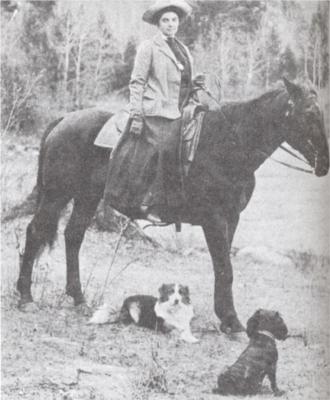
Biography
From around 1913[2], unable to find buyers or peers, Carr ran a boarding house she called the House of All Sorts for over twenty years to survive financially. She painted far less. It was a long, grinding interruption that would have ended most careers, and for a time it nearly ended hers. Recognition came only in 1927, when the National Gallery of Canada mounted a solo exhibition of her work in Ottawa and she travelled east to meet the Group of Seven. Lawren Harris became her closest mentor, and the encounter restarted everything.
The work that defines her reputation centres on her documentation of First Nations communities along the Pacific Northwest coast: remote villages on Haida Gwaii, along the Skeena River, totem poles and longhouses she painted with a sense of urgency, believing she was recording a disappearing world. The Nuu-chah-nulth people gave her the name Klee Wyck, meaning laughing one. Key canvases from this period include The Indian Church (1929[2]) and Big Raven (1931), and The Crazy Stair sold at auction in 2013 for CAD $3.39 million.
After a series of heart attacks from 1937[2], she turned to writing. Klee Wyck, published in 1941, won the Governor General's Literary Award. She died in Victoria in March 1945[2]. A minor planet, 5688 Kleewyck, is named in her honour.
Timeline
- 1871Born in Victoria, British Columbia, in December. She was the second-youngest of nine children.
- 1910Studied at the Académie Colarossi in Paris, absorbing Fauvist colour theory.
- 1913Started running a boarding house called the House of All Sorts to support herself financially.
- 1927The National Gallery of Canada mounted a solo exhibition of her work in Ottawa. She travelled east and met the Group of Seven.
- 1929Painted "The Indian Church".
- 1931Painted "Big Raven".
- 1937Began to experience a series of heart attacks.
- 1941Published "Klee Wyck", which won the Governor General's Literary Award.
- 1945Died in Victoria in March, aged 73.
Notable Works
Tap to view larger.
Next stop
Expressionism →
Explore the artists and ideas of Expressionism.
Emily Carr prints
Hand-finished archival prints from Emily Carr's body of work.


Related Artists


Take Emily Carr home.
See all Emily Carr prints →Frequently Asked Questions
What is Emily Carr known for?
Emily Carr is known for her documentation of First Nations communities along the Pacific Northwest coast. She painted remote villages, totem poles, and longhouses with a sense of urgency, believing she was recording a disappearing world.What is Emily Carr's most famous work?
It is difficult to name a single "most famous" work by Emily Carr; her notability rests on her paintings as a whole, and her status as a Canadian[2] icon. However, several of her works are particularly well known and representative of her mature style. Carr is best known for her paintings of British Columbia's landscape and First Nations culture. She often depicted totem poles in their rainforest settings, as well as the forests themselves. Some of her well-known paintings include *Big Raven* (1931[2]), *Totem and Forest* (1931), and *Indian Church* (1929). These paintings capture the atmosphere of the Pacific Northwest, with its towering trees, misty light, and the powerful presence of First Nations art. Carr's later works became more abstract, focusing on the spiritual qualities of the forest. Paintings such as *Scorned as Timber, Beloved of the Sky* (1939) exemplify this shift, with their dynamic brushstrokes and emphasis on light and movement. Ultimately, Carr's fame comes from her unique vision and her ability to convey a sense of the Canadian wilderness.What should I know about Emily Carr's prints?
Emily Carr is best known for her paintings, but prints were also a part of her practice. Understanding the terminology around prints is important, as the art market uses specific definitions to differentiate "original prints" from reproductions. An original print is conceived as a print, executed solely as a print, and usually produced in a numbered and signed edition. Each print in the edition is an original, created from a plate, stone, screen, or block made for that purpose. The artist inks and pulls each print individually, making it a "multi-original" medium. The artist determines the edition size, and sequential numbering accounts for the prints, such as 12/25. A reproduction is a copy of artwork initially created in another medium, such as painting or watercolour. Photomechanical means usually create it. Numbering and signing a reproduction does not change its essence; it remains a copy, not an original print. Emily Carr's early images of Nuu-chah-nulth villages around Ucluelet in 1899[2] were often pen and ink works, a common medium for commercial illustration.What style or movement did Emily Carr belong to?
Emily Carr is generally associated with Post-Impressionism and Expressionism[2], though her work defies easy categorisation. Carr's exposure to European modernism, particularly French Fauvism and German Expressionism, had a significant effect on her artistic direction. Expressionism, which arose in Germany around 1905[2], sought to convey subjective emotions and inner psychological realities through extreme expressiveness. This resonated with Carr's own spiritual and emotional connection to the British Columbian wilderness. Carr's paintings often display qualities linked to Expressionism: simplified forms, intense colours, and an emphasis on emotional impact over realistic representation. Her depictions of First Nations villages and totem poles, as well as her later forest scenes, communicate a deep, personal response to the landscape. However, Carr's style remained individual, incorporating elements of other movements while retaining her own unique vision.What techniques or materials did Emily Carr use?
Emily Carr is known for her paintings of British Columbia's forests and First Nations culture. Her techniques involved a range of materials and approaches. Carr worked primarily with oil paints on canvas and paper. She also produced sketches and watercolours. Her early training included instruction in traditional watercolour methods, which influenced her later oil painting techniques. She often used thin washes of colour, similar to watercolour washes, in her oil paintings. Carr experimented with different grounds, or priming layers, on her canvases. These included white grounds, which were common at the time, and possibly coloured grounds. The ground affects the luminosity and overall tone of the painting. Carr's application of paint varied. She sometimes used broad, expressive brushstrokes to create a sense of movement and energy. In other works, she applied paint more thinly and smoothly. She also explored different ways of building up layers of paint to create depth and texture.What was Emily Carr known for?
Emily Carr (1871[2]-1945[2]) is known for her paintings of British Columbia's forests and First Nations culture. Initially, Carr studied art in San Francisco, London, and Paris. Her early work showed influences from various European styles, including Fauvism and Post-Impressionism. Around 1910[2], Carr began to focus on subjects closer to home. She travelled extensively throughout British Columbia, visiting remote indigenous villages and sketching the totem poles and other cultural artefacts she encountered. These experiences had a significant impact on her artistic direction. Carr's mature style is characterised by its bold brushstrokes, strong colours, and spiritual intensity. She sought to capture the essence of the Canadian[2] wilderness, conveying its power and mystery. Her paintings often depict towering trees, dense undergrowth, and dramatic skies. Carr also aimed to document and preserve First Nations heritage, recognising its cultural importance. Her work provides a unique perspective on the relationship between nature and culture in British Columbia.When did Emily Carr live and work?
Emily Carr was born on 13 December 1871[2] in Victoria, British Columbia, and she died there on 2 March 1945[2]. Carr is best known for her paintings of First Nations settlements and totem poles, as well as her depictions of the forests of British Columbia. She began her art studies in San Francisco in 1890[2]. From 1899 to 1900, she studied at the Westminster School of Art in London. In 1910, Carr travelled to France, where she encountered Post-Impressionism and Fauvism. This exposure led to a change in her artistic style, as she adopted brighter colours and looser brushwork. Upon her return to British Columbia, she began to paint the indigenous communities and the natural environment that would define her career. During the 1930s, Carr's work gained wider recognition, supported by the artist Lawren Harris of the Group of Seven. She exhibited with the group, further establishing her place in Canadian[2] art history. In addition to her painting, Carr was also a writer, producing several books that offer insights into her life and artistic practice.Who did Emily Carr influence?
Emily Carr's art influenced later artists, but her approach to First Nations subjects has been analysed as part of a colonial process. Carr sought to document First Nations cultural traditions at a time when those traditions faced disruption. She aimed for accuracy in representing totem poles and other cultural objects. She hoped to understand the context and meanings of Native cultural traditions. Carr's method involved both personal interpretation and systematic recording of Native designs. She integrated the formal language of Northwest Coast carving with the surrounding environment, using arabesque lines. Jack Shadbolt stated that Emily Carr initially inspired him. He said that his interest was increased by her powerful evocations of tragedy in the dying culture of abandoned First Nations villages. He saw the romantic grandeur of their remnant standing against the overwhelming wilderness. Shadbolt's journal entry on 24 February 1985, discusses his early contact with Carr and her impact on his artistic interests.Who influenced Emily Carr?
Modernist European painters had an impact on some Chinese oil painters studying in Japan, and these trends may have influenced Emily Carr. Around 1920[2], many young Chinese artists went to Japan to study at places such as the Tokyo School of Fine Arts, or the Kawabata Academy of Painting in Tokyo. While there, they were exposed to modern art movements. They saw Impressionists, Post-Impressionists, Cubists, and Fauves. Japanese printmakers in the nineteenth century made compositional advances using Western perspective. Later, European artists such as Van Gogh and Matisse saw these Japanese prints and were influenced by their use of colour and two-dimensional space. These European artists then became stylistic sources for Japanese and Chinese modernist oil painters. Yasui Sotaro and Umehara Ryuzaburo were instrumental in creating a Japanese version of Post-Impressionism.Who was Emily Carr?
Emily Carr (1871[2]-1945[2]) was a Canadian[2] artist and writer, heavily inspired by the Indigenous peoples of the Pacific Northwest Coast. She is particularly known for her paintings of totem poles and the forests of British Columbia. Born in Victoria, British Columbia, Carr studied art in San Francisco, London, and Paris. Her early work was fairly conventional, but a 1907[2] trip to Alaska, and later travels in British Columbia, exposed her to First Nations art. She began to incorporate these images into her work, documenting villages and creating paintings of totem poles in their original locations. Her style evolved, becoming increasingly expressive and influenced by Post-Impressionism and Fauvism. Carr's work received wider recognition later in her life, and she is now considered a major figure in Canadian art.Why are Emily Carr's works important today?
Emily Carr's art retains importance because of her approach to British Columbia's landscape and First Nations cultures. She captured images of villages and totem poles, often in areas undergoing rapid change due to logging and colonial expansion. Her works provide a visual record of cultural artefacts, although one filtered through her European artistic perspective. Carr's position as an outsider viewing First Nations art is now a subject of debate. While she aimed to celebrate the carvings, some view her work as cultural appropriation, part of a wider history of imperialism. Her images are stylised, and it is not always clear where her interpretation begins and the original artefact ends. Despite these criticisms, Carr's paintings remain significant. They reflect her personal discovery of the art in her region. Her interpretations of nature, influenced by artists like Lawren Harris and the poet Walt Whitman, present a unique vision. Her work encourages discussions about representation, cultural exchange, and the complex relationship between art and history.What was Emily Carr's art style?
Emily Carr's paintings of Northwest Coast Native villages were transformed when she came into direct contact with the French current of artistic primitivism during her studies in Paris. Before this, her first Native images were finished mostly in pen and ink.
Sources
Editorial draws on the following primary and tertiary references for Emily Carr.
- [1] wikidata Wikidata: Q289624 Used for: identifiers.
- [2] wikipedia Wikipedia: Emily Carr Used for: biography, birth dates, death dates, identifiers, movement attribution, nationality.
- [3] book O'Brian, John; White, Peter; , Beyond Wilderness Used for: biography.
- [4] book Penny Olsen, Collecting Ladies: Ferdinand Von Mueller and Women Botanical Artists Used for: biography, stylistic analysis.
- [5] book Getty, Getty - Julia Margaret Cameron Complete Photographs Used for: stylistic analysis.
- [6] book Albers, Patricia, Joan Mitchell : lady painter : a life Used for: biography.
Editorial overseen by Solis Prints. Sources verified 2026-10-02. Click a source for details, or hover over [N] in the page above to preview.
Editorial standardsMethodologyCorrectionsAI disclosureAbout the editorial team