



![A Nubian Girl standing beside the First[?] Cataract of the Nile (ca. 1839) by Émile Prisse d'Avennes](https://cdn.shopify.com/s/files/1/0833/9292/1935/files/artwork-mile-prisse-d-avennes-a-nubian-girl-standing-beside-the-first-cataract-o.jpg?width=480)

Émile Prisse d'Avennes
Few European scholars have embedded themselves in another culture as completely as Émile Prisse d'Avennes. Arriving in Egypt in 1827[2] aged twenty, he learned Arabic, adopted the name Idriss-effendi, dressed as an Egyptian, and spent the next two decades documenting monuments, recording inscriptions, and living among the communities he was studying. The work he produced across that period remains a standard reference in Egyptology.
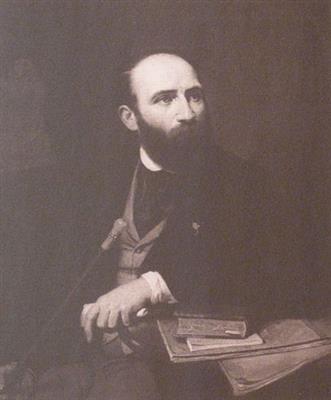
Biography
Prisse was born in Avesnes-sur-Helpe in 1807[2] to a family of some standing. After his father's death he trained in law, then changed course entirely. He was hired by Muhammad Ali Pasha as a civil engineer and used the position as cover for the archaeology that genuinely occupied him. He was meticulous and prolific. His drawings of Egyptian and Arabic monuments were made directly from the sources, with a precision that distinguished them from the more impressionistic work of many contemporaries.
In 1842[2] he published his first major set of architectural illustrations. His "Oriental Album" followed in 1848, containing thirty lithographs of Nile Valley inhabitants. The monumental "Arabic Art: monuments after Cairo" appeared between 1869 and 1877 in a series of large-format chromolithographic plates that captured decorative programmes in buildings that have since been altered or destroyed. His final work, "Histoire de l'art égyptien" (1878), synthesised decades of fieldwork into a comprehensive illustrated history.
Prisse also removed the Prisse Papyrus from Thebes in 1843[2], a document now held at the Bibliothèque nationale de France and considered among the oldest known manuscripts. He died in Paris in 1879[2]. His documentation of Egyptian and Islamic architecture retains value precisely because so much of what he recorded no longer survives intact.
Timeline
- 1807Born in Avesnes-sur-Helpe. He came from a family of some standing.
- 1827Arrived in Egypt at 20. He learned Arabic and adopted the name Idriss-effendi.
- 1842Published his first major set of architectural illustrations.
- 1843Removed the Prisse Papyrus from Thebes. The document is now held at the Bibliothèque nationale de France.
- 1848Published "Oriental Album", containing thirty lithographs of Nile Valley inhabitants.
- 1869Published "Arabic Art: monuments after Cairo" in a series of chromolithographic plates. Publication continued until 1877.
- 1878Published "Histoire de l'art égyptien", a comprehensive illustrated history.
- 1879Died in Paris at 72. His documentation of Egyptian and Islamic architecture retains value.
Notable Works
Tap to view larger.
Where to See Émile Prisse d'Avennes
1 museum worldwide.
-
 5 works
Victoria and Albert Museum
London, United Kingdom
Daily 10:00–17:45, Friday 10:00–22:00 · Free
Next stop
Browse the movements →
Every movement in the collection, from the Renaissance to Pop art.
Related Artists


Frequently Asked Questions
What is Émile Prisse d'Avennes's most famous work?
Émile Prisse d'Avennes (1807[2]-1879[2]) was a French[2] Egyptologist, artist, and writer, who is best known for his documentation of Egyptian art, architecture, and culture. Although it is difficult to name one single most famous work, some of his most important publications include *Oriental Album: Characters, Costumes, and Customs of the Egyptian People* (1840[2]), and *Arab Art* (1877). His most ambitious project was *La Decoration Égyptienne* (1841), a detailed survey of Egyptian decorative arts, which included measured drawings, paintings, and descriptions of temples, tombs, and other monuments. D'Avennes's meticulous documentation and artistic skill made *La Decoration Égyptienne* a valuable resource for scholars and artists interested in ancient Egypt. His work had a significant impact on the development of Egyptology as a discipline, and helped to promote interest in Egyptian art and culture in Europe.What should I know about Émile Prisse d'Avennes's prints?
Émile Prisse d'Avennes (1807[2]-1879[2]) was a French[2] Orientalist artist, writer, and Egyptologist. He is best known for his detailed documentation of Islamic art and architecture in Egypt and the Middle East. Prisse d'Avennes's prints are often reproductions of his original drawings and watercolours. These images were initially created during his travels in the region. He produced several significant publications featuring his artwork, including "Oriental Album" (1851[2]-1869[2]) and "L'Art Arabe" (1877). "L'Art Arabe" is a particularly important work; it contains a wealth of information about Islamic art, architecture, and design. His prints typically depict architectural details, such as mosaics, friezes, and decorative panels. They also include scenes of daily life, portraits of local people, and renderings of Islamic manuscripts. Prisse d'Avennes aimed to accurately record and represent the artistic heritage of the Islamic world. His work is valued for its historical and artistic merit, providing valuable insights into a culture that was little known in Europe at the time. His prints are appreciated for their detail, accuracy, and artistic quality.What techniques or materials did Émile Prisse d'Avennes use?
Without specific documentation of Émile Prisse d'Avennes's methods, we can look to general 19th-century painting techniques. Artists' manuals and encyclopaedias became increasingly common from the 17th century onward. These publications offered instruction on media such as tempera, fresco, miniature painting, oils, enamel, and painting on porcelain. Some also discussed encaustic (hot wax) methods. Oil painting was considered a relatively new method, and preparing the medium was a frequent problem. Many artists mixed nut oil with lead white, thickened in sunlight. To dry a layer of lead white, painters mixed the pigment with oil of turpentine, which quickened drying as it evaporated. For painting on canvas, the material was stretched, smoothed with pumice, sized with glue, and given a double ground. The first ground was coloured with raw umber and red brown; the second, with lead white and carbon black to make grey.What was Émile Prisse d'Avennes known for?
Émile Prisse d'Avennes (1807[2]-1879[2]) was a French[2] Egyptologist, artist, and writer. He is known for his extensive documentation of Egyptian art, architecture, and culture, particularly during the 19th century. Prisse d'Avennes travelled to Egypt several times, beginning in 1826[2]. During these trips, he studied hieroglyphs, surveyed monuments, and collected artefacts. His most significant work is *Histoire de l'art égyptien d'après les monuments, depuis les temps les plus reculés jusqu'à la domination romaine* (1878), a comprehensive survey of Egyptian art. He also produced detailed architectural drawings and reconstructions. These have proved invaluable for scholars. Prisse d'Avennes's work contributed significantly to the growing European interest in Egyptology. His publications helped to disseminate knowledge about ancient Egypt. They also influenced artistic and design trends. His meticulous approach to documentation set a high standard for future Egyptologists.When did Émile Prisse d'Avennes live and work?
Émile Prisse d'Avennes was active in the 19th century. The archaeologist Gaston Maspero, born in Paris in 1846[2], was an expert in Egyptian hieroglyphs by the age of nineteen. At twenty-three, he became professor of Egyptology at the École des hautes études (School of Higher Studies), the graduate school of Paris University. Four years later, he was chosen to fill the chair of Egyptology at the Collège de France in Paris. Maspero first visited Egypt at the age of thirty-one. He served as director of the Antiquities Service and head of the Bulaq Museum from 1881 to 1886. He returned to Egypt to take up his old post as director of the Antiquities Service in 1899, resigning fifteen years later due to failing health. Maspero died in 1916.Where can I see Émile Prisse d'Avennes's work?
Émile Prisse d'Avennes's artwork can be viewed in several public collections. These include the British Museum in London and the Bibliothèque nationale in Paris. Other museums that hold relevant collections are the Musée du Louvre (Paris), the Victoria and Albert Museum[1] (London), and the National Museums of Scotland (Edinburgh). The Musée Guimet and the Musée Cernuschi, both in Paris, also contain related works. The Guimet, or Musée national des Arts asiatiques-Guimet, is located at 6, place d’Iéna, 75116 Paris. The Cernuschi is at 7, avenue Velasquez, 75008 Paris. The Musée Cernuschi holds a diverse collection of early Chinese art. The Royal Ontario Museum in Toronto has relevant holdings, as does the Middle East Culture Centre in Tokyo.Where was Émile Prisse d'Avennes from?
Unfortunately, the provided passages do not contain information about the origins of Émile Prisse d'Avennes. The texts discuss figures such as Auguste Mariette and Gaston Maspero, both connected to Egyptology. Mariette was born in Boulogne-sur-Mer, France, and Maspero was born in Paris, also in France, to Italian parents. The passages also refer to the nationalist interpretations of painters such as Watteau and Poussin, who, despite foreign influences, were claimed as embodiments of the French[2] spirit. Napoleon Bonaparte's invasion of Egypt in 1798, which included a commission of scholars, is mentioned as a boost for Egyptology. However, none of these passages provide details about Émile Prisse d'Avennes's place of birth or nationality.Who did Émile Prisse d'Avennes influence?
Émile Prisse d'Avennes's publications had an impact on historians and thinkers such as Violet-le-Duc, Riegl, and Choisy. His lavish, oversized books, including *L'art arabe d'apres les monuments du Kaire depuis le VIIe siecle jusqu'a la fin du XVIIIe* (1869[2]-1877[2]) and *La décoration arabe* (1887), featured colour plates that emphasised the polychromy of Islamic architectural decoration. These books contained precise measured drawings, plans, and elevations, accompanied by numerous details and ornamental panels. Prisse d'Avennes hoped his work would provide modern decorative arts and architecture with materials to "renounce banality". Prisse d'Avennes documented buildings with natives, turning them into objects for the ethnographic "gaze". He believed the Muslim civilisation of Cairo was created by the Koran, a faithful representation of the aspirations, ideas, and mores of the Semitic races. He considered the differences in style within the works of various races under Muslim law as varied modes of the same art, as all principles inspiring these races came from the same source.Who influenced Émile Prisse d'Avennes?
Jean-Auguste-Dominique Ingres, a painter known for his classicising style, had many students who respected him. Ingres taught, supervised studio work, and involved his best students in his paintings, following the example of his own master, Jacques-Louis David. Ingres's approach to teaching and collaboration suggests the importance of artistic lineage and mentorship in the French[2] art world. Interest in Egyptian art and architecture also played a role in shaping artistic ideas during this period. Antoine-Chrysostome Quatremère de Quincy's essay, "De l'architecture égyptienne," established an understanding of the formation and distinction of Greek architecture that influenced French thought for decades. Julien-David Le Roy's "Ruines" was translated into English by John Soane, indicating a transmission of architectural ideas across countries. Soane adapted Le Roy's ideas when designing a colonnade and dealing with the experience of Egyptian hypostyle halls.Who was Émile Prisse d'Avennes?
Émile Prisse d'Avennes (1807[2]-1879[2]) was a French[2] Egyptologist, artist, and writer. He is known for his studies of Egyptian art, architecture, and hieroglyphs. D'Avennes travelled to Egypt extensively, documenting its monuments and culture. His work aimed to record and interpret Egyptian civilisation. His publications include detailed illustrations and descriptions of Egyptian sites. These resources contributed to the growing field of Egyptology in the 19th century. Egypt's ancient monuments and culture became increasingly popular in Europe after the publication of *Description de l’Égypte*. Jean-François Champollion deciphered the hieroglyphs on the Rosetta Stone, presenting his paper in 1822[2]. D'Avennes's work, along with that of Champollion and others, helped to advance understanding of ancient Egypt. These efforts continue to inform Egyptologists today.Why are Émile Prisse d'Avennes's works important today?
Émile Prisse d'Avennes's works are significant due to their contribution to the study of Islamic art and architecture. His drawings and surveys provide valuable documentation of Egyptian monuments and artistic traditions from the mid-19th century. Prisse d'Avennes's publications, such as "Oriental Album" (1851[2]-1869[2]) and "La Decoration Arabe" (1885), made Near Eastern art more accessible to Western audiences. These works offered detailed visual records of architectural details, decorative patterns, and artistic styles. This documentation is especially important because many of the sites and objects he recorded have since been altered, damaged, or lost. His work also invites consideration of how Western audiences perceive the Near East. Some scholars suggest that understanding contemporary perspectives and aesthetic judgements can make historical monuments more accessible. Prisse d'Avennes's images provide insight into the visual culture of the time, and how it was interpreted by a European artist. His detailed studies of Islamic art contribute to a broader understanding of cultural exchange and artistic traditions.
Sources
Editorial draws on the following primary and tertiary references for Émile Prisse d'Avennes.
- [1] museum Victoria and Albert Museum Used for: museum holdings.
- [2] wikipedia Wikipedia: Émile Prisse d'Avennes Used for: biography, birth dates, death dates, identifiers, movement attribution, nationality.
- [3] book Bénédicte Savoy, Charlotte Guichard, Christine Howald, Acquiring Cultures Used for: biography.
- [4] book Julian Heath, Archaeology Hotspot Egypt Used for: biography.
- [5] book Harding, James, Artistes pompiers : French academic art in the 19th century Used for: biography.
- [6] book Getty, Getty - Antiquity and Photography Early Views of Ancient Mediterranean Sites Used for: stylistic analysis.
- [7] book Getty, Getty - The Ruins of the Most Beautiful Monuments of Greece Used for: biography.
- [8] book Getty, Getty - The Topkapi Scroll Geometry and Ornament in Islamic Architecture Used for: stylistic analysis.
- [9] book Masterpieces of western art : a history of art in 900 individual studies from the Gothic to the present day Used for: biography.
- [10] book Auji, Hala, Printing Arab Modernity: Book Culture and The American Press in Nineteenth-Century Beirut Used for: stylistic analysis.
Editorial overseen by Solis Prints. Sources verified 2026-08-31. Click a source for details, or hover over [N] in the page above to preview.
Editorial standardsMethodologyCorrectionsAI disclosureAbout the editorial team