



Elenore Abbott
Philadelphia produced a remarkable generation of illustrators in the early twentieth century, and Elenore Abbott was among its most imaginative. Trained at the Pennsylvania Academy of Fine Arts, the Philadelphia School of Design for Women, and the Académie des Beaux-Arts in Paris, she brought an Art Nouveau[1] sensibility to subjects, fairy tales, classical adventure stories, wilderness landscapes, that rewarded exactly that kind of decorative intensity.
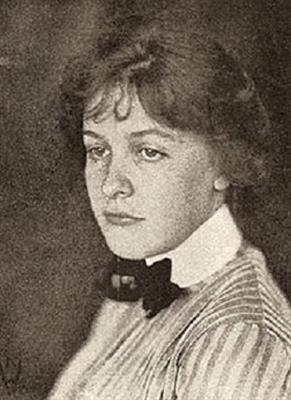
Biography
Born in Lincoln, Maine, in 1875[1], she studied under Howard Pyle at the Drexel Institute, an apprenticeship that shaped her gift for narrative composition. Her illustrations appeared in Harper's Magazine, The Saturday Evening Post, and Scribner's, and she produced editions of Grimm's Fairy Tales, Robinson Crusoe, Kidnapped, and Treasure Island that remained in print for decades. The fairy tale work in particular showed her at her finest: detailed watercolours in which forests have genuine depth and costume is historically observed rather than vaguely period.
She married the lawyer and artist C. Yarnall Abbott in 1898[1] and settled in Rose Valley, Pennsylvania, a utopian arts community south-west of Philadelphia, after 1911. She was a member of The Plastic Club, the Philadelphia women's art organisation, and her practical instincts extended well beyond the studio: in 1928 she helped found the Rose Valley swimming pool, financing her share partly by selling paintings.
Abbott died in 1935[1], her reputation eclipsed by the mid-century shift away from classic illustration. Her work has since been reassessed as a careful and undervalued contribution to the golden age of American[1] book art.
Timeline
- 1875Born in Lincoln, Maine.
- 1898Married C. Yarnall Abbott, a lawyer and artist.
- 1900Studied under Howard Pyle at the Drexel Institute, Philadelphia.
- 1900Began illustrating for Harper's Magazine, The Saturday Evening Post, and Scribner's.
- 1911Settled in Rose Valley, Pennsylvania, after 1911, a utopian arts community south-west of Philadelphia.
- 1928Helped found the Rose Valley swimming pool, financing her share partly by selling paintings.
- 1935Died in 1935, aged 60.
- 1935Illustrated editions of Grimm's Fairy Tales, Robinson Crusoe, Kidnapped, and Treasure Island.
Notable Works
Tap to view larger.
Next stop
Art Nouveau →
Explore the artists and ideas of Art Nouveau.
Related Artists


Frequently Asked Questions
What is Elenore Abbott known for?
Elenore Abbott is known for her illustrations in Harper's Magazine, The Saturday Evening Post, and Scribner's. She also produced editions of Grimm's Fairy Tales, Robinson Crusoe, Kidnapped, and Treasure Island.What is Elenore Abbott's most famous work?
Elenore Abbott (1875[1]-1949) was an American[1] illustrator of children's books and classic literature. While she created artwork for many publications, she is perhaps best known for her illustrations in a 1915[1] edition of Robert Louis Stevenson's adventure novel *Treasure Island*. Abbott's *Treasure Island* illustrations brought a fresh visual interpretation to Stevenson's story. She created numerous colour plates and black-and-white drawings for the book, depicting scenes such as the confrontation between Jim Hawkins and Long John Silver. Her illustrations are characterised by their attention to detail, dramatic compositions, and use of light and shadow. Abbott's style blended realism with a sense of romanticism, capturing the spirit of adventure in *Treasure Island*. Her work on *Treasure Island* was well-received, and the edition became a popular gift item. Abbott also illustrated other classic books, including *Kidnapped*, *Grimm's Fairy Tales*, and *The Arabian Nights*. Although she worked on many projects throughout her career, her *Treasure Island* illustrations remain among her most recognisable and celebrated achievements.What should I know about Elenore Abbott's prints?
When buying Elenore Abbott prints, it is helpful to understand some basics about fine-art printmaking. A print is an image conceived as a print, created solely as a print, usually in a numbered edition, and signed by the artist. Each print in the edition is an original, printed from a plate, stone, screen or block created for that purpose. There is no one original print from which copies are made. Each print is inked and pulled individually; it is a multi-original medium. The number of prints in the edition is decided by the artist, and the sequential numbering provides an accounting for the number of prints in the edition. Each print has a specific number; for example, 12/25 means the edition is 25, and the particular print is number 12. A reproduction, although often called a print, has no relationship to an original print. It is a copy of a work of art conceived by the artist in another medium (painting, watercolour, etc.). The reproduction has usually been made by photomechanical means. Numbering and signing a reproduction does not change its essence; it is still a reproduction of a painting or watercolour, not an original print.What style or movement did Elenore Abbott belong to?
Elenore Abbott (1875[1]-1949) was an American[1] illustrator, painter, and designer. She is associated with the Brandywine School, a style of American illustration that began in the early 20th century. The Brandywine School is not a formal academy or movement. It is named for the Brandywine River valley, near Wilmington, Delaware and Chadds Ford, Pennsylvania. The style is characterised by romantic and idealised imagery, with a focus on historical subjects and literary themes. Illustrators associated with the Brandywine School often worked in a realistic style, but they also used dramatic lighting and composition to create a sense of atmosphere and mood. Howard Pyle, a well-known illustrator and teacher, is considered the founder of the Brandywine School. Abbott studied with Pyle at the Drexel Institute in Philadelphia, and later at his summer school in Chadds Ford. Other artists associated with the Brandywine School include N.C. Wyeth, Frank Schoonover, and Harvey Dunn. Abbott's illustrations often appeared in books and magazines, including *Harper's Monthly*, *Scribner's Magazine*, and *The Saturday Evening Post*. She illustrated works by Robert Louis Stevenson, Sir Walter Scott, and Louisa May Alcott.What techniques or materials did Elenore Abbott use?
Elenore Abbott (1875[1]-1935[1]) was an American[1] illustrator of children's books and magazines. She is known for her work in watercolour, pen and ink, and oil paint. Abbott studied at the Philadelphia School of Design for Women and the Pennsylvania Academy of the Fine Arts, where she was taught by illustrators Howard Pyle and Clifford Grayson. Pyle's influence is particularly apparent in her use of strong compositions and dramatic lighting. She often employed a technique of applying thin washes of watercolour to build up colour and form. This approach allowed her to create luminous effects and capture details. Abbott’s illustrations often featured strong female characters. She used models in costume to create realistic and detailed images. Her work appeared in publications such as *Harper's Magazine*, *The Saturday Evening Post*, and *Scribner's Magazine*. She illustrated books including *Grimm's Fairy Tales* and *Kidnapped*. Her illustrations are characterised by their attention to detail, use of colour, and ability to capture the imagination.What was Elenore Abbott known for?
Elenore Abbott was an American[1] book illustrator, scenic designer, and painter. She is best known for illustrating classic works of children's literature, such as "Grimm's Fairy Tales", "Robinson Crusoe", and "Kidnapped". Abbott's illustrations often featured strong female characters and dramatic scenes, rendered in a realistic style. Abbott studied at the Philadelphia School of Design for Women and the Pennsylvania Academy of the Fine Arts, where she was influenced by illustrators like Howard Pyle. She developed a style characterised by detailed costumes, historical accuracy, and dynamic compositions. Abbott's work appeared in magazines, books, and advertisements, contributing to the golden age of American illustration. Her artwork is admired for its storytelling ability and artistic skill.When did Elenore Abbott live and work?
Elenore Plaisted Abbott was an American[1] illustrator who lived from 1872 to 1939. She studied at the Philadelphia School of Design for Women, and later with illustrators Howard Pyle and William L. Taylor. Abbott became part of Pyle's Brandywine School, a group of artists working in the Brandywine Valley near Wilmington, Delaware. Abbott is known for her illustrations in books and magazines, particularly for children's literature. Her work often appeared in publications such as *Harper's Magazine*, *The Saturday Evening Post*, and *Scribner's Magazine*. She illustrated classic novels, including *Treasure Island*, *Kidnapped*, and *Grimm's Fairy Tales*. She developed a style characterised by realism and attention to detail. Abbott's illustrations brought stories to life for a wide audience. She contributed significantly to the field of early 20th-century American illustration.Where can I see Elenore Abbott's work?
Elenore Abbott's artwork can be viewed in several museums. In the United States, these include the Charles Hosmer Morse Museum of American[1] Art (Winter Park, Florida), the Los Angeles County Museum of Art (Los Angeles), the Metropolitan Museum of Art (New York), the Minneapolis Institute of Arts (Minneapolis), the Museum of Modern Art (New York), the Virginia Museum of Fine Arts (Richmond), and the Wolfsonian at Florida International University (Miami Beach). Abbott's work can also be seen at the Art Institute of Chicago. In Canada, her art is held at the Royal Ontario Museum (Toronto), and the Art Gallery of Nova Scotia (Halifax). United Kingdom locations include the Brighton Museum & Art Gallery, the Geffrye Museum (London), the Manchester Art Gallery, the National Museums of Scotland, Royal Museum (Edinburgh), the Victoria & Albert Museum (London), the Compton Verney Art Gallery and Park (Warwickshire), the London Transport Museum, the Museum of Art + Craft (Ditchling, East Sussex), and the Tunbridge Wells Museum and Art Gallery (Kent).Where was Elenore Abbott from?
Elenore Plaisted Abbott (1875[1]-1935[1]) was an American[1] illustrator, born in Cambridge, Massachusetts. She came from a family with artistic connections; her mother, Elizabeth, was a painter, and her father, Edwin, was an architect. Abbott's early artistic training occurred at the School of the Museum of Fine Arts, Boston. There, she studied with Edmund Tarbell and Frank Weston Benson. Later, she studied with Howard Pyle. Pyle was a significant influence on her development as an illustrator; she attended his summer school at Chadds Ford, Pennsylvania. Abbott is known for her illustrations in books and magazines. These include work for an edition of Robert Louis Stevenson's *Treasure Island* (1911[1]), and illustrations for *Grimms' Fairy Tales*. Her style combines realism with a sense of drama, fitting for adventure stories. She worked in watercolour, oil, and pen and ink, often depicting scenes with strong light and shadow. She lived and worked in Rose Valley, Pennsylvania, after marrying in 1898.Who did Elenore Abbott influence?
Elenore Abbott is not mentioned in the reference passages. Therefore, I cannot provide information about her influence on other artists. The passages discuss the influences of artists such as Macdonald-Wright, Henrietta Shore, and Henry Lee McFee on other artists in the California art scene. Macdonald-Wright influenced Mabel Alvarez, Edouard Vysekal, and Donna Schuster. Henrietta Shore influenced Edward Weston. Henry Lee McFee influenced Edna Reindel and Robert Bentley Schaad. The passages also mention the influence of Rex Slinkard on Nick Brigante, and the influence of Armin Hansen and Hovsep Pushman on George K. Brandriff. Mary Abbott, an Abstract Expressionist, is mentioned as being influential, though often unrecognised due to the male-dominated art world at the time.Who influenced Elenore Abbott?
Elenore Abbott (1875[1]-1949) was an American[1] illustrator of children's books, textbooks, and magazines. She studied at the Philadelphia School of Design for Women and the Pennsylvania Academy of the Fine Arts. Howard Pyle had a significant effect on Abbott's artistic development. She attended Pyle's summer school at Chadds Ford, Pennsylvania. Later, she joined his classes at Drexel Institute in Philadelphia. Pyle emphasised imagination, observation, and historical accuracy. He encouraged students to live their paintings. Abbott adopted Pyle's approach to illustration, including strong compositions and dramatic lighting. Abbott's work also shows the influence of the Brandywine School, a style of American illustration associated with Pyle and his students. The Brandywine artists often depicted historical and literary subjects with a focus on realism and storytelling. Abbott's illustrations for works such as "Grimm's Fairy Tales" (1920[1]) and "Robinson Crusoe" (1920) reflect this influence. She created detailed and imaginative scenes that brought these stories to life for a wide audience.Who was Elenore Abbott?
Elenore Abbott was an American[1] illustrator from Philadelphia who trained at the Pennsylvania Academy of Fine Arts, the Philadelphia School of Design for Women, and the Académie des Beaux-Arts in Paris. She is known as one of the most imaginative illustrators of her generation.
Sources
Editorial draws on the following primary and tertiary references for Elenore Abbott.
- [1] wikipedia Wikipedia: Elenore Abbott Used for: biography, birth dates, death dates, identifiers, movement attribution, nationality.
- [2] book Alfred Frankenstein, After the Hunt _ William Harnett and Other American Still Life Painters, 1870-1900 Used for: biography.
- [3] book Landauer, Susan, The not-so-still life : a century of California painting and sculpture Used for: biography.
- [4] book 1892-1968, Panofsky, Erwin,, Tomb sculpture: four lectures on its changing aspects from ancient Egypt to Bernini Used for: biography, stylistic analysis.
Editorial overseen by Solis Prints. Sources verified 2026-08-29. Click a source for details, or hover over [N] in the page above to preview.
Editorial standardsMethodologyCorrectionsAI disclosureAbout the editorial team