



Edouard Riou
- Orientalist painting
Before photography fixed the public imagination of prehistoric seas and polar ice, Édouard Riou drew them. His illustrations for Jules Verne's early Voyages Extraordinaires, produced across the 1860s and 1870s, defined how an entire generation of readers pictured worlds that no camera could reach.
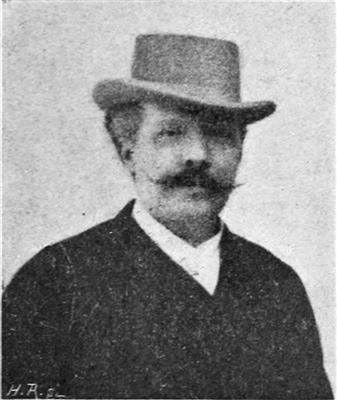
Biography
Riou was born in Saint-Servan, Brittany, in 1833[1] and trained in Paris under two painters of opposite temperament: Charles-François Daubigny, the Barbizon landscapist, and Gustave Doré, the most technically ambitious illustrator of the century. When Pierre-Jules Hetzel needed an artist for Verne's *Five Weeks in a Balloon* (1865[1]), Riou was the choice, and the partnership that followed produced some of the most reproduced imagery of the Victorian era.
Over the following decade he illustrated *The Adventures of Captain Hatteras* (190 images), *Journey to the Centre of the Earth* (56 images), *The Children of Captain Grant* (175 images), and the first eleven chapters of *Twenty Thousand Leagues Under the Sea* before Alphonse de Neuville took over. His earlier work for Louis Figuier's *La Terre avant le déluge* (1863[1]) had already established his ability to visualise lost geological time; Verne gave him the future. He also illustrated Hugo's *Notre-Dame de Paris*, Dumas' *The Count of Monte Cristo* (1887), and produced commemorative artwork for the opening of the Suez Canal.
Elected to the Legion of Honour, Riou worked until his death in Paris in 1900[1]. His images for Verne remain in print today, their slightly feverish energy making them still more alive than the polished photographic illustration that soon replaced engraving.
Timeline
- 1833Born in Saint-Servan, Brittany.
- 1860Studied in Paris under Charles-François Daubigny and Gustave Doré.
- 1863Illustrated Louis Figuier's *La Terre avant le déluge*.
- 1865Began illustrating Jules Verne's *Five Weeks in a Balloon*.
- 1866Illustrated *The Adventures of Captain Hatteras*.
- 1867Illustrated *Journey to the Centre of the Earth*.
- 1868Illustrated *The Children of Captain Grant*.
- 1869Illustrated the first eleven chapters of *Twenty Thousand Leagues Under the Sea*.
- 1887Illustrated Dumas' *The Count of Monte Cristo*.
- 1900Died in Paris.
Notable Works
Tap to view larger.
Next stop
Browse the movements →
Every movement in the collection, from the Renaissance to Pop art.
Related Artists


Frequently Asked Questions
What is Edouard Riou known for?
Édouard Riou is known for his illustrations for Jules Verne's novels, which helped shape the public's imagination of prehistoric and undiscovered worlds. He also illustrated works by Louis Figuier, Victor Hugo, and Alexandre Dumas.What style or movement did Edouard Riou belong to?
Édouard Riou was active during the height of French[1] Orientalism, a movement that gained momentum throughout the 19th century. It followed on French engagement in Algeria, and from 1830, public interest in scenes with Algerian backgrounds grew considerably. Innumerable artists made what became an almost obligatory visit to Algeria, and the Salons were filled with the results of these voyages of discovery. Orientalist painting[1] became less anecdotal after the opening of the Suez Canal in 1869[1], as the public grew more accustomed to the idea of previously mysterious lands becoming easily accessible. Later Orientalist pictures became more imbued with mysticism, as the informative traveller was gradually superseded by the Symbolist. The Societé des Peintres Orientalistes was formed in 1893, with Gérôme as honorary president.What was Edouard Riou known for?
Edouard Riou was a French[1] artist known for his illustrations. The 19th century saw an increase in Orientalism in French art, and Riou's career occurred during this period. French artists produced a number of works depicting scenes and settings in Northern Africa and the Middle East. This was spurred by France's colonial activity in Algeria and the opening of the Suez Canal in 1869[1], which increased French access to the region. Many artists never visited the regions they depicted, relying on costumes and accessories collected by travellers. Some artists, like Horace Vernet and Tissot, travelled to the East to find useful picture props to make Biblical subjects more immediate. The public was greatly attracted to Orientalist art, which offered a combination of savagery and sensuality in opulent, exotic settings.When did Edouard Riou live and work?
Edouard Riou was active as an artist from the 1850s to the 1880s. France saw considerable political change during Riou's lifetime. The Second Republic was proclaimed in 1848[1], followed by Louis-Napoléon's coup d'état in 1851. He proclaimed himself Emperor Napoléon III in 1852, beginning the Second Empire. France was at war with Russia (the Crimean War) in 1854-1856[1] and Austria in 1859. Other artists active during Riou's lifetime include Jean-Francois Millet (died 1875), Gustave Courbet (died 1877), Edouard Manet, Camille Pissarro, Pierre Auguste Renoir, Edgar Degas, Paul Cezanne, Alfred Sisley, Gustave Caillebotte, Berthe Morisot, Mary Cassatt, Paul Signac, George Seurat, Vincent van Gogh, Paul Gauguin, and Henri de Toulouse-Lautrec. The poet Paul Valery (born 1871), the writer Guy de Maupassant (born 1850), and the physicist Albert Einstein (born 1879) were also born during this period.Where can I see Edouard Riou's work?
Works by Edouard Riou can be viewed in a number of museums. These include the Musée des Arts Decoratifs in Paris, and the Musée des Beaux-Arts in both Nantes and Nancy. Other locations include the Musée d’Orsay, also in Paris; the Musée du Louvre, also in Paris; and the Musée National d’Art Moderne, Centre Georges Pompidou, yet again in Paris. Outside of Paris, Riou's work is held at the Musée des Beaux-Arts in Rouen; the Musée des Beaux-Arts in Reims; and the Musée des Beaux-Arts in Quimper. Additional museums that hold his works are the Musée des Beaux-Arts in Lille; the Musée Crozatier in Le Puy; and the Musée de Peinture et de Sculpture in Grenoble. The Musée d’Art et d’Industrie in Saint Etienne also has examples of his art.Who did Edouard Riou influence?
Édouard Riou's influence is not well documented in the available sources. However, some Post-Impressionist artists and movements can be linked to similar artistic ideas and techniques. Paul Signac, Paul Gauguin, and the Symbolists were influenced by theories about the interrelationship of the arts and the connection between aesthetic and physiological problems. Henri Martin combined Neo-Impressionism with idealistic themes, similar to those favoured by Pierre Puvis de Chavannes. Maxime Maufra was closely influenced by Gauguin, with whom he was in frequent contact during the 1890s. These artists explored colour, symbolism, and emotional expression in ways that resonate with some aspects of Riou's work. Further research would be needed to establish direct connections.Why are Edouard Riou's works important today?
Edouard Riou (1833[1]-1900[1]) was a French[1] illustrator and painter known for his work in popular illustrated books and magazines. Although not considered a fine artist in the traditional sense, Riou's illustrations are valued today for several reasons. His artwork provides a visual record of historical events, scientific discoveries, and geographical explorations of the 19th century. Riou worked with authors such as Jules Verne, producing images for *Twenty Thousand Leagues Under the Sea* and other adventure novels. These illustrations helped shape public perception of the stories. His illustrations contributed to the dissemination of knowledge and the popularisation of science during a period of significant intellectual and technological change. Riou's images are appreciated for their aesthetic qualities, offering a glimpse into the artistic conventions and tastes of his time.How did Edouard Riou die?
Edouard Riou died in 1900[1] at the age of 67.
Sources
Editorial draws on the following primary and tertiary references for Edouard Riou.
- [1] wikipedia Wikipedia: Edouard Riou Used for: biography, birth dates, death dates, identifiers, movement attribution, nationality.
- [2] book guggenheim-modernsculpturef00hirs Used for: biography.
- [3] book guggenheim-paintingsfromare00solo Used for: biography.
- [4] book guggenheim-twopri00weis Used for: biography, stylistic analysis.
- [5] book Post-impressionism : cross-currents in European painting Used for: biography.
- [6] book Post-impressionism : cross-currents in European painting Used for: biography.
Editorial overseen by Solis Prints. Sources verified 2026-10-16. Click a source for details, or hover over [N] in the page above to preview.
Editorial standardsMethodologyCorrectionsAI disclosureAbout the editorial team