

Domenico Cunego
Domenico Cunego, an engraver from the Republic of Venice, was a key figure in documenting the physical remains of the Roman Empire. While many of his contemporaries focused on idealistic scenes, Cunego spent years in Rome recording the decay of structures like the Temple of Venus and the Amphitheatre of Capua. His work often provided the primary visual record for British aristocrats on the Grand Tour who wanted to bring the precise scale of Italian ruins back to their estates.
Biography
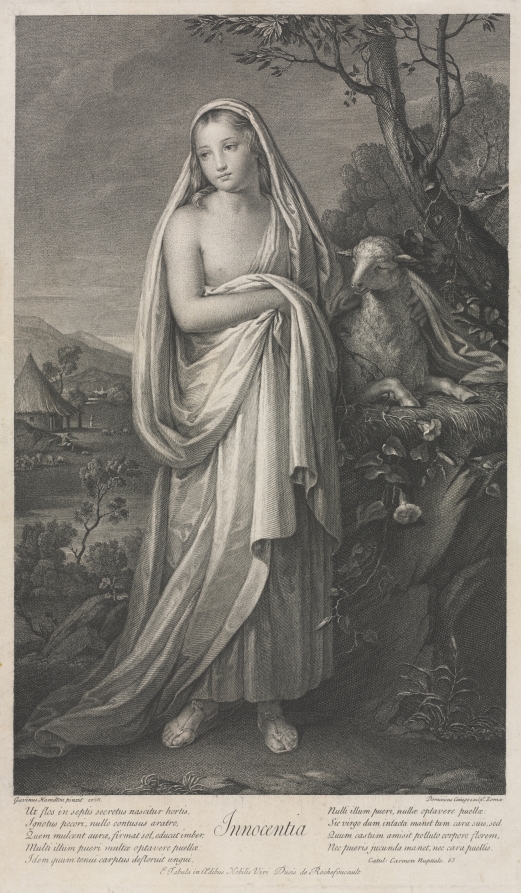
His technique relied on a disciplined use of the burin to translate the textures of stone and marble into line. In works like Mary Magdalene and Sibylla Amalthea, he managed to replicate the soft tonal shifts of original paintings while maintaining the sharp clarity required for architectural plates. He often worked alongside the archaeologist Gavin Hamilton. This partnership gave his prints a level of topographical accuracy that separated him from more decorative engravers of the late eighteenth century.
For the modern collector, Cunego's prints offer a balance between classical history and linear design. His architectural studies, such as the Temple of Antoninus and Faustina, function as understated visual anchors in contemporary rooms. The monochrome palette and precise draughtsmanship allow these eighteenth-century observations to sit comfortably alongside modern furniture.
Notable Works
Tap to view larger.
Next stop
Browse the movements →
Every movement in the collection, from the Renaissance to Pop art.
Domenico Cunego prints
Hand-finished archival prints from Domenico Cunego's body of work.


Related Artists


Take Domenico Cunego home.
See all Domenico Cunego prints →Frequently Asked Questions
When was Domenico Cunego born?
Domenico Cunego was born in 1727 and died in 1803.What is Domenico Cunego known for?
Domenico Cunego is known for domenico Cunego was a Venetian engraver known for his precise architectural plates of Roman ruins and accurate reproductions of classical paintings during the eighteenth century.