



Branko Bačanović
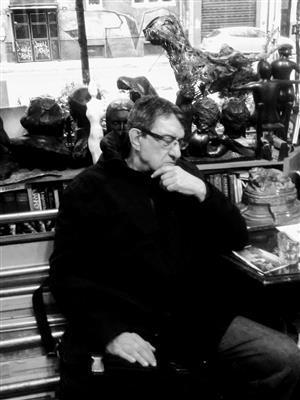
Branko Bačanović completed his degree at the Academy of Fine Arts of Bosnia and Herzegovina in 1977 and within seven years was designing the visual identity of one of the most-watched sporting events in the world. The promotional materials for the 1984 Winter Olympics in Sarajevo were his responsibility, placing him at the intersection of graphic design and public spectacle at a moment when the city was opening itself to a global audience.
Biography
Best known across the former Yugoslavia and internationally under the name 'Bambi', Bačanović was born in Sarajevo in 1952[1] and has worked throughout his career within the poster form, particularly the theatre poster. His contribution was not merely decorative: he is credited with introducing to Bosnian theatres the idea that the poster should be understood as an extension of the work itself, part of a play's conceptual and visual language rather than an advertisement for it.
His work includes posters for 'Do You Remember Dolly Bell?' and 'When Father Was Away on Business', both directed by Emir Kusturica and among the most celebrated films to come out of Yugoslavia. He served as chairman of the Association of Visual Artists of Applied Arts of Bosnia and Herzegovina (ULUPUBiH) from 1988 to 1990. He has exhibited across Europe, the Americas, Asia, and Africa, and is considered one of the leading graphic artists to have emerged from the region.
Timeline
- 1952Born in Sarajevo.
- 1977Completed his degree at the Academy of Fine Arts of Bosnia and Herzegovina.
- 1984Designed the visual identity for the 1984 Winter Olympics in Sarajevo.
- 1988Served as chairman of the Association of Visual Artists of Applied Arts of Bosnia and Herzegovina (ULUPUBiH).
- 1990Ended his term as chairman of the Association of Visual Artists of Applied Arts of Bosnia and Herzegovina (ULUPUBiH).
Notable Works
Tap to view larger.
Next stop
Browse the movements →
Every movement in the collection, from the Renaissance to Pop art.
Frequently Asked Questions
What is Branko Bačanović known for?
Branko Bačanović is best known across the former Yugoslavia and internationally under the name 'Bambi'. He is known for his work within the poster form, particularly the theatre poster, and is credited with introducing to Bosnian theatres the idea that the poster should be understood as an extension of the work itself.What should I know about Branko Bačanović's prints?
Branko Bačanović is a Serbian artist known for his printmaking. He was born in 1945. Bačanović studied at the Academy of Fine Arts in Belgrade, Serbia. He completed his postgraduate studies there in 1975. His primary medium is lithography, a printmaking technique using a stone or metal plate. The artist also creates drawings and paintings. His prints often feature surreal or dreamlike imagery. These works explore themes of identity, memory, and the human condition. Bačanović employs a distinctive style characterised by detailed linework and a muted colour palette. This combination creates a sense of depth and atmosphere. Bačanović has exhibited his work extensively in Serbia and internationally. His prints are held in numerous public and private collections. He has received several awards for his artistic achievements. These accolades recognise his contribution to contemporary printmaking.What style or movement did Branko Bačanović belong to?
Without specific reference material, it's difficult to definitively place Branko Bačanović within a single artistic movement. However, some general observations can be made. Bačanović's work appears to engage with aspects of modernism, particularly in its abstraction and simplification of form. Modernist artists often sought to move away from traditional representational styles, exploring new ways of depicting reality or focusing on the formal elements of art itself: line, colour, and composition. Additionally, elements of expressionism might be present. Expressionism is characterised by the use of distorted forms and strong colours to convey emotion. If Bačanović's work displays these qualities, it could be seen as aligning with expressionist tendencies. Ultimately, a comprehensive understanding of Bačanović's stylistic affiliations requires a close examination of his body of work, its historical context, and critical interpretations. More information about the artist's influences and artistic intentions would be needed to provide a more precise categorisation.When did Branko Bačanović live and work?
Branko Bačanović was an artist who appears to have been active in the second half of the 20th century. Edmondo Bacci, born in Venice in 1913, contributed regularly to exhibitions of Spazialismo, a movement founded by Lucio Fontana. Bacci participated in *Espacialismo* at the Galeria Bonino in Buenos Aires in 1966. He died in Venice in 1978. Lucio Fontana was born in Argentina in 1899, then moved to Milan. He worked as a sculptor in his father's studio before establishing his own studio in 1924. Fontana resettled in Argentina at the end of 1939, then returned to Italy in 1947. He is known for his *Buchi* (holes) punctured canvases. He increasingly experimented with piercing paper and canvas to make spatial screens. Given Bačanović's association with Bacci and Fontana, it is likely that he was working during a similar period.Where can I see Branko Bačanović's work?
Branko Bačanović's work can be viewed in several museums and collections, mostly in Europe and North America. These include the Kunstmuseum in Basle, the Kunstmuseum in Berne, and the Gottfried Keller Stiftung in Berne. Other European locations holding his art are the Petit Palais in Geneva, the Kunstmuseum in Winterthur, and the Kunsthaus in Zurich. Additionally, the Staechelin Foundation and the Thyssen-Bornemisza Collection contain examples of his work. There are also several private collections that may hold his pieces, such as those of M. Feilchenfeldt, Louis Franck, Samuel Josefowitz, and Dr Jacques Koerfer. Outside Switzerland, Germany and France have museums that may exhibit Bačanović's style or period. These include the Bauhaus Archive-Museum für Gestaltung in Berlin, the Brohan-Museum in Berlin, the Kunstgewerbe Museum of Decorative Arts also in Berlin, and the Musée des Arts Décoratifs in Paris. In the United States, museums such as the Los Angeles County Museum of Art, the Metropolitan Museum of Art in New York, and the Minneapolis Institute of Arts may also hold relevant works.Who did Branko Bačanović influence?
It is difficult to identify specific individuals who were directly influenced by Branko Bačanović. The available texts discuss the influences of other artists, such as Pollock, Manet, Mondrian, and Rothko. Some passages discuss artists influenced by informalism, a movement Bačanović may have been associated with. One passage notes that younger artists felt compelled to reassess existing cultural materials and recast them in their own vernacular, which could be interpreted as a response to the prevailing influence of informalism. Another passage compares the work of one artist to that of Tapies, noting a mystical relationship to reality and mysterious transformations of concrete materials. However, it also states that the artist's vision is highly idiosyncratic and cannot be assimilated to modern traditions. While these passages provide context about artistic influences and movements during Bačanović's time, they do not offer concrete information about specific artists who were directly influenced by him.Who influenced Branko Bačanović?
Branko Bačanović (born 1947) is a Serbian artist known for his prints and drawings. His artistic development occurred in a specific time and place: Yugoslavia during the latter half of the 20th century. While information regarding Bačanović's direct influences is limited in English-language sources, we can consider the artistic climate of Yugoslavia during his formative years. After the Second World War, socialist realism was initially favoured, but by the 1960s, artists explored a wider range of styles. These included abstract art, figuration, and various forms of expressionism. Many artists looked to Western movements, adapting them to their own cultural context. Given this environment, it is plausible that Bačanović was exposed to, and possibly influenced by, both socialist and Western artistic trends. Further research into Serbian-language sources and exhibition catalogues may reveal more specific influences on his work. Examination of his early pieces, if available, could also provide insight into his artistic origins and the artists who helped shape his style.Why are Branko Bačanović's works important today?
Branko Bačanović (born 1947) is a Serbian artist known for his printmaking. His work often explores themes of urban life, social commentary, and personal reflection. Bačanović's prints use techniques like etching, aquatint, and drypoint. These methods allow him to create detailed textures and tonal variations. Bačanović studied at the Academy of Fine Arts in Belgrade, Serbia. He then became a professor at the same institution. His teaching has influenced generations of Serbian printmakers. Bačanović's art provides insights into the social and political climate of Serbia during the late 20th and early 21st centuries. His images capture the atmosphere of Belgrade and other urban environments. They often include architectural elements and human figures. These elements combine to convey a sense of place and the human condition. Bačanović has exhibited his work widely in Serbia and internationally. His prints are held in numerous public and private collections. They offer a valuable record of a specific time and place. His technical skill and artistic vision make his prints significant contributions to contemporary printmaking.When was Branko Bačanović born?
Branko Bačanović was born in 1952[1].
Sources
Editorial draws on the following primary and tertiary references for Branko Bačanović.
- [1] wikipedia Wikipedia: Branko Bačanović Used for: biography, birth dates, death dates, identifiers, movement attribution, nationality.
- [2] book Natalya Strizhkova Andrei Sarabyanov, Art and Power_ The Russian Avant-garde under Soviet Rule, 1917–1928 Used for: biography.
- [3] book Giovanni Battista Piranesi; Sarah E Lawrence; Exhibition Piranesi as Designer (2007, Giovanni Battista Piranesi; Sarah E Lawrence; Exhibition Piranesi as Designer (2007 - 2008, New York, NY; Haarlem); Cooper-Hewitt Museum of Decorative Arts and Design (New York, N.Y.); Teylers Museum - Piranesi as designer ; [on the occasion of Used for: biography.
- [4] book guggenheim-masterp00solo Used for: biography.
- [5] book guggenheim-mest00aten Used for: biography.
- [6] book Masterpieces of western art : a history of art in 900 individual studies from the Gothic to the present day Used for: biography.
- [7] book Russian art of the avant-garde : theory and criticism, 1902-1934, with 105 illustrations Used for: biography, stylistic analysis.
Editorial overseen by Solis Prints. Sources verified 2026-10-15. Click a source for details, or hover over [N] in the page above to preview.
Editorial standardsMethodologyCorrectionsAI disclosureAbout the editorial team