



Bantikov Vladimir Andreevich
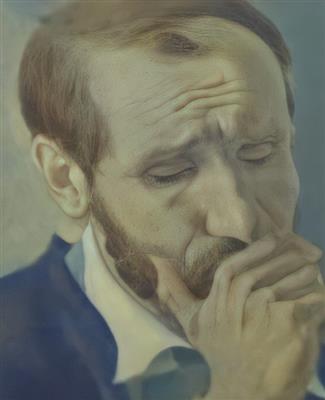
Vladimir Bantikov spent his career working in what critics described as a kind of magical realism, though the term sits imprecisely on his output. His paintings, landscapes and still lifes built from recognisable everyday subjects, were not surreal in the conventional sense; they rendered ordinary objects in an atmosphere of unusual, saturated light that gave familiar scenes the quality of something half-remembered. The effect produced what one commentator described as a "fairy halo" over compositions that had no narrative strangeness of their own.
Biography
Born in 1944[1], Bantikov was active from around 1963[1] until his death in 1991[1], working in the city of Pushkin, near Leningrad. He was never prominently exhibited within the Soviet system, and the bulk of his work found its way into private collections abroad: Germany, France, and the United States among them. His reputation during his lifetime rested more on international private interest than on institutional recognition at home.
After his death a house-museum was established in Pushkin to preserve his output, but a fire in 2011 destroyed much of the collection. A number of paintings survived in family archives and private hands, and his work continues to circulate through the European and American secondary market.
Timeline
- 1944Born in 1944.
- 1963Began working as an artist around 1963.
- 1991Died in 1991, aged 47. He worked in Pushkin, near Leningrad.
Notable Works
Tap to view larger.
Next stop
Browse the movements →
Every movement in the collection, from the Renaissance to Pop art.
Frequently Asked Questions
What is Bantikov Vladimir Andreevich's most famous work?
Information about Bantikov Vladimir Andreevich's most famous work is difficult to verify. No single piece is consistently cited across available sources. Paintings by other Russian artists, such as Kuzma Petrov-Vodkin's 1914-15 *The Mother of God of Tenderness towards Evil Hearts*, are noted for their spiritual intensity. Also of note is Alexander Drevin's *Supper* from the *Refugee Woman* series (1915-17), which reflects the artist's shock and sympathy for uprooted compatriots during the First World War. Philipp Malyavin's *Dancing Peasant Woman* (late 1900s) is mentioned as an innovative work utilising pictorial conventions found in folklore. Vladimir Lebedev's *Still Life with Boot* (1920) and *Cubism* (1922) are held in the State Russian Museum, St Petersburg.What should I know about Bantikov Vladimir Andreevich's prints?
Vladimir Andreevich Bantikov's prints can be understood using standard print terminology. A 'vintage print' means that the print was produced close to when the negative was made. A 'period print' refers to one made within roughly ten to fifteen years after the original shooting. If a print's creation date is unknown, or more than fifteen years after the shooting, it is termed an 'old print'. A 'modern print' (or 'contemporary print') is a recent print made using the original negative. An 'original print' is one the artist made or directly supervised. Lastly, a 'facsimile' is a print created by re-photographing a print, or by using the original negative; in this case, the print base and processing should match those of a vintage print as closely as possible. Prints are often produced in limited, or unlimited, editions. An original print is an image conceived as a print and executed solely as a print, usually in a numbered edition, and signed by the artist. Each print in the edition is an original, printed from a plate, stone, screen or block created for that purpose. Each print is inked and pulled individually; it is a multi-original medium.When did Bantikov Vladimir Andreevich live and work?
Bantikov Vladimir Andreevich was a Soviet artist who lived from 1902 to 1958[1]. He was born on 20 June 1902, in Lyucite, Latvia. He died on 30 May 1958, in Moscow. From 1917 to 1919, Bantikov studied art with Yurii Pen. In 1919, he attended the Vkhutemas in Moscow. He then transferred to the Vitebsk Art Institute to study under Chagall, and later Malevich, who took control of the school in the winter of 1919-1920[1]. Bantikov participated in the organisation of the "Posnovis" group, which was later renamed "Unovis". He contributed to all exhibitions of the Unovis group. In 1922, when the Unovis was forced out by the local authorities and Malevich left Vitebsk, Bantikov joined the Ginkhuk in Petrograd. He worked as a designer with Suetin at the Lomonosov State Porcelain Factory. In 1925, he contributed to the Exposition Internationale des Arts Decoratifs et Industriels Modernes in Paris. From the 1930s to the 1950s, he continued to paint, design, and exhibit. From 1941 to 1943, he lived in Perm.Where can I see Bantikov Vladimir Andreevich's work?
Bantikov Vladimir Andreevich's work may be found in several Russian regional museums that acquired avant-garde art after the revolution. In the early Soviet period, the Museum Bureau dispatched artworks to regional centres. Samara received 35 works by avant-garde artists in August 1919. The Municipal Museum in Samara was founded that May, arranged according to "museum of painterly culture" principles. The Samara Regional Art Museum holds some of these works today. Other cities receiving artworks included Astrakhan, Penza, Simbirsk, Smolensk, Nizhny Novgorod, Voronezh, Kazan, and Yekaterinburg. The Yekaterinburg Museum of Visual Arts has an avant-garde collection that may include Bantikov's work. The Vyatka Art and Historical Museum received artworks from Moscow in 1919, including works by artists of modern schools. By 1928, the museum had graphic works by artists of the UNOV1S association, including some by Chagall. The Vyatka museum boasts a complete avant-garde collection of any regional museum. The Krasnodar museum received avant-garde works from the Museum of Painterly Culture in 1925 and 1929.Who did Bantikov Vladimir Andreevich influence?
It is difficult to identify specific individuals who were directly influenced by Bantikov Vladimir Andreevich from the reference texts provided. However, the texts do offer some context regarding artistic influence and movements during the time period in which Bantikov was active. The avant-garde movement, particularly figures associated with Vkhutemas (a Russian art and technical school), played a role in shaping the artistic consciousness of later generations. Teachers at Vkhutemas, including Rodchenko, Tatlin, Lissitzky and Stepanova, were central to innovation in art and design. Students, even in faculties focused on traditional techniques, incorporated lessons learned from these figures into their work. The avant-garde's methods for interpreting and representing collections have acted as guidelines for Russian museums. The Museum of Painterly Culture also influenced muscological practice. The heritage of the Russian avant-garde enriched the work of young Soviet artists during the "thaw" period of the late 1950s and early 1960s.What was Bantikov Vladimir Andreevich's art style?
Vladimir Andreevich's art style was described by critics as a kind of magical realism. His paintings rendered ordinary objects in an atmosphere of unusual, saturated light that gave familiar scenes the quality of something half-remembered.How did Bantikov Vladimir Andreevich die?
Bantikov Vladimir Andreevich died in 1991[1] at the age of 47.
Sources
Editorial draws on the following primary and tertiary references for Bantikov Vladimir Andreevich.
- [1] wikipedia Wikipedia: Bantikov Vladimir Andreevich Used for: biography, birth dates, death dates, identifiers, movement attribution, nationality.
- [2] book guggenheim-artofavantgardei00rowe Used for: biography.
- [3] book Yevgenia Petrova (editor), Origins of the Russian avant-garde_ celebrating the 300th anniversary of St. Petersburg_ the Walters Art Museum, Baltimore (13 February-25 May 2003), Fine Arts Museums of San Francisco (29 June-21 September 2003) Used for: biography.
- [4] book Peter. Leek, Russian Painting Used for: biography.
Editorial overseen by Solis Prints. Sources verified 2026-10-15. Click a source for details, or hover over [N] in the page above to preview.
Editorial standardsMethodologyCorrectionsAI disclosureAbout the editorial team