



Bahia Shehab
- calligraffiti
During Egypt's 2011 revolution, Bahia Shehab took to the streets of Cairo with a can of spray paint and began writing no on walls across the city. These were not improvised slogans: each design was drawn from a collection of 1,000 historical forms of the Arabic word for refusal, sourced from Islamic heritage sites in Spain, China, Afghanistan, and Iran. The project, A Thousand Times No, had begun in 2010 as a design research archive; under the pressure of political crisis, it became street art.
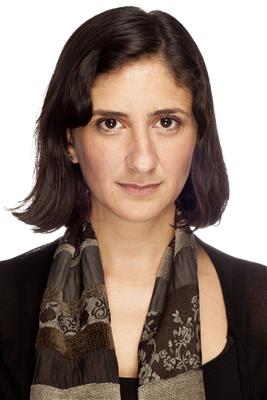
Biography
Born in 1977[1] in Beirut to a Lebanese-Egyptian family, Shehab studied graphic design at the American University of Beirut before completing an MA in Islamic Art and Architecture at the American University in Cairo and a PhD in Arab Art History at Leiden University in 2019. The research underpinning A Thousand Times No was, in part, her doctoral work: a systematic survey of the visual history of refusal across the Islamic world.
Since 2010 she has taught at the American University in Cairo, where she founded the Graphic Design programme. Her practice has expanded to include large-scale calligraphic street interventions across Europe, North America, and Asia, using quotes from the Palestinian poet Mahmoud Darwish rendered in custom typefaces she derives from Kufic script. At the Shangri La Museum of Honolulu in 2018, a site-specific mural replaced traditional vegetation with roots as a comment on colonised land.
Her work received the UNESCO-Sharjah Prize for Arab Culture and the Prince Claus Award in 2016. She was named a TED Fellow in 2012 and appeared on the BBC 100 Women list in 2013. Her 2021 publication You Can Crush the Flowers is a visual memoir of the revolution and its aftermath.
Timeline
- 1977Born in Beirut to a Lebanese-Egyptian family.
- 2010Began teaching at the American University in Cairo, where she founded the Graphic Design programme.
- 2010Started the design research archive "A Thousand Times No".
- 2011Painted "A Thousand Times No" on walls across Cairo during the Egyptian revolution.
- 2012Named a TED Fellow.
- 2013Appeared on the BBC 100 Women list.
- 2016Received the UNESCO-Sharjah Prize for Arab Culture and the Prince Claus Award.
- 2018Created a site-specific mural at the Shangri La Museum of Honolulu.
- 2019Completed a PhD in Arab Art History at Leiden University.
- 2021Published "You Can Crush the Flowers", a visual memoir of the revolution and its aftermath.
Notable Works
Tap to view larger.
Next stop
Browse the movements →
Every movement in the collection, from the Renaissance to Pop art.
Frequently Asked Questions
What is Bahia Shehab known for?
Bahia Shehab is known for her street art project, A Thousand Times No, which uses 1,000 historical forms of the Arabic word for refusal. She is also known for large-scale calligraphic street interventions using quotes from Mahmoud Darwish.What is Bahia Shehab's most famous work?
Bahia Shehab is best known for her work combining Islamic calligraphy with contemporary graffiti art. Her street art gained attention following the 2011 Egyptian Revolution. Shehab's "A Thousand Times NO" project is one of her most recognisable series. This project began as a response to political events in Egypt. It explores the many ways the Arabic word "no" can be written in different calligraphic styles. She used these various forms of "no" as a visual protest against injustice and oppression. The designs were sprayed onto walls in Cairo, often in response to specific incidents or political actions. Her work extends beyond street art. Shehab has published books on Arabic calligraphy and design. She also teaches design at The American University in Cairo. Her art and scholarship often focus on the intersection of Islamic art history, modern design, and political activism. She has received multiple awards and fellowships for her artistic and academic contributions.What should I know about Bahia Shehab's prints?
Bahia Shehab is an Egyptian-Lebanese artist, designer, and professor, best known for her work combining Islamic calligraphy with contemporary social commentary. Her prints often feature stylised Arabic script, particularly the letter "la," which can mean "no". Shehab's interest in the Arabic script began during her study of Islamic art and history. She earned a PhD in Islamic art and design history from the School of Oriental and African Studies (SOAS), University of London, in 2002. Her dissertation analysed the development of the Arabic kufic script. She later explored the use of kufic on Fatimid-era tombstones in Egypt. After the Egyptian Revolution of 2011, Shehab began stencilling Arabic graffiti on the walls of Cairo. These street art pieces addressed issues of social justice, political oppression, and cultural identity. She used the "no" symbol to protest against injustice and advocate for change. Her prints often translate these concepts to a gallery setting, making her messages accessible to a wider audience. Her work has been exhibited in museums and galleries around the world. She has also received several awards and honours for her artistic and academic contributions.What style or movement did Bahia Shehab belong to?
Bahia Shehab is a contemporary artist, designer, and art historian whose work centres on Arab cultural heritage and sociopolitical issues. She is not typically associated with a specific historical art movement, as her practice blends modern design principles with historical Islamic calligraphy. Shehab's artistic style is characterised by her innovative use of Arabic script, particularly the Kufic script, to create both abstract compositions and socially conscious messages. Her work often appears in public spaces as a form of street art and also in gallery settings. This approach places her work in the context of contemporary art that engages with activism and cultural identity. While not fitting neatly into a traditional art historical category, her work can be seen as part of a broader movement of artists who draw on their cultural heritage to address contemporary issues. Shehab's art intersects with post-colonial art, which reclaims and reinterprets historical narratives, and with contemporary Islamic art, which explores themes of identity, spirituality, and politics. Her unique synthesis of these elements defines her individual style.What techniques or materials did Bahia Shehab use?
Without specific information about Bahia Shehab's techniques, we can discuss some general art techniques. Pencil techniques include hatching (parallel strokes), crosshatching (layered strokes at angles), applying heavy pressure for dark shading, gradating pressure for tonal shifts, blending with tools, and creating textured shading with the pencil's side. These methods allow for diverse stroke effects, influencing shapes and weights. Creating form involves establishing a line drawing to define an object's shape. Value is added by observing how light interacts with the object, creating highlights and shadows. Acrylic techniques offer varied textures. A flat wash, a thin mixture of diluted acrylic paint, is applied with overlapping horizontal strokes. The choice of materials influences the creative outcome, with each surface, paint type, and brush producing different effects.What was Bahia Shehab known for?
Bahia Shehab is an Egyptian-Lebanese artist, designer, and art historian. She is best known for her work combining modern Arabic calligraphy with political and social commentary, often focusing on issues of identity, cultural heritage, and social justice. Shehab's work frequently incorporates the 99 names of God in Islam, exploring their visual and symbolic potential. Her street art and graffiti projects, particularly those created in the aftermath of the Arab Spring, gained recognition for their bold messages and innovative use of Arabic script. She has also published books on Arabic calligraphy and design, contributing to the preservation and promotion of this art form. Shehab is also an academic; she researches Islamic art history.When did Bahia Shehab live and work?
Bahia Shehab is an Egyptian-Lebanese artist, designer, and art historian, born in 1967. She is noted for her work on Islamic visual culture, particularly the intersection of Arabic calligraphy, typography, and contemporary art. Shehab is a professor of design at the American University in Cairo, where she has taught courses on the history of Islamic art and design, as well as graphic design. Her academic research and artistic practice often overlap, with each informing the other. She has published several books and articles on Islamic art, calligraphy, and visual culture, contributing to the field's scholarship. Shehab's artwork has been exhibited internationally, and she has received several awards for her contributions to art and design. She continues to live and work between Cairo and Beirut.Where can I see Bahia Shehab's work?
Bahia Shehab's artwork has been exhibited in numerous locations. These include museums in the United States, such as the Los Angeles County Museum of Art (LACMA) in Los Angeles, the Metropolitan Museum of Art in New York, the Minneapolis Institute of Arts, the Museum of Modern Art (MoMA) in New York, the Virginia Museum of Fine Arts in Richmond, and the Wolfsonian at Florida International University in Miami Beach. In Canada, her work can be viewed at the Royal Ontario Museum in Toronto. In the United Kingdom, institutions holding her art include the Brighton Museum & Art Gallery, the Geffrye Museum in London, the Manchester Art Gallery, the National Museums of Scotland in Edinburgh, and the Victoria & Albert Museum in London. Other locations where Shehab's art may be seen include the Rijksmuseum in Amsterdam, the Ashmolean Museum in Oxford, the Staatliche Museen Preussischer Kulturbesitz in Berlin, the Brooklyn Museum, the British Museum in London, the Chehelsotun Museum in Isfahan, the Czartoryski Museum in Cracow, the Freer Gallery of Art in Washington, DC, the Calouste Gulbenkian Museum in Lisbon, and the Musée du Louvre in Paris.Where was Bahia Shehab from?
Bahia Shehab is an Egyptian-Lebanese artist, designer, and art historian. Her work often incorporates aspects of Arab culture and Islamic history. She is particularly known for her use of Arabic calligraphy as a modern design element. Shehab's art frequently addresses social and political issues, especially those affecting women in Arab societies. She has lived and worked in various locations, including Cairo and Beirut. Her diverse background and experiences have shaped her unique artistic style, blending traditional forms with contemporary themes. Shehab's academic research has focused on the history of Arabic script and its potential for modern applications. She has also taught design at universities in the Middle East and beyond.Who did Bahia Shehab influence?
Bahia Shehab's influence is difficult to measure directly, but the careers of several artists suggest possible connections. In the 1940s, Georges Henein saw certain younger artists as blank pages for Art and Liberty to write their next chapter. Samir Rafi' and Hassan el-Telmisani stand out in particular. Henein wrote the preface for Rafi's first solo exhibition at the Lycée Français du Caire in 1944. So associated was Rafi' with Art and Liberty in the public eye that when he started exhibiting independently after the group had ceased to organise its large annual exhibitions, the label of Surrealism, or references to the group, would continue to appear. The visual artist Fateh al-Moudarres largely entered into the world of Surrealism in the late 1940s at the Aleppo salons and by way of his association with the Muyasser brothers, as well through avant-garde cultural journals like the Latakia-based al-Qīthāra (The Lyre) and the Beirut-based Shi’r. Al-Moudarres often drew on that which is local to historical Syria, including family life, folktales, religion (Christianity and Islam), the desert, ancient Mesopotamian civilisations, urbanisation and modernisation, rural/country life, and the poor.Who influenced Bahia Shehab?
Paul Klee was an influence on Bahia Shehab. Klee's work, with its simplified style, blends figurative and abstract elements. He aimed to create his own style, devoid of preconceptions. He wanted to be "as though newborn, knowing nothing, absolutely nothing about Europe… to be almost primitive". Nacer Khemir writes that, until he saw a reproduction of one of Klee’s paintings, he conceived of objects of Tunisian visual culture as merely functional. Klee revealed to him "the underlying source" of his "physical surroundings". Khemir saw in Klee’s process the potential for creative resistance to oppression. Klee’s work enabled him to find satisfaction in making art from and about his own surroundings. Klee travelled from Marseilles to Tunisia in April 1914 with fellow artists August Macke and Louis Moilliet. He purchased four watercolours in the Arab quarter in Tunis.Who was Bahia Shehab?
Bahia Shehab was an artist, designer, and art historian, born in 1977[1]. Her work focuses on Islamic cultural heritage and contemporary Arab identity. She is best known for her street art, which uses Arabic calligraphy as a medium for social commentary and activism. She often employs the 99 names of God in Islam, reinterpreting them visually to address current issues. Shehab's academic research explores the history of Arabic script and its potential for modern design. She has published several books on the subject, including *A Thousand Times No: The Visual History of Lam-Alif* (2010). She has taught design at the American University in Cairo and other institutions. Her work has been exhibited internationally, and she has received several awards for her contributions to art and design.
Sources
Editorial draws on the following primary and tertiary references for Bahia Shehab.
- [1] wikipedia Wikipedia: Bahia Shehab Used for: biography, birth dates, death dates, identifiers, movement attribution, nationality.
- [2] book Dorling Kindersley, Artists: Inspiring Stories of the World's Most Creative Minds Used for: biography.
- [3] book Art, the ape of nature : studies in honor of H. W. Janson Used for: stylistic analysis.
- [4] book guggenheim-europeandrawings00allo Used for: biography.
- [5] book guggenheim-handboo00pegg Used for: biography.
- [6] book Nagel, Alexander, The controversy of Renaissance art Used for: biography, stylistic analysis.
Editorial overseen by Solis Prints. Sources verified 2026-08-26. Click a source for details, or hover over [N] in the page above to preview.
Editorial standardsMethodologyCorrectionsAI disclosureAbout the editorial team