



Armando Montaner Valdueza
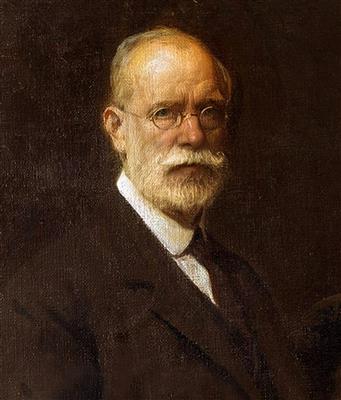
King Alfonso XIII sat for Armando Montaner Valdueza at some point in a career that would eventually end not in Spain but in Chile. Born in Valencia in 1871[1], Montaner Valdueza trained at the Real Academia de Bellas Artes de San Carlos under Francisco Domingo Marqués, Gonzalo Salvá, and José Vilar Torres before joining Joaquín Sorolla's workshop in Madrid.
Biography
Portrait work proved his most effective calling card. Conventional but accomplished in its realism, his portraiture attracted commissions from the socially elevated across Europe and Latin America. His ability to navigate worldly and elegant circles carried him from Spain to Argentina, where he received official portrait commissions and took prizes at international exhibitions. Securing the sitting of a king placed him at the summit of his social range.
In 1920[1] the Chilean government hired him as a professor of Colour and Composition at the School of Fine Arts in Santiago, a position that drew him permanently to South America. As his career matured he shifted toward a more personal approach to painting, alongside continued work in still life and landscape. He died in Santiago in 1960[1], aged 89, outlasting most of his generation by decades.
Timeline
- 1871Born in Valencia.
- 1890Studied at the Real Academia de Bellas Artes de San Carlos under Francisco Domingo Marqués, Gonzalo Salvá, and José Vilar Torres.
- 1890Joined Joaquín Sorolla's workshop in Madrid.
- 1920Hired by the Chilean government as a professor of Colour and Composition at the School of Fine Arts in Santiago.
- 1920Moved permanently to South America to take up his position in Santiago.
- 1960Died in Santiago, Chile, at 89.
Notable Works
Tap to view larger.
Next stop
Browse the movements →
Every movement in the collection, from the Renaissance to Pop art.
Frequently Asked Questions
What is Armando Montaner Valdueza known for?
Armando Montaner Valdueza is best known for his portrait work, which attracted commissions from socially elevated circles across Europe and Latin America. His portrait of King Alfonso XIII secured his position at the summit of his social range.What is Armando Montaner Valdueza's most famous work?
It is difficult to identify Armando Montaner Valdueza's single most famous work, as the provided texts do not offer enough information to make a definitive claim about their body of work. However, several artworks are mentioned repeatedly, suggesting their importance. Diego Velázquez's *Las Meninas* appears multiple times across the passages. Other significant works by Velázquez include *The Surrender of Breda*, various portraits of Philip IV, and *The Spinners* (also known as *The Fable of Arachne*). Mentions of these works appear in discussions of Spanish Golden Age painting, alongside pieces by other artists such as Bartolomé Murillo and El Greco. Without further information, it is impossible to determine which work by Valdueza is the most well-known.What style or movement did Armando Montaner Valdueza belong to?
It is difficult to assign Armando Montaner Valdueza to a single style or movement. Some observers consider his approach surprising, as it seemingly nullifies conflicts between dignity and sex, and between dress and power. His work produces an aesthetic beauty that liberates social minorities and sexualities. It gains public importance through mass culture, while remaining open to the imaginary and the sensual. His creations offer the freedom to move from a local condition to an international one, coinciding with globalisation and the universalisation of the bourgeois ideal. Montaner Valdueza's style is part of the modernisation of middle-range tastes. It provides a garment that is not an elitist option, but a democratic one on the level of aesthetic supply. His product reflects the growing sophistication of the world's citizens, whose personalities are oriented toward an enlightened search for self.What techniques or materials did Armando Montaner Valdueza use?
Armando Montaner Valdueza's practice involves a multidisciplinary approach, incorporating diverse materials and techniques. He uses resin and metal panels (such as copper, aluminium, and stainless steel), synthetic paper, fabrics, and traditional materials like paper, canvas, bronze and clay. In his two-dimensional work, Montaner Valdueza manipulates panels through sanding and preparation for image transfers and paint. He adds layers of silk and other fabrics. His oil paintings range from thick impasto to thin washes, sometimes leaving areas of the background bare. This treatment allows the painting to develop organically. He often works on multiple paintings at once because of the slow drying time of oil paint. Montaner Valdueza also explores sculpture installations and art objects, using mechatronics and biology engineering. He employs micro cameras, sensors, fibre optic lighting, electro-valves, precision air and hydraulics pumps, and computer programs to create what he considers intelligent art installations. He uses programmable pumps to pulsate liquids like oils and purified water through tubes, imitating communication between organs. He interprets these apparatuses as complex artificial lifeforms.What was Armando Montaner Valdueza known for?
Armando Montaner Valdueza was a Spanish sculptor of the Baroque period. He was active in Seville, specialising in religious sculptures intended for churches and religious processions. These sculptures were designed to evoke strong emotions and piety in viewers. Montaner's skill was such that poets of the time referred to him as the "Andalusian Lysippus", a reference to a famous Ancient Greek sculptor. Sevillians called him "el dios de la madera" ("the god of the wood"), acknowledging both his talent and his preferred medium. Despite some legal issues, such as an accusation of murder in 1591 and a guild dispute in 1623, Montaner was a highly regarded artist. In 1635, he was summoned to Madrid to create a bust of Philip IV of Spain. This bust was then sent to Italy for Pietro Tacca to use as a model for an equestrian portrait of the king. While Montaner was at court, Diego Velázquez painted his portrait, depicting him at work on the bust. Montaner died in 1649 from the plague. His sculptures influenced the development of Spanish art, notably the work of Francisco de Zurbarán.When did Armando Montaner Valdueza live and work?
Armando Montaner Valdueza's lifespan and working period are not explicitly detailed in the provided texts. However, the passages do mention several artists and their activities during the late 19th and early 20th centuries. For instance, there's mention of Julio Gonzalez working at La Soudure autogene francaise metalworks in Boulogne-sur-Seine from June to September 1918[1], where he learned oxyacetylene welding. Picasso is noted to have been active during this time as well, designing sets and costumes for Ballets Russes performances and exhibiting at Paul Rosenberg Gallery in Paris around 1919. These details provide a sense of the artistic environment and timeframe in which Valdueza might have been working, though without direct reference to the artist themselves.Where can I see Armando Montaner Valdueza's work?
It is difficult to provide a comprehensive list of locations where Armando Montaner Valdueza's work can be viewed, as the provided texts do not contain information about the artist or his exhibitions. However, the Vatican Museum in Rome and the Palazzo Giustiniani, also in Rome, hold sarcophagi. The National Museum in Florence has works by Leonardo. The tomb of the Cardinal of Portugal is in S. Miniato, Florence. To find specific locations for Valdueza's work, it is recommended to consult art databases, museum websites, and exhibition catalogues. These resources may offer details on past and current exhibitions, as well as public collections that include his pieces. You could also contact art galleries that specialise in Spanish art, or museums in Spain, for further information.Who did Armando Montaner Valdueza influence?
Armando Montaner Valdueza's influence can be traced to Nicaraguan painter Armando Morales. Morales, considered one of Central America's greatest artists, created a distinctive visual language, partly inspired by Robert Motherwell, Antoni Tapies, and Serge Poliakoff. Morales's 1958[1] abstract painting *Guerrillo muerto I (Dead Guerrilla I)*, which won the Ernst Wolf Prize in 1959 at the V Sao Paulo Bienal in Brazil, shows the impact of other artists. *Guerrillo muerto I* is linked to Motherwell's "Spanish Elegy" series, begun in 1948. Both works share anti-fascist themes, expressed through brooding megalithic forms and organic contours. Morales's connection to Motherwell's memorial to the Spanish Republic reflects his artistic background. One of Morales's professors at the National School of Fine Arts in Managua during the 1940s, Augusto, may have exposed him to these influences.Who influenced Armando Montaner Valdueza?
Armando Montaner Valdueza found early inspiration in Caracas. He was struck by a cubist still life by Braque, which led him to study Braque and Picasso. He then explored Cézanne and van Gogh. Although Gauguin's symbolic approach did not fully convince him, Montaner Valdueza was drawn to Gauguin's use of colour. Later, in Paris, Montaner Valdueza sought to inject movement into Mondrian's works, but he realised Mondrian had already achieved this in *Broadway Boogie-Woogie*. He found Moholy-Nagy's approach important, and he also discovered Calder, Marcel Duchamp, and Gabo. Montaner Valdueza aimed to build on the elements these artists had introduced, seeking to answer the questions they had posed but not resolved. He was drawn to works from the Bauhaus movement and Klee's explorations of perspective. He also admired Malevich, Kandinsky's "Bauhaus" period, Sophie Taeuber, and Arp. He sought out the work of Albers, eventually viewing his paintings at the Galerie Denise René.Who was Armando Montaner Valdueza?
Information about Armando Montaner Valdueza is difficult to find. However, other artists of the 20th century include Amedeo Modigliani, who was born in Livorno, Italy, in 1884[1]. He began studying painting at age fourteen, and in 1906, he moved to Paris, settling in Montmartre. Modigliani's early work showed the influence of Toulouse-Lautrec, Théophile Alexandre Steinlen, Gauguin, and Cézanne. Another artist of the time was Piet Mondrian, who experimented with Pointillism and adopted Cubism around 1911. After seeing Cubist works by Pablo Picasso and Georges Braque, he moved to Paris. From 1912 to 1914, he developed a personal abstract style. Robert Motherwell, born in Aberdeen, Washington, in 1915, also contributed to the art world. He studied at the Otis Art Institute of Los Angeles and later at Stanford University.Why are Armando Montaner Valdueza's works important today?
Armando Montaner Valdueza's work is relevant because it engages with important cultural and artistic movements. His art relates to the theories of Severo Sarduy, who saw art as a system of signs and simulations. Sarduy, a member of the Parisian Tel Quel group during the 1960s, viewed language, in its broadest sense, as a lens through which to understand the world. For Sarduy, language and art did not reveal inner truths; instead, they pointed back to the material nature of existence. Sarduy also explored the concept of the Neo-Baroque, a style that embraces fragmentation and challenges traditional notions of a centred, unified human experience. His theories connect diverse artists across time, linking figures such as Rubens and De Kooning, Holbein and Warhol, in a non-linear artistic conversation. This approach allows for the Baroque to be read in an ahistorical manner. Montaner Valdueza's art, therefore, participates in a dialogue about identity, representation, and the way we construct meaning through visual language, aligning with Sarduy's idea of art as a signal sent out, waiting to be received and understood.What was Armando Montaner Valdueza's art style?
Armando Montaner Valdueza's portraiture was conventional but accomplished in its realism. As his career progressed, he adopted a more personal approach to painting, while continuing to produce still lifes and landscapes.
Sources
Editorial draws on the following primary and tertiary references for Armando Montaner Valdueza.
- [1] wikipedia Wikipedia: Armando Montaner Valdueza Used for: biography, birth dates, death dates, identifiers, movement attribution, nationality.
- [2] book guggenheim-beforepicassoaft00swee Used for: biography.
- [3] book guggenheim-guhe00solo Used for: biography.
- [4] book Lilian H. Zirpolo, Historical Dictionary of Baroque Art and Architecture Used for: biography, stylistic analysis.
- [5] book Masterpieces of western art : a history of art in 900 individual studies from the Gothic to the present day Used for: biography.
Editorial overseen by Solis Prints. Sources verified 2026-08-31. Click a source for details, or hover over [N] in the page above to preview.
Editorial standardsMethodologyCorrectionsAI disclosureAbout the editorial team