

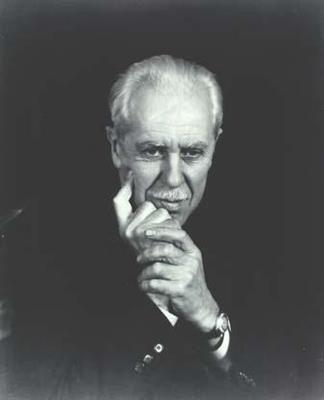
Alfred Heber Hutty
In 1919[2], Alfred Hutty arrived in Charleston, South Carolina, and immediately sent his wife a telegram: "Come quickly. Have found heaven." He never really left. From that point until his death in 1954[2], Hutty divided his year between Charleston's winters and his Woodstock, New York property, becoming the figure most responsible for establishing the city as a centre of American[2] printmaking.
Biography
Hutty came to Charleston already formed: trained under L. Birge Harrison and Frank Vincent DuMond, he had worked for Tiffany Studios and spent the First World War designing ship camouflage. He arrived in Charleston as a painter in oil and watercolour, but the city's moss-draped oaks, antebellum architecture, and street life turned him decisively toward etching and drypoint. Drypoint's soft, burry line caught the atmospheric quality of Spanish moss and wrought iron in ways that oil could not.
In 1923[2], he co-founded the Charleston Etchers' Club and taught at the Carolina Art Association from 1920 to 1924. His prints entered the collections of the Metropolitan Museum of Art, LACMA, and the Cleveland Museum of Art. He became the first American[2] elected to the British Society of the Graphic Arts and won the Logan Prize at the Art Institute of Chicago. His subjects: Charleston's historic streets, rural farm life, and the African-American residents of the city, observed with a directness unusual for the period.
Timeline
- 1877Born
- 1919Arrived in Charleston, South Carolina
- 1920Began teaching at the Carolina Art Association
- 1923Co-founded the Charleston Etchers' Club
- 1924Stopped teaching at the Carolina Art Association
- 1954Died
Notable Works
Tap to view larger.
Next stop
Browse the movements →
Every movement in the collection, from the Renaissance to Pop art.
Related Artists




Frequently Asked Questions
What is Alfred Heber Hutty known for?
Alfred Heber Hutty is known for his etchings and drypoints of Charleston. He co-founded the Charleston Etchers' Club in 1923[2], and his prints are held in the collections of the Metropolitan Museum of Art, LACMA, and the Cleveland Museum of Art.What is Alfred Heber Hutty's most famous work?
It is difficult to name one single work as Alfred Heber Hutty's most famous. He produced a substantial body of work, mainly etchings and drawings. Hutty is best known for his depictions of the Southern United States, especially Charleston, South Carolina. He captured the atmosphere of the city's historic architecture, gardens, and waterfront. He often depicted scenes of daily life, such as people working, relaxing, or going about their business. These works evoke a sense of nostalgia for a bygone era. Hutty's prints were popular during his lifetime and continue to be collected today. His images of Charleston are particularly well-regarded, as they offer a glimpse into the city's past and capture its unique charm. Some of his better-known images include "Church Street, Charleston", "The Old Slave Mart", and "Moonlight on Broad Street". However, due to the volume of his work and the consistency of his chosen subjects, no individual piece eclipses the others in fame.What should I know about Alfred Heber Hutty's prints?
Alfred Heber Hutty was an American[2] artist known for his etchings and drypoints, particularly of scenes in Charleston, South Carolina. He studied at the Saint Louis School of Fine Arts, and later became an instructor there. Hutty's prints often depict the architecture and atmosphere of the South. He captured the look of historic buildings, gardens, and the surrounding coastal areas. His style is characterised by strong lines and a careful attention to light and shadow. Printmaking in general experienced changes during Hutty's career. Originally, engravers' works were reviewed in the art press, and venues abroad were the most rewarding places to exhibit. By 1928[2], the Royal Academy gave engravers' works full recognition. However, photoengraving became widespread, which affected the livelihood of many engravers. Works that were once limited in number were then supplanted by photoengravings in large quantities.What style or movement did Alfred Heber Hutty belong to?
Alfred Heber Hutty (1877[2]-1954[2]) was an American[2] artist known for his work in etching and watercolour. His style is characterised by flowing washes within a crisp linear pattern. His subjects ranged from architecture to old vaudeville stages. Hutty's fine craftsmanship is a distinctive feature of his work. Some art historians consider him an American Scene Painter. This movement received emphasis during the 1930s. These painters focused on native elements. Other American Scene Painters include Thomas Hart Benton, Grant Wood, and John S. Curry. Hutty's work shares some stylistic similarities with Edward Hopper, particularly in its simplified forms. However, Hopper's urban motifs convey a sense of loneliness, while Hutty's work does not always evoke the same emotional tone. Hutty's style remained consistent throughout his career, and he did not fully embrace abstraction, although he was clearly influenced by it.What was Alfred Heber Hutty known for?
Alfred Heber Hutty (1877[2]-1954[2]) was an American[2] artist, most associated with his etchings and paintings of the South Carolina lowcountry. He is particularly known for his depictions of Charleston's historic architecture and coastal scenery. Hutty initially worked as a theatre set designer. He later pursued art studies at the Art Institute of Chicago. His early artistic output included Impressionistic paintings. However, he found greater success with etching, a medium that allowed him to capture the details of Charleston's buildings and streets. Hutty moved to Charleston in 1919[2]. He became a central figure in the city's art scene, teaching at the Carolina Art Association. His work gained popularity during the Charleston Renaissance, a period of artistic and cultural revival in the city. Hutty's images of moss-draped trees, old buildings, and the surrounding marshlands became iconic representations of the region. He worked in both black and white, and in colour, often using watercolour.When did Alfred Heber Hutty live and work?
Alfred Heber Hutty (1877[2]-1954[2]) was an American[2] artist known for his etchings and paintings. He is particularly associated with Charleston, South Carolina, where he lived and worked for a significant portion of his career. Born in Grand Haven, Michigan, Hutty initially trained as a lithographer. He later studied at the Art Students League in New York City, developing his skills in various media. In 1919[2], Hutty first visited Charleston, and he was captivated by the city's unique atmosphere and architectural character. Hutty decided to make Charleston his permanent home in 1920. He became a central figure in the city's artistic community, contributing to the Charleston Renaissance. This movement saw a surge of artistic and cultural activity in the region. Hutty's work often depicted the city's historic buildings, gardens, and waterfront scenes. He captured the essence of Charleston's charm through his distinctive style. Hutty taught art classes and workshops, influencing a generation of local artists. He remained in Charleston until his death in 1954, leaving behind a substantial body of work that continues to be celebrated.Where can I see Alfred Heber Hutty's work?
Alfred Heber Hutty's work can be viewed in several museums. In the United States, these include the Metropolitan Museum of Art in New York; the Los Angeles County Museum of Art (LACMA); the Minneapolis Institute of Arts; the Museum of Modern Art in New York; the Virginia Museum of Fine Arts in Richmond; the Charles Hosmer Morse Museum of American[2] Art in Winter Park, Florida; the J. Paul Getty Museum in Los Angeles; the Art Institute of Chicago; the Field Museum in Chicago; and the Wolfsonian at Florida International University in Miami Beach. Outside the United States, you can find his work at the Royal Ontario Museum in Toronto, as well as the Brighton Museum & Art Gallery, the Geffrye Museum in London, the Manchester Art Gallery, the National Museums of Scotland (Royal Museum) in Edinburgh, and the Victoria & Albert Museum in London.Where was Alfred Heber Hutty from?
Alfred Heber Hutty was born in 1877[2] in Grand Haven, Michigan. He became a prominent figure in the Charleston Renaissance. Hutty's early artistic training occurred at the St. Louis School of Fine Arts, where he was an instructor. He then relocated to Charleston, South Carolina, in 1919[2], becoming a central figure in the city's art scene. Hutty is best known for his etchings and watercolour paintings, often depicting scenes of the South Carolina Lowcountry. His work captures the atmosphere of the region, particularly its historic architecture and natural settings. He was a member of the Charleston Etchers' Club and exhibited his work widely. Hutty died in Woodstock, New York, in 1954[2].Who did Alfred Heber Hutty influence?
Alfred Heber Hutty's influence is most apparent in the work of artists associated with the Charleston Renaissance. This artistic and cultural movement took place in Charleston, South Carolina, during the early 20th century. Hutty, along with Elizabeth O'Neill Verner, became a central figure in the city's art scene. He mentored younger artists and encouraged experimentation. His own etchings and pastels, often depicting the local architecture and scenery, provided examples for others to follow. While it is difficult to trace direct stylistic imitation, Hutty's role as a teacher and advocate undoubtedly shaped the artistic output of many Charleston artists. He created an atmosphere that valued regional subject matter and individual expression. Some artists who worked in Charleston during this period include Alice Ravenel Huger Smith, Anna Heyward Taylor, and William Halsey. Hutty's impact is best understood as a catalyst for a broader artistic flowering, rather than a narrow school of followers.Who was Alfred Heber Hutty?
Alfred Heber Hutty (1877[2]-1954[2]) was an American[2] artist known for his prints and paintings. He is particularly associated with the Charleston Renaissance, a post-First World War artistic and cultural movement in Charleston, South Carolina. Hutty was born in Grand Haven, Michigan. He studied at the Art Institute of Chicago before working as a theatre set painter. He first visited Charleston in 1919[2], initially for health reasons, and was captivated by the city's atmosphere and architecture. He became a central figure in Charleston's artistic community. He produced numerous etchings, drypoints, and pastels depicting the city's streets, buildings, and surrounding areas. His work often features scenes of daily life, historic buildings, and the natural environment of the South Carolina Lowcountry. Hutty's style blends realism with a degree of romanticism, capturing the charm and character of his chosen subjects. He was a member of the Charleston Etchers' Club, further solidifying his place in the city's art scene. Hutty taught art classes and mentored younger artists, contributing to the growth of artistic activity in the region.Why are Alfred Heber Hutty's works important today?
Alfred Heber Hutty (1877[2]-1954[2]) was an American[2] artist known for his etchings and paintings, particularly of the South Carolina Lowcountry. He captured scenes of Charleston, its architecture, and the surrounding coastal areas. Hutty's works offer a historical record of a specific time and place. His depictions of Charleston's buildings and streets provide insight into the city's architectural heritage during the early to mid-20th century. These works document a bygone era, preserving the atmosphere and character of the region. His prints and paintings also reflect the artistic trends of his time. Hutty's style often incorporated elements of tonalism and impressionism, aligning him with broader movements in American art. Studying his work provides a view into the artistic tastes and preferences of the period. Interest in Hutty's art has grown in recent years, as collectors and institutions seek to preserve and celebrate regional art histories. His images of the South Carolina coast have become important visual documents, valued for their aesthetic qualities and historical information.What was Alfred Heber Hutty's art style?
Hutty's drypoint style used a soft, burry line to capture the atmospheric quality of Spanish moss and wrought iron. His subject matter included Charleston's historic streets, rural farm life, and the city's African-American[2] residents.
Sources
Editorial draws on the following primary and tertiary references for Alfred Heber Hutty.
- [1] museum Harvard Art Museums Used for: museum holdings.
- [2] wikipedia Wikipedia: Alfred Heber Hutty Used for: biography, birth dates, death dates, identifiers, movement attribution, nationality.
- [3] book Husslein-Arco, Agnes, editor; Koja, Stephan, editor; Law, Rebecca (Translator), translator; McInnes, Robert (Translator), translator; Somers, Nick, translator; Monet, Claude, 1840-1926. Paintings. Selections; Österreichische Galerie Belvedere, h Used for: biography.
- [4] book Post-impressionism : cross-currents in European painting Used for: biography.
- [5] book Landauer, Susan, The not-so-still life : a century of California painting and sculpture Used for: biography.
Editorial overseen by Solis Prints. Sources verified 2026-10-16. Click a source for details, or hover over [N] in the page above to preview.
Editorial standardsMethodologyCorrectionsAI disclosureAbout the editorial team