

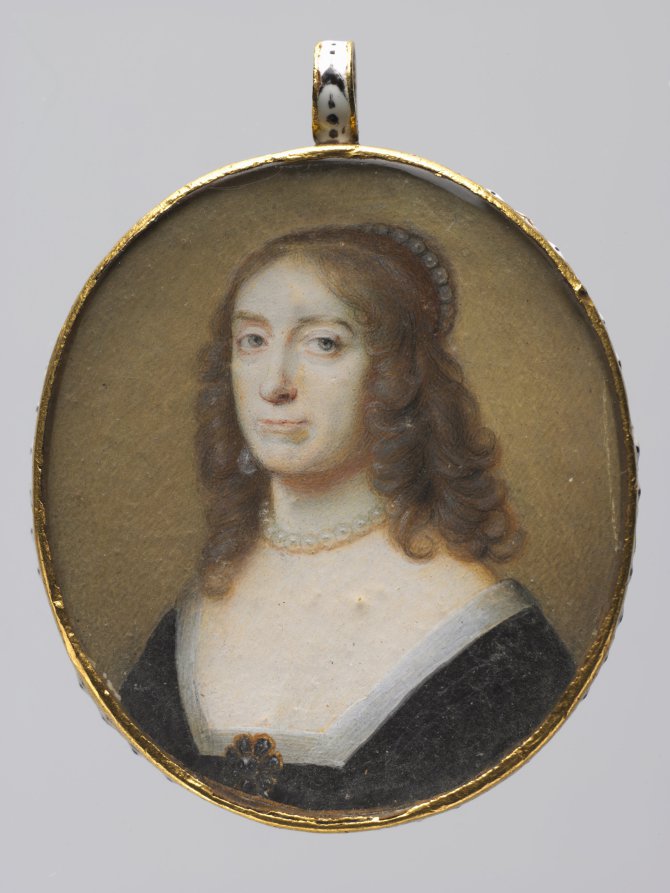
Alexander Cooper
Alexander Cooper spent much of his career as a court painter in exile. Although born in London, he found his success abroad. He worked for Elizabeth Stuart, the Electress Palatine, during her residence in The Hague. Later, he moved to Stockholm to serve Queen Christina of Sweden. This international career allowed him to document the interconnected royal houses of Northern Europe during a period of political change. He was the elder brother of Samuel Cooper, yet he chose a path that took him far from the English court.
Biography
His technique focused on the portrait miniature. This format required extreme precision. Cooper learned his craft from his uncle, John Hoskins, alongside his brother. His work differs from the English style through a clear Dutch influence. He used cool tones and careful shading to define the features of his subjects. His portraits of Henriette Marie and the Palatine children are known for their clarity. He often painted on vellum, which allowed for smooth transitions in skin tones.
These miniatures interest those who follow the personal history of the Stuart dynasty. The portraits were originally intended to be held in the hand. As prints, they keep this sense of closeness. They provide a factual record of seventeenth-century fashion and royal lineage. These miniatures suit a study where the viewer can observe the specific details of the sitters. His work offers a quiet alternative to the large-scale oil paintings of the Baroque period.
Notable Works
Tap to view larger.
Next stop
Browse the movements →
Every movement in the collection, from the Renaissance to Pop art.
Frequently Asked Questions
When was Alexander Cooper born?
Alexander Cooper was born in 1609 and died in 1660.What is Alexander Cooper known for?
Alexander Cooper is known for alexander Cooper was a seventeenth-century miniature painter who served the royal courts of the Netherlands and Sweden, documenting the Stuart family and Queen Christina.


