

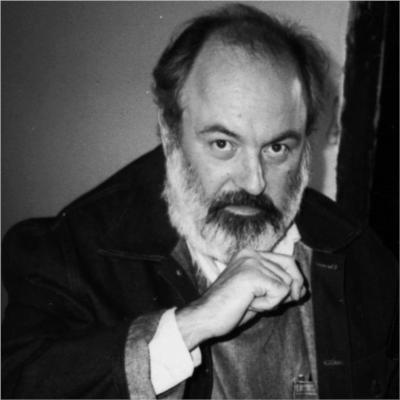
Alberto Gironella
Alberto Gironella never trained as a painter. He graduated from the National Autonomous University of Mexico in 1959[1] with a degree in Spanish Literature, and it was the literature graduate's eye, fixed on Velazquez, Goya, El Greco, and the colonial freight those names carried in Mexico, that shaped everything he made.
Biography
Born in Mexico City on 26 September 1929[1], Gironella came of age when the monumental nationalism of the Mexican[1] muralists still dominated the conversation. He rejected that tradition entirely, turning instead to the Spanish Baroque and to Surrealism (specifically the strain cultivated by Leonora Carrington and the filmmaker Luis Bunuel) for his two main poles of reference. In 1960[1] he co-founded the avant-garde Galeria Prisse in Mexico City and won both the Paris Biennial for Young Painters and the first prize at the Sao Paulo Biennial in the same year.
His most sustained project was a long series of paintings reworking Velazquez's Las Meninas: layered canvases in which the original composition was taken apart and reassembled through a Mexican[1] and post-Surrealist lens. Andre Breton, who saw his 1961[1] solo show in Paris, endorsed the work publicly. Later series included a Madonna sequence begun in 1991, and he illustrated Carlos Fuentes's novel Terra Nostra, a work whose own baroque ambitions were well matched to Gironella's.
He died in Mexico City on 2 August 1999[1], his work held in the Palacio de Bellas Artes and the Museo de Arte Moderno in Mexico City.
Timeline
- 1929Born in Mexico City on September 26
- 1959Graduated from UNAM with a degree in Spanish Literature
- 1960Co-founded the avant-garde Galeria Prisse in Mexico City
- 1960Won the Paris Biennial for Young Painters
- 1960Won first prize at the Sao Paulo Biennial
- 1961Solo show in Paris endorsed by Andre Breton
- 1991Began the Madonna sequence
- 1999Died in Mexico City on August 2
Next stop
Browse the movements →
Every movement in the collection, from the Renaissance to Pop art.
Related Artists




Frequently Asked Questions
What is Alberto Gironella known for?
Alberto Gironella is known for his paintings that rework Velazquez's Las Meninas. He deconstructed and reassembled the original composition through a Mexican[1] and post-Surrealist lens, creating layered canvases.What is Alberto Gironella's most famous work?
Alberto Gironella is best known for his series of paintings incorporating Mexican[1] history and culture, often with a surrealist bent. He is particularly noted for his variations on canonical European paintings. One of his most recognised works is his series based on the life of Maximilian I of Mexico. These paintings frequently incorporate collage elements, such as labels, newspaper clippings, and other found objects, creating a layered effect. Gironella's "El Suicidio de Maximiliano" (The Suicide of Maximilian) is a prime example of this approach. It references Édouard Manet's "The Execution of Emperor Maximilian", but with Gironella's distinctive Mexican sensibility. Gironella also produced series inspired by Ophelia, after John Everett Millais, and Leda, after Leonardo da Vinci. These paintings demonstrate his interest in reinterpreting European masterpieces through a Mexican lens, blending high art with popular culture. His work often explores themes of identity, power, and cultural hybridity.What should I know about Alberto Gironella's prints?
Alberto Gironella (1929[1]-1999[1]) was a Mexican[1] artist known for his mixed-media works and reinterpretations of historical paintings. He incorporated collage, assemblage, and elements of popular culture into his art. While specific details about Gironella's printmaking are scarce, it is helpful to understand his broader artistic approach. He often engaged with established imagery, subverting or altering it to create new meanings. His prints likely reflect this tendency, perhaps through screenprinting or other techniques that allow for layering and reproduction of images. Gironella's work often contains a critical or satirical edge, challenging conventional interpretations of history and culture. His prints may incorporate similar themes, using familiar images to make statements about Mexican identity, politics, or art history. To fully appreciate his prints, consider their relationship to his wider body of work and his interest in reinterpreting established narratives.What style or movement did Alberto Gironella belong to?
Alberto Gironella (1929[1]-1999[1]) was a Mexican[1] artist associated with the Generación de la Ruptura (Breakaway Generation). This movement, which emerged in the 1950s, sought to break away from the established norms of Mexican muralism. Mexican muralism, with its politically charged and socially didactic narratives, had dominated the country's art scene for decades. Artists such as Diego Rivera, José Clemente Orozco, and David Alfaro Siqueiros set a high bar. The Generación de la Ruptura, however, looked towards international trends and embraced a wider range of artistic styles and subjects. Gironella's work often incorporated elements of surrealism and Dada, and he was known for his use of collage and assemblage techniques. He frequently referenced historical artworks, reinterpreting them in a contemporary context. This approach aligned with the broader aims of the Ruptura artists, who sought to engage in a dialogue with both Mexican and international art history, rather than adhering to a singular national style. His art offers a critical commentary on Mexican identity.What techniques or materials did Alberto Gironella use?
Alberto Gironella was a Mexican[1] artist whose work often incorporated collage and assemblage techniques. He is known for using diverse materials in his pieces, creating textured and layered surfaces. Gironella frequently combined painting with three-dimensional elements. These included found objects, such as metal scraps, broken glass, and discarded items, which he attached to the canvas. This approach blurred the lines between painting and sculpture. His work also involved the appropriation and reinterpretation of historical artworks. He would often take well-known paintings by old masters and alter them, adding his own personal touches and contemporary elements. This could involve painting over sections of the original image, adding collage elements, or incorporating text. Gironella's techniques and materials varied throughout his career, but his interest in combining different media and challenging traditional artistic conventions remained a constant feature of his work.What was Alberto Gironella known for?
Alberto Gironella (1929[1]-1999[1]) was a Mexican[1] artist, sometimes associated with the Generación de la Ruptura (Breakaway Generation). This group of Mexican artists departed from the established artistic conventions of the Mexican School of Painting. Gironella is best known for his use of collage and appropriation. He often incorporated elements from Old Master paintings into his own works, creating new and often satirical interpretations. These works engaged with Mexican identity, history, and culture. His practice included painting, sculpture, and set design. He also explored literary themes, referencing figures such as the Marquis de Sade and Mexican literary icons. His art frequently combined humour, social commentary, and a critical view of Mexican society.When did Alberto Gironella live and work?
Alberto Gironella was born in Mexico City on 26 June 1929[1]. He died in the same city on 20 August 1999[1]. Gironella is known for his collages and assemblages that often incorporated found objects and references to Mexican[1] history and culture. While specific details about his early artistic training are scarce, it is evident that he was active as an artist from the 1950s onwards, participating in exhibitions and becoming associated with the Generación de la Ruptura (Breakaway Generation), a group of Mexican artists who rejected the established norms of Mexican muralism in favour of more experimental and individualistic approaches to art. His work evolved over several decades, encompassing a range of styles and themes, but he remained committed to exploring Mexican identity and challenging conventional artistic boundaries.Where was Alberto Gironella from?
Alberto Gironella was a Mexican[1] artist. He was born in Mexico City on 26 September 1929[1]. Gironella is known for his unique style, which often incorporated elements of pop art, surrealism, and Mexican history. He frequently used collage techniques, combining found objects and images in his work. His subject matter ranged from Mexican icons to reinterpretations of old master paintings. Gironella was part of a generation of Mexican artists who reacted against the established traditions of muralism. José Luis Cuevas, in his 1959[1] essay "The Cactus Curtain", criticised the dominance of mural painting and called for new directions in Mexican art. While not a muralist himself, Gironella contributed to this shift by exploring new forms of expression and engaging with international art movements. He died in Mexico City on 2 August 1999[1].Who influenced Alberto Gironella?
Alberto Gironella drew inspiration from various sources. The writings of Elio Vittorini and the cultural organisations that invited international figures to lecture had an impact on him. He was also part of a generation influenced by international debate, Marxist thought from a phenomenological viewpoint, Theodor Adorno's critique of consumer society, and critical reflection upon the modern tradition of using history and theory as structural materials in planning. Giulio Carlo Argan's book, *Walter Gropius and the Bauhaus* (1951[1]) also exerted a considerable influence. Gironella's artistic development occurred in dialogue with figures such as Frederick Kiesler, Adolf Loos, Richard Neutra and Rudolph Schindler. He found inspiration in the work of Giuseppe Terragni, whose colleague Pietro Lingeri supported Gironella's admission into the MSA.Who was Alberto Gironella?
Alberto Gironella (1929[1]-1999[1]) was a Mexican[1] artist known for his mixed-media works. He incorporated collage, assemblage, and painting techniques. His art often engaged with Mexican history and culture. Born in Mexico City, Gironella initially studied law before turning to art. He became associated with the Generación de la Ruptura, a group of artists who moved away from the established Mexican muralism. This group sought new forms of expression. Gironella's work frequently referenced European masters. He reinterpreted paintings by artists like Goya and Velázquez. He also drew inspiration from Mexican icons, such as the Emperor Maximilian. These figures appeared in his art, often with a satirical or critical perspective. His pieces often included found objects, creating a textured surface. Gironella explored themes of power, religion, and national identity. He worked across various media, including canvas, paper, and sculpture. He is considered an important figure in 20th-century Mexican art.Why are Alberto Gironella's works important today?
Alberto Gironella (1929[1]-1999[1]) was a Mexican[1] artist known for his unique blend of Mexican history, popular culture, and surrealist sensibilities. His works often incorporated collage and assemblage techniques, using found objects and unconventional materials to create layered, complex compositions. Gironella's importance lies in his re-evaluation of Mexican identity. He challenged traditional notions of nationalism by appropriating and subverting iconic images and figures from Mexican history, literature, and folklore. His art offered a critical perspective on power, myth, and cultural representation. His engagement with international art movements, such as surrealism and Pop art, further contributed to his significance. He synthesised these influences with his own cultural background, creating a distinctive visual language that resonated with both local and global audiences. Gironella's work continues to be relevant for its exploration of cultural hybridity, its critique of historical narratives, and its innovative approach to art-making.What was Alberto Gironella's art style?
Alberto Gironella's art style was influenced by the Spanish Baroque and Surrealism, particularly the Surrealism of Leonora Carrington and Luis Bunuel. His work involved taking apart and reassembling compositions through a Mexican[1] and post-Surrealist lens.
Sources
Editorial draws on the following primary and tertiary references for Alberto Gironella.
- [1] wikipedia Wikipedia: Alberto Gironella Used for: biography, birth dates, death dates, identifiers, movement attribution, nationality.
- [2] book guggenheim-mariomerz00cela Used for: biography.
- [3] book Braun, Emily, 1957-; Asor Rosa, Alberto; Royal Academy of Arts (Great Britain), Italian art in the 20th century : painting and sculpture, 1900-1988 Used for: biography.
- [4] book Masterpieces of western art : a history of art in 900 individual studies from the Gothic to the present day Used for: biography.
Editorial overseen by Solis Prints. Sources verified 2026-09-30. Click a source for details, or hover over [N] in the page above to preview.
Editorial standardsMethodologyCorrectionsAI disclosureAbout the editorial team