



Abdul Mati Klarwein
The psychedelic swirl of colours on Santana's 1970[1] Abraxas album and the ghostly figures on Miles Davis's Bitches Brew are among the most iconic record sleeves ever produced. Both were painted by Abdul Mati Klarwein, a German[1]-born artist of Jewish heritage who spent his career building an elaborate visual language drawn equally from Surrealism[1], Islamic ornament, Hindu iconography, and the American counterculture.
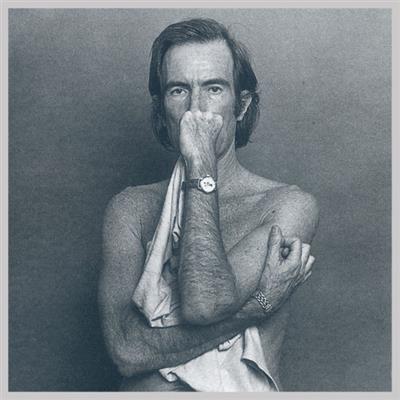
Biography
Born in Hamburg in 1932[1], Klarwein studied under Fernand Léger in Paris from 1949[1] to 1951 before apprenticing with the Austrian Fantastic Realist Ernst Fuchs, mastering the Old Master oil-and-tempera Mischtechnik technique. The training gave his densely layered compositions an almost hallucinatory depth. His monumental Aleph Sanctuary, worked on from 1963 to 1970, is the fullest statement of his ambitions: a room-sized cycle of paintings intended as a place of contemplation.
In the late 1950s Klarwein added Abdul to his name as a deliberate gesture towards Jewish-Muslim reconciliation, a preoccupation that ran through much of his imagery. Andy Warhol reportedly named him his favourite painter, and a 1970[1] Time magazine cover brought his work to audiences far beyond the music world.
He settled eventually in Deià, Mallorca, where he died in 2002[1]. His album cover work for Davis, Santana, and Earth, Wind and Fire placed visionary painting at the centre of mass culture at a moment when the two seemed briefly willing to meet.
Timeline
- 1932Born in Hamburg, Germany
- 1949Studied under Fernand Léger in Paris
- 1951Apprenticed with Ernst Fuchs
- 1963Began working on Aleph Sanctuary
- 1970Painted Santana's Abraxas album cover
- 1970Painted Miles Davis's Bitches Brew album cover
- 1970Featured on Time magazine cover
- 1970Completed Aleph Sanctuary
- 2002Died in Deià, Mallorca
Notable Works
Tap to view larger.
Next stop
Surrealism →
Explore the artists and ideas of Surrealism.
Related Artists


Frequently Asked Questions
What is Abdul Mati Klarwein known for?
Abdul Mati Klarwein is best known for his album cover work, including iconic sleeves for Santana's Abraxas and Miles Davis's Bitches Brew. His visionary painting placed him at the centre of mass culture when the art world and popular culture briefly converged.What is Abdul Mati Klarwein's most famous work?
Abdul Mati Klarwein is perhaps best known for his album cover art, particularly his work for musicians like Miles Davis. Klarwein created the cover for Davis's 1970[1] album *Bitches Brew*. This artwork is a striking, psychedelic image that has become closely associated with the album's experimental and genre-bending sound. Klarwein's cover designs often incorporated surreal and fantastical elements, reflecting his interest in visionary art and various cultural influences. He blended imagery from different traditions, creating a unique style that resonated with the counterculture movement of the late 1960s and early 1970s. His work extended beyond album covers, encompassing paintings and other visual art forms. However, it is his album art, especially *Bitches Brew*, that secured his place in popular culture.What should I know about Abdul Mati Klarwein's prints?
Abdul Mati Klarwein's prints, like all fine-art prints, exist in a complex marketplace with specific conventions. An 'original print' is conceived as a print and executed solely as a print, usually in a numbered edition and signed by the artist. Each print in the edition is an original, printed individually from a plate, stone, screen, or block created for that purpose. The artist determines the number of prints in the edition. The sequential numbering provides an accounting for the number of prints in the edition; each print has a specific number (for example, 12/25, meaning print number 12 from an edition of 25). The artist's signature is usually in pencil. The printmaker marks up each of their prints as follows: the edition claim is written as a pair of numbers on the left bottom margin of the print; the title of the print is in the middle of the bottom margin; and the signature is on the right of the bottom margin. The letters A/P signify an artist’s proof, and the convention is that they are identical to the edition; artist proofs can be up to 10 per cent of an edition.What style or movement did Abdul Mati Klarwein belong to?
Abdul Mati Klarwein is generally associated with Surrealism[1], though the classification is complex. The term "Surrealism" was coined in 1917 by Guillaume Apollinaire to describe Jean Cocteau’s ballet *Parade* and Apollinaire’s own play *Les Mamelles de Tirésias*. In 1924 André Breton adopted the word to describe a new mode of expression, encompassing poetry, painting, prose, sculpture, photography, film, and interventionist activity. Breton’s 1924 *Manifeste du surréalisme* launched the movement. However, Surrealism was never a style as such, and Surrealist art took many different forms. Rosalind Krauss notes that "style is a vexing problem for anyone dealing with surrealist art" because of the visual dissimilarity between paintings that incorporate psychic automatism and those that focus on Freudian dream interpretation. Instead, Surrealist paintings are "united around the concept of the irrationally conceived metaphoric image". Breton defined Surrealism as "a certain point of the mind at which life and death, the real and the imagined, past and future, the communicable and the incommunicable, high and low, cease to be perceived as contradictions".What techniques or materials did Abdul Mati Klarwein use?
Abdul Mati Klarwein's practice involved standard artists' oil paint mixed with a medium of wax and turpentine. The medium was kept liquid on a hot plate and mixed with the paint by brush just before application to the canvas. The mixture was applied with a brush and worked over so the medium and paint were thoroughly mixed, evenly covering the shape. The paint was then worked with a large painting spatula and a small painting knife until it reached a satisfactory state. The surface was kept constant and total, with variables such as extensive heating of the medium resulting in evaporation, which could make the paint gummy and softer. Leftover paint with wax added was often used in mixing subsequent colours. The artist was never exactly sure how much wax was added to the oil paint in the final surface, but oil remained the primary binder, as opposed to encaustic, where the wax is the binder.What was Abdul Mati Klarwein known for?
Abdul Mati Klarwein, born in Hamburg in 1932[1], was a painter best known for his surrealist works. He had a peripatetic upbringing, moving with his family to Palestine in 1934[1], and later living in Paris and Morocco. Klarwein's art often combined disparate elements in unexpected ways, a common trait among surrealist artists. These artists aimed to disrupt conventional perceptions and explore the unconscious mind. Klarwein's paintings frequently featured mystical and psychedelic imagery, reflecting his interest in diverse cultures and spiritual traditions. His work gained recognition in the 1960s and 1970s, particularly for his album cover art. He created covers for musicians such as Miles Davis (Bitches Brew, 1970), Santana (Abraxas, 1970), and Buddy Miles (Electric Church, 1969). These covers, with their fantastical and otherworldly imagery, became iconic representations of the music they accompanied. Klarwein continued to paint and exhibit his work until his death in 2002[1].When did Abdul Mati Klarwein live and work?
Abdul Mati Klarwein was born in 1932[1] and died in 2002[1]. His artistic career spanned several decades and continents. Born in Hamburg, Germany, on 9 April 1932[1], Klarwein's family fled the Nazi regime, moving first to Palestine in 1934, and then to Paris in 1938. He studied art with Fernand Léger and later at the École des Beaux-Arts. Klarwein is best known for his surreal and psychedelic paintings, often incorporating religious and mystical imagery. He created album covers for musicians such as Miles Davis (Bitches Brew, 1970) and Santana (Abraxas, 1970). Klarwein's work also appeared on albums by Buddy Miles, and The Last Poets. Klarwein lived and worked in various locations, including New York, Paris, and Deià, Majorca, where he died in 2002.Where can I see Abdul Mati Klarwein's work?
Abdul Mati Klarwein's work can be viewed in museums and public collections internationally. These include the Aarhus Kunstmuseum in Denmark; the Amos Andersonin Taidemuseo in Helsinki; and the Arkiv for Dekorativ Konst in Lund, Sweden. In the United States, his work is held at The Art Institute of Chicago; the Busch-Reisinger Museum, Harvard University, Cambridge, Massachusetts; and the Cincinnati Art Museum. Other US locations include the Cleveland Museum of Art and the Solomon R. Guggenheim Museum in New York. European locations include the Fondation Maeght in Saint Paul de Vence, France; the Fyns Stifts Kunstmuseum (Fyn County Museum of Fine Arts) in Odense, Denmark; and the Graphische Sammlung Albertina in Vienna. Klarwein's pieces are also held at the Henie-Onstad Art Center in Hovikodden, Norway; the Kunstmuseum Bern; the Kunstmuseum Luzern; and the Louisiana Museum of Modern Art, Humlebaek, Denmark. Additional museums include the Malma Museum, Sweden; the Musée des Gobelins, Mobilier National, Paris; the Musée National d'Art Moderne, Centre Georges Pompidou, Paris; the Museum of Art, Carnegie Institute, Pittsburgh; the Museum of Modern Art, Oxford; the Museum am Ostwall, Dortmund; the Nasjonalgalleriet, Oslo; and the Nationalmuseum, Stockholm.Where was Abdul Mati Klarwein from?
Abdul Mati Klarwein was born in Hamburg, Germany, in 1932[1]. His parents were both artists. His father, Joseph, was a painter of religious subjects, and his mother, Elsa, was an opera singer. Klarwein's family fled Nazi Germany in 1934[1], moving first to Palestine, then to Paris in 1939, and finally to New York in 1948. He studied at the École des Beaux-Arts in Paris in the late 1940s, and later at the Art Students League in New York. Klarwein is best known for his surrealist paintings, which often incorporate images from different cultures and religions. He produced album covers for musicians such as Miles Davis, Santana, and Jimi Hendrix. He lived in a number of places, including New York, Paris, and Deià, Majorca, where he died in 2002[1].Who did Abdul Mati Klarwein influence?
Abdul Mati Klarwein's influence can be seen in the psychedelic art movement of the 1960s, particularly in rock posters. This style, associated with the hippie generation and experimentation with LSD, drew inspiration from Art Nouveau and Jugendstil, as well as artists like Mucha and Beardsley. The rock graphics incorporated dense, swirling lines and fantastic subject matter, echoing Art Nouveau techniques. Psychedelic artists often imposed an Art Nouveau aesthetic on print text, influenced by Viennese Secessionist designers like Alfred Roller. Artists created custom letterforms that were more fanciful than legible, using optically altered colour combinations and swirling light-show underlays. This approach defied the commercial function of advertising, presenting a puzzle rather than a straightforward promotion. American artists such as Rick Griffin, Victor Moscoso, Stanley Mouse, and Wes Wilson were known for their 'New Nouveau' posters. In England, Hapshash and the Coloured Coat also produced Art Nouveau-inspired works.Who influenced Abdul Mati Klarwein?
Abdul Mati Klarwein's influences included a range of modern masters. Henri Matisse's silhouetted forms and expressive shapes offered direct inspiration, particularly his drawings. The silhouetted forms dictated attempts to freely render organic forms with emphatic positive/negative relationships. Klarwein also took cues from artists associated with the Bauhaus school. Paul Klee, with his simplified and witty style that blended figurative and abstract elements, was a significant influence. Klee aimed to create his own style devoid of preconceptions, which resonated with many artists. Wassily Kandinsky, another Bauhaus figure, also had an impact. Klarwein's artistic development reflects an engagement with both the expressive figuration of Matisse and the abstract tendencies of the Bauhaus.Why are Abdul Mati Klarwein's works important today?
Abdul Mati Klarwein (1932[1]-2002[1]) is best known for his surreal and psychedelic paintings, often associated with the counterculture of the 1960s and 1970s. His work appeared on album covers for musicians such as Miles Davis, Santana, and Jimi Hendrix, bringing his art to a broad audience. Klarwein's art combined elements from various cultures and traditions, reflecting a cosmopolitan sensibility. He drew inspiration from European art history, as well as African, Asian, and pre-Columbian art. His paintings often feature dreamlike imagery, exploring themes of spirituality, sexuality, and altered states of consciousness. Klarwein's approach disregarded conventional artistic boundaries, opening up questions about the impact of modernity on the individual. Despite political and ideological obstacles, his focus on the relationship between modernism and subjectivity influenced emerging artists. His journey through modernism, which advocated discovering materials and processes, exploring the inner self, and seeking a relationship with society, was significant for subsequent developments.
Sources
Editorial draws on the following primary and tertiary references for Abdul Mati Klarwein.
- [1] wikipedia Wikipedia: Abdul Mati Klarwein Used for: biography, birth dates, death dates, identifiers, movement attribution, nationality.
- [2] book guggenheim-futurismmodernfo00solo Used for: biography.
- [3] book guggenheim-twopri00weis Used for: biography.
- [4] book Masterpieces of western art : a history of art in 900 individual studies from the Gothic to the present day Used for: biography.
Editorial overseen by Solis Prints. Sources verified 2026-09-30. Click a source for details, or hover over [N] in the page above to preview.
Editorial standardsMethodologyCorrectionsAI disclosureAbout the editorial team