



Carl Wilhelm Kolbe
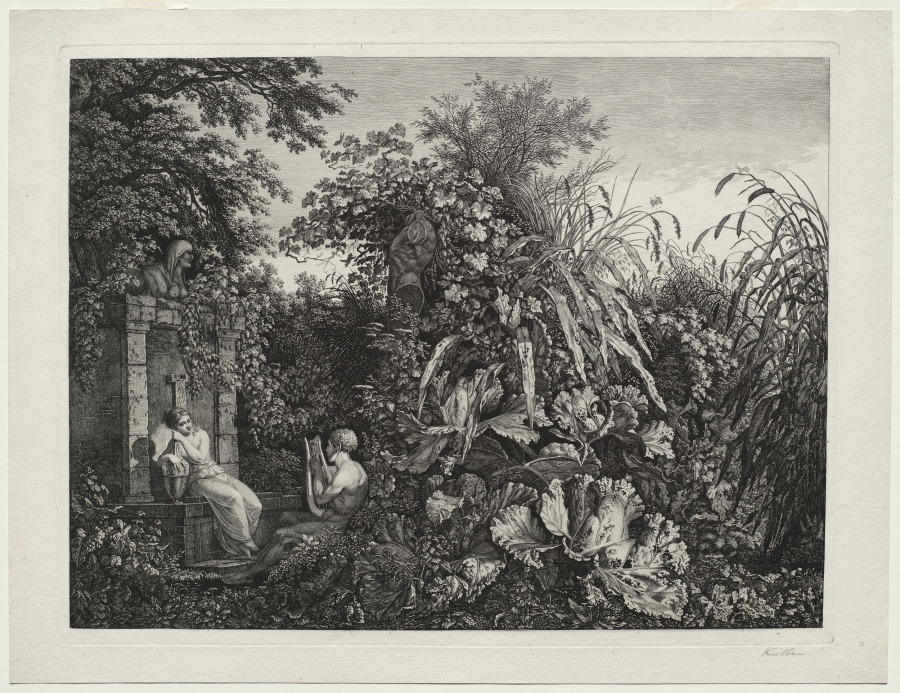
Carl Wilhelm Kolbe did not begin his artistic career until his mid-thirties. Before turning to printmaking, he worked as a linguist and a teacher at the Philanthropinum in Dessau. His transition from the study of language to the study of nature resulted in a highly disciplined approach to etching. He became known for his obsessive focus on botanical details, particularly the massive leaves of the butterbur plant. These plants often dominate his compositions, dwarfing the human figures.
Biography
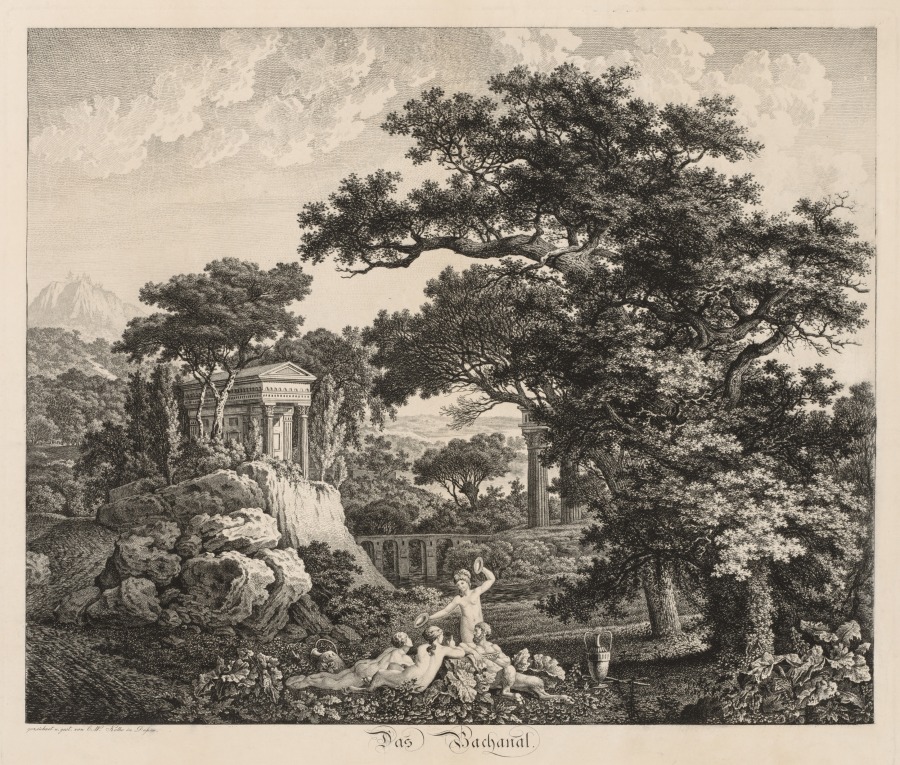
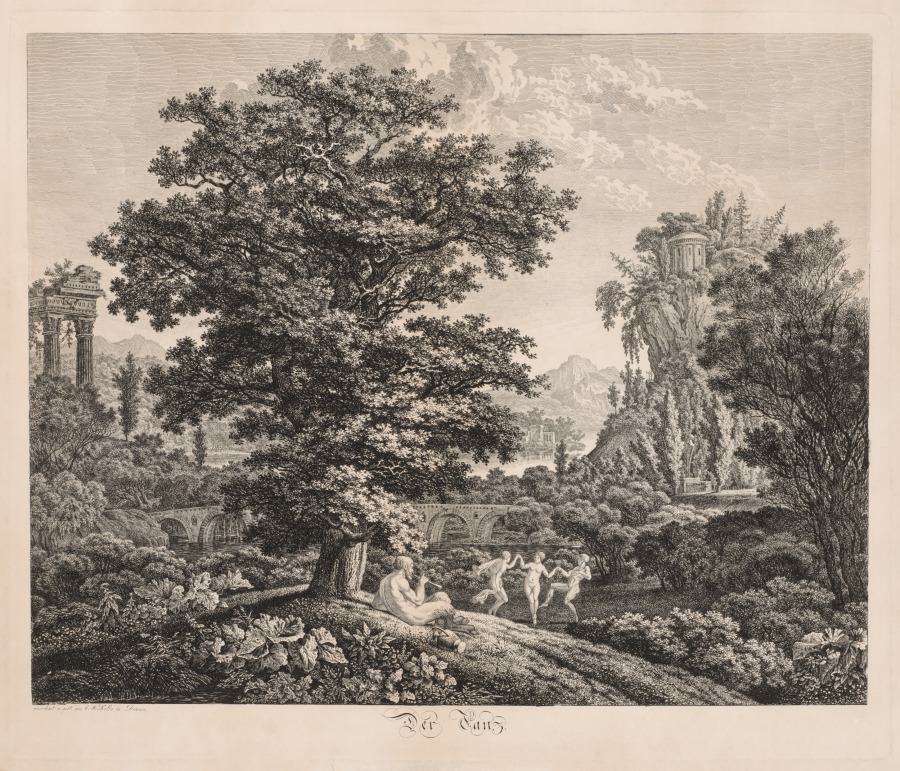
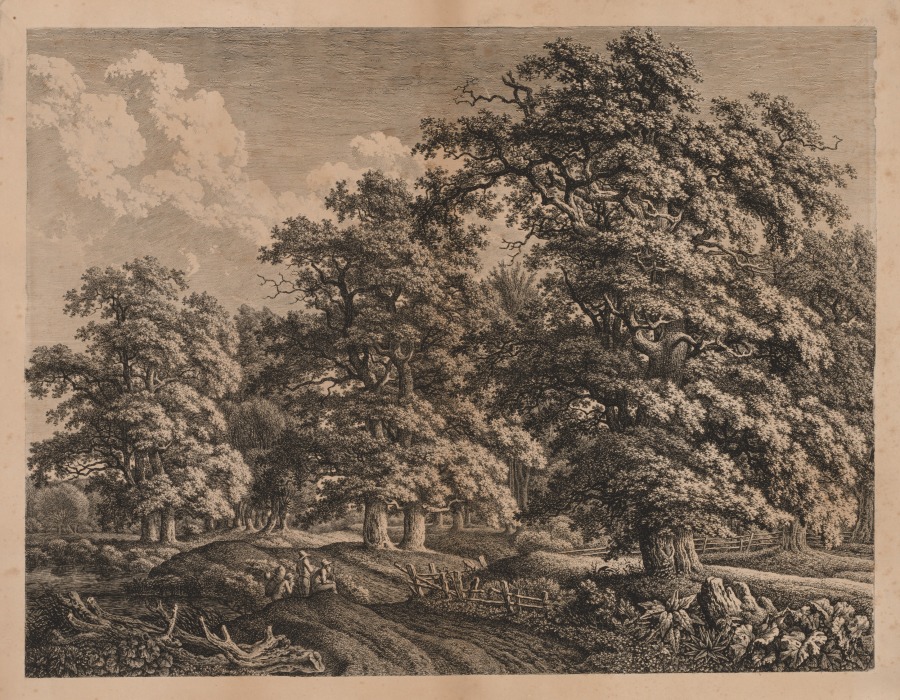
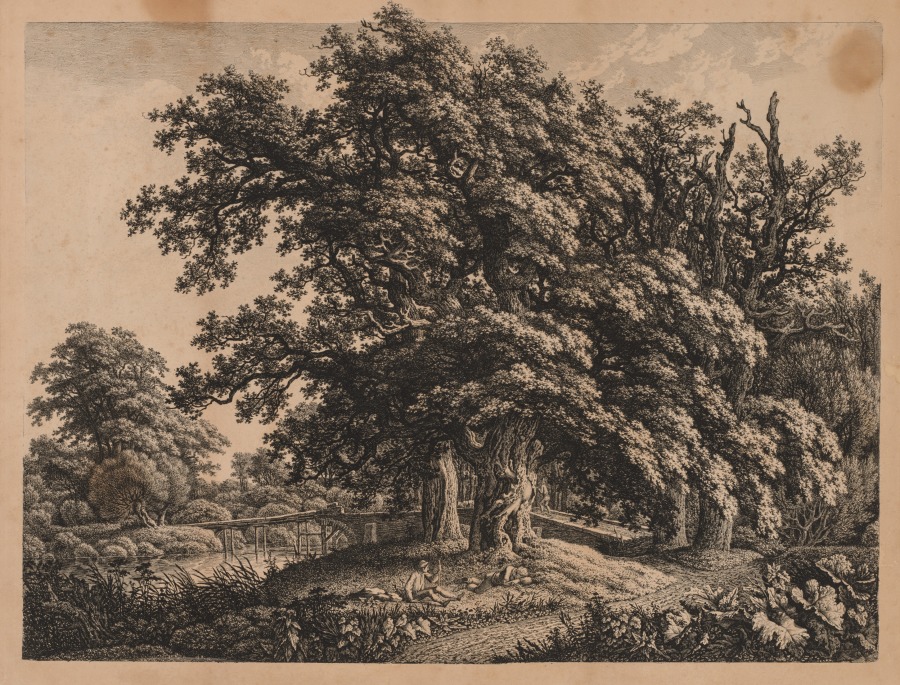
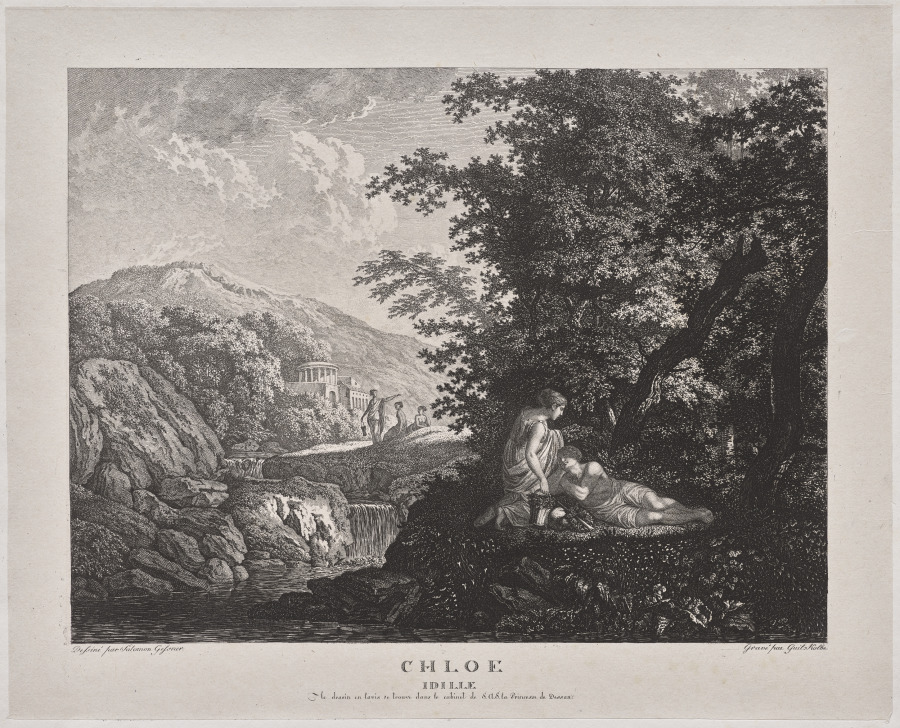
His work belongs to the German Romantic tradition but maintains a strict Neoclassical precision. Kolbe earned the nickname "Oak Kolbe" because of his frequent depictions of ancient, gnarled trees. He often placed figures from classical idylls, such as Chloe or Damon and Phyllis, within dense, overgrown forests. These scenes create a sense of isolation and quietude. His technique involved dense cross-hatching to build deep shadows. This method makes his forests appear almost impenetrable.
Modern collectors value Kolbe for his unique botanical perspective. His prints do not treat the natural world as a backdrop. Instead, elements like the cascade or the fountain in the wood become the primary subjects. The large-scale foliage and dramatic contrasts of light and shadow suit contemporary interiors that favour monochrome art. His etchings provide a bridge between traditional pastoral themes and a modern focus on the physical textures of plant life.
Notable Works
Tap to view larger.
Next stop
Browse the movements →
Every movement in the collection, from the Renaissance to Pop art.
Carl Wilhelm Kolbe prints
Hand-finished archival prints from Carl Wilhelm Kolbe's body of work.

Related Artists


Take Carl Wilhelm Kolbe home.
See all Carl Wilhelm Kolbe prints →Frequently Asked Questions
When was Carl Wilhelm Kolbe born?
Carl Wilhelm Kolbe was born in 1759 and died in 1835.What is Carl Wilhelm Kolbe known for?
Carl Wilhelm Kolbe is known for carl Wilhelm Kolbe was a Prussian linguist turned printmaker known for his precise etchings of oversized botanical forms and idyllic forest scenes.