

Sammlung
Max Ernst
Entdecken Sie kuratierte Kunstdrucke, ausgewählt für individuelle Wohnräume und durchdachte Interieurs.
Vorgeschlagene Filter
-
 Of This Men Shall Know Nothing - Max Ernst
Print
Regulärer Preis Ab £28.00 GBPAngebotspreis Ab £28.00 GBP Regulärer Preis -
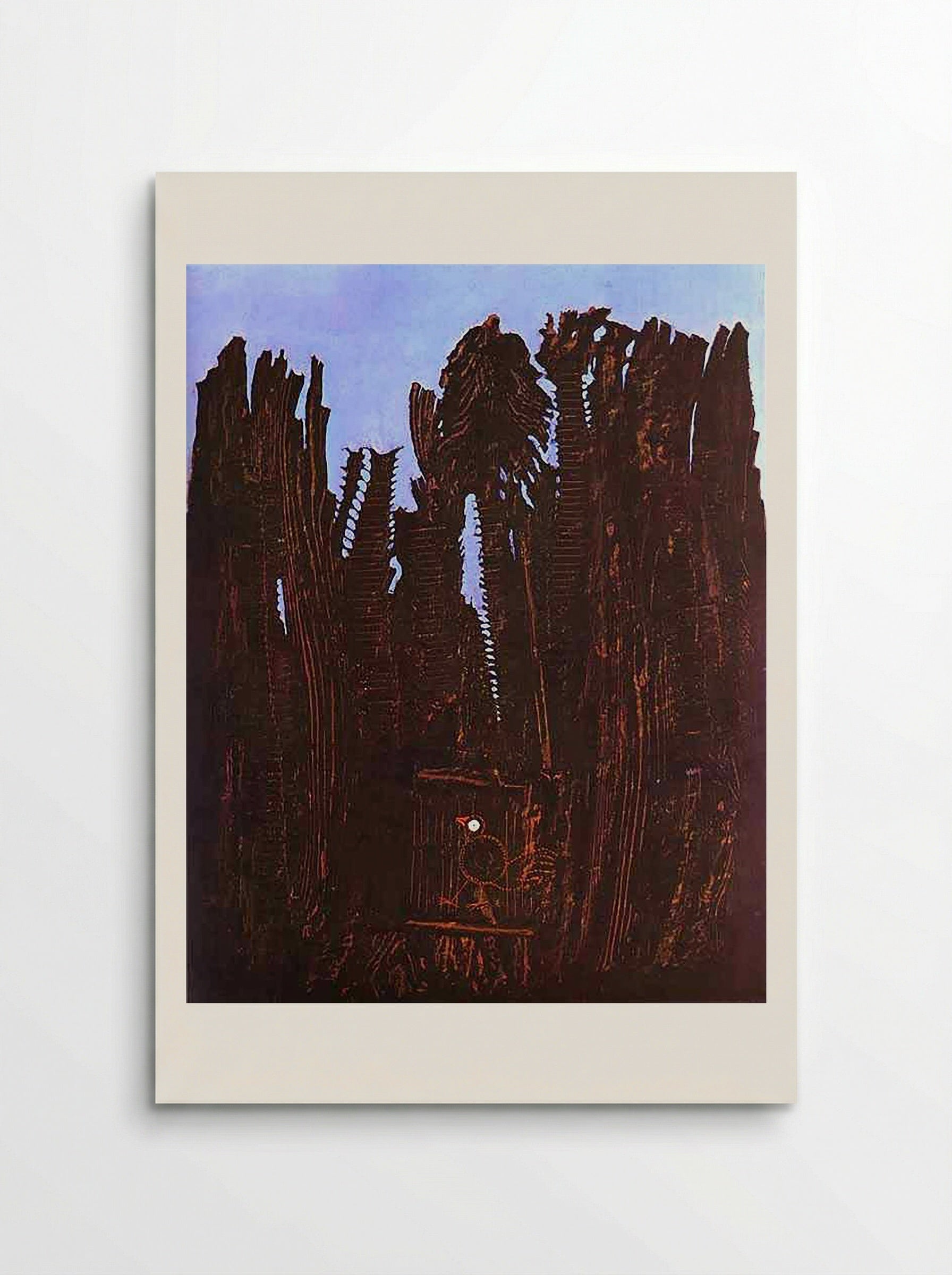
 Wald und Taube – Kunstdruck
Print · Framed
Regulärer Preis Ab £28.00 GBPAngebotspreis Ab £28.00 GBP Regulärer Preis -

 The Virgin Spanking the Christ Child before Three Witnesses: Andre Breton, Paul Eluard, and the Painter - Max Ernst
Print · Framed
Regulärer Preis Ab £28.00 GBPAngebotspreis Ab £28.00 GBP Regulärer Preis -

 A Friends' Reunion - Max Ernst
Print · Framed
Regulärer Preis Ab £28.00 GBPAngebotspreis Ab £28.00 GBP Regulärer Preis -
 Two Children are Threatened by a Nightingale - Max Ernst
Print
Regulärer Preis Ab £37.00 GBPAngebotspreis Ab £37.00 GBP Regulärer Preis -
 The Elephant Celebes - Max Ernst
Print
Regulärer Preis Ab £28.00 GBPAngebotspreis Ab £28.00 GBP Regulärer Preis -
 The Temptation of Saint Anthony - Max Ernst
Print
Regulärer Preis Ab £28.00 GBPAngebotspreis Ab £28.00 GBP Regulärer Preis -
 The Hat Makes the Man - Max Ernst
Print
Regulärer Preis Ab £28.00 GBPAngebotspreis Ab £28.00 GBP Regulärer Preis -
 Compendium of the History of the Universe - Max Ernst
Print
Regulärer Preis Ab £28.00 GBPAngebotspreis Ab £28.00 GBP Regulärer Preis -
 Everyone Here Speaks Latin - Max Ernst
Print
Regulärer Preis Ab £37.00 GBPAngebotspreis Ab £37.00 GBP Regulärer Preis -
 The Gray Forest - Max Ernst
Print
Regulärer Preis Ab £28.00 GBPAngebotspreis Ab £28.00 GBP Regulärer Preis -
 A Night of Love - Max Ernst
Print
Regulärer Preis Ab £28.00 GBPAngebotspreis Ab £28.00 GBP Regulärer Preis -
 Illustration to Une Semaine de Bonté - Max Ernst
Print
Regulärer Preis Ab £28.00 GBPAngebotspreis Ab £28.00 GBP Regulärer Preis -
 Gala Éluard - Max Ernst
Print
Regulärer Preis Ab £28.00 GBPAngebotspreis Ab £28.00 GBP Regulärer Preis -
 Fruit of a Long Experience - Max Ernst
Print
Regulärer Preis Ab £28.00 GBPAngebotspreis Ab £28.00 GBP Regulärer Preis -
 Katharina Ondulata - Max Ernst
Print
Regulärer Preis Ab £37.00 GBPAngebotspreis Ab £37.00 GBP Regulärer Preis -
 Ubu Imperator - Max Ernst
Print
Regulärer Preis Ab £28.00 GBPAngebotspreis Ab £28.00 GBP Regulärer Preis -
 A Maiden, a Widow and a Wife - Max Ernst
Print
Regulärer Preis Ab £28.00 GBPAngebotspreis Ab £28.00 GBP Regulärer Preis -
 Fishbone Forest - Max Ernst
Print
Regulärer Preis Ab £28.00 GBPAngebotspreis Ab £28.00 GBP Regulärer Preis -
 33 Little Girls Chasing Butterflies - Max Ernst
Print
Regulärer Preis Ab £28.00 GBPAngebotspreis Ab £28.00 GBP Regulärer Preis -
 Seascape - Max Ernst
Print
Regulärer Preis Ab £28.00 GBPAngebotspreis Ab £28.00 GBP Regulärer Preis -
 The Blue Forest - Max Ernst
Print
Regulärer Preis Ab £28.00 GBPAngebotspreis Ab £28.00 GBP Regulärer Preis -
 The World Map Makes a Mockery - Max Ernst
Print
Regulärer Preis Ab £28.00 GBPAngebotspreis Ab £28.00 GBP Regulärer Preis -
 Loplop Introduces Loplop - Max Ernst
Print
Regulärer Preis Ab £28.00 GBPAngebotspreis Ab £28.00 GBP Regulärer Preis


Artist Biography
Max Ernst
Ernst invented frottage because he was staring at a wooden floor. He was in a hotel room in 1925, looking at the grain of the floorboards, and saw figures and landscapes in the patterns. He placed paper over the surface and rubbed it with graphite. The textures that emerged, wood grain transformed into forests, oceans, and strange organic forms, became the basis of his painting technique for the next decade.
He was born in Brühl, near Cologne, and studied philosophy and art history at the University of Bonn. He had no formal art training. He saw a Picasso exhibition, joined the Rhineland Expressionists, served in the German army during the First World War (artillery), and emerged with what he described as a compulsion to find something beyond rational thought. Dada gave him the method. Surrealism gave him the framework.
His collage novels, made from cut-up Victorian engravings reassembled into dreamlike narratives, are among the most original works of the twentieth century. Une Semaine de Bonte (A Week of Kindness, 1934) is a series of 182 collages arranged in five chapters, each associated with an element and a day of the week. The imagery is violent, erotic, and funny. The source material, melodramatic Victorian illustrations, is treated with deadpan seriousness.
He married four times. His second wife was Peggy Guggenheim (briefly). His fourth was the painter Dorothea Tanning. He moved to America during the war, lived in Sedona, Arizona, and then returned to France. He died in Paris in 1976, the night before his eighty-fifth birthday.
He was born in Brühl, near Cologne, and studied philosophy and art history at the University of Bonn. He had no formal art training. He saw a Picasso exhibition, joined the Rhineland Expressionists, served in the German army during the First World War (artillery), and emerged with what he described as a compulsion to find something beyond rational thought. Dada gave him the method. Surrealism gave him the framework.
His collage novels, made from cut-up Victorian engravings reassembled into dreamlike narratives, are among the most original works of the twentieth century. Une Semaine de Bonte (A Week of Kindness, 1934) is a series of 182 collages arranged in five chapters, each associated with an element and a day of the week. The imagery is violent, erotic, and funny. The source material, melodramatic Victorian illustrations, is treated with deadpan seriousness.
He married four times. His second wife was Peggy Guggenheim (briefly). His fourth was the painter Dorothea Tanning. He moved to America during the war, lived in Sedona, Arizona, and then returned to France. He died in Paris in 1976, the night before his eighty-fifth birthday.
Related Artists


Warum uns wählen?