

Collection
Giovanni Bellini
Explore curated art prints selected for distinctive homes and considered interiors.
-

 Madonna and Child with Saints and a Donor - Giovanni Bellini
Print · Framed
Regular price From £28.00 GBPSale price From £28.00 GBP Regular price -

 Sacred Allegory - Giovanni Bellini
Print · Framed
Regular price From £28.00 GBPSale price From £28.00 GBP Regular price -

 The San Giobbe Altarpiece Detail of Music Making Angels - Giovanni Bellini
Print · Framed
Regular price From £28.00 GBPSale price From £28.00 GBP Regular price -

 Saint Francis in the Desert - Giovanni Bellini
Print · Framed · Canvas
Regular price From £30.00 GBPSale price From £30.00 GBP Regular price -

 Polyptych of San Vincenzo Ferreri - Giovanni Bellini
Print · Framed · Canvas
Regular price From £28.00 GBPSale price From £28.00 GBP Regular price -

 St Jerome Reading in the Countryside - Giovanni Bellini
Print · Framed · Canvas
Regular price From £28.00 GBPSale price From £28.00 GBP Regular price -

 St. Jerome, St. Christopher and St. Augustine - Giovanni Bellini
Print · Framed · Canvas
Regular price From £28.00 GBPSale price From £28.00 GBP Regular price -

 Madonna and Child - Giovanni Bellini
Print · Framed · Canvas
Regular price From £28.00 GBPSale price From £28.00 GBP Regular price -

 Dead Christ Supported by the Madonna and St. John - Giovanni Bellini
Print · Framed · Canvas
Regular price From £28.00 GBPSale price From £28.00 GBP Regular price -

 Madonna, with Child Standing on a Parapet - Giovanni Bellini
Print · Framed · Canvas
Regular price From £28.00 GBPSale price From £28.00 GBP Regular price -

 Head of St John the Baptist - Giovanni Bellini
Print · Framed · Canvas
Regular price From £30.00 GBPSale price From £30.00 GBP Regular price -

 Greek Madonna - Giovanni Bellini
Print · Framed · Canvas
Regular price From £28.00 GBPSale price From £28.00 GBP Regular price -

 Presentation at the Temple - Giovanni Bellini
Print · Framed · Canvas
Regular price From £28.00 GBPSale price From £28.00 GBP Regular price -

 Portrait of a Young Man in Red - Giovanni Bellini
Print · Framed · Canvas
Regular price From £28.00 GBPSale price From £28.00 GBP Regular price -

 St. Mark Preaching in Alexandria - Giovanni Bellini
Print · Framed · Canvas
Regular price From £28.00 GBPSale price From £28.00 GBP Regular price -

 Portrait of Fra Theodoro da Urbino - Giovanni Bellini
Print · Framed · Canvas
Regular price From £28.00 GBPSale price From £28.00 GBP Regular price -

 Baptism of Christ - Giovanni Bellini
Print · Framed · Canvas
Regular price From £28.00 GBPSale price From £28.00 GBP Regular price -

 Dead Christ Supported by Angels - Giovanni Bellini
Print · Framed · Canvas
Regular price From £28.00 GBPSale price From £28.00 GBP Regular price -

 Madonna with Trees - Giovanni Bellini
Print · Framed · Canvas
Regular price From £28.00 GBPSale price From £28.00 GBP Regular price -

 Holy Conversation - Giovanni Bellini
Print · Framed · Canvas
Regular price From £28.00 GBPSale price From £28.00 GBP Regular price -

 The Crucifixion - Giovanni Bellini
Print · Framed · Canvas
Regular price From £28.00 GBPSale price From £28.00 GBP Regular price -

 The Redeemer - Giovanni Bellini
Print · Framed · Canvas
Regular price From £28.00 GBPSale price From £28.00 GBP Regular price -

 The Annunciation - Giovanni Bellini
Print · Framed · Canvas
Regular price From £30.00 GBPSale price From £30.00 GBP Regular price -
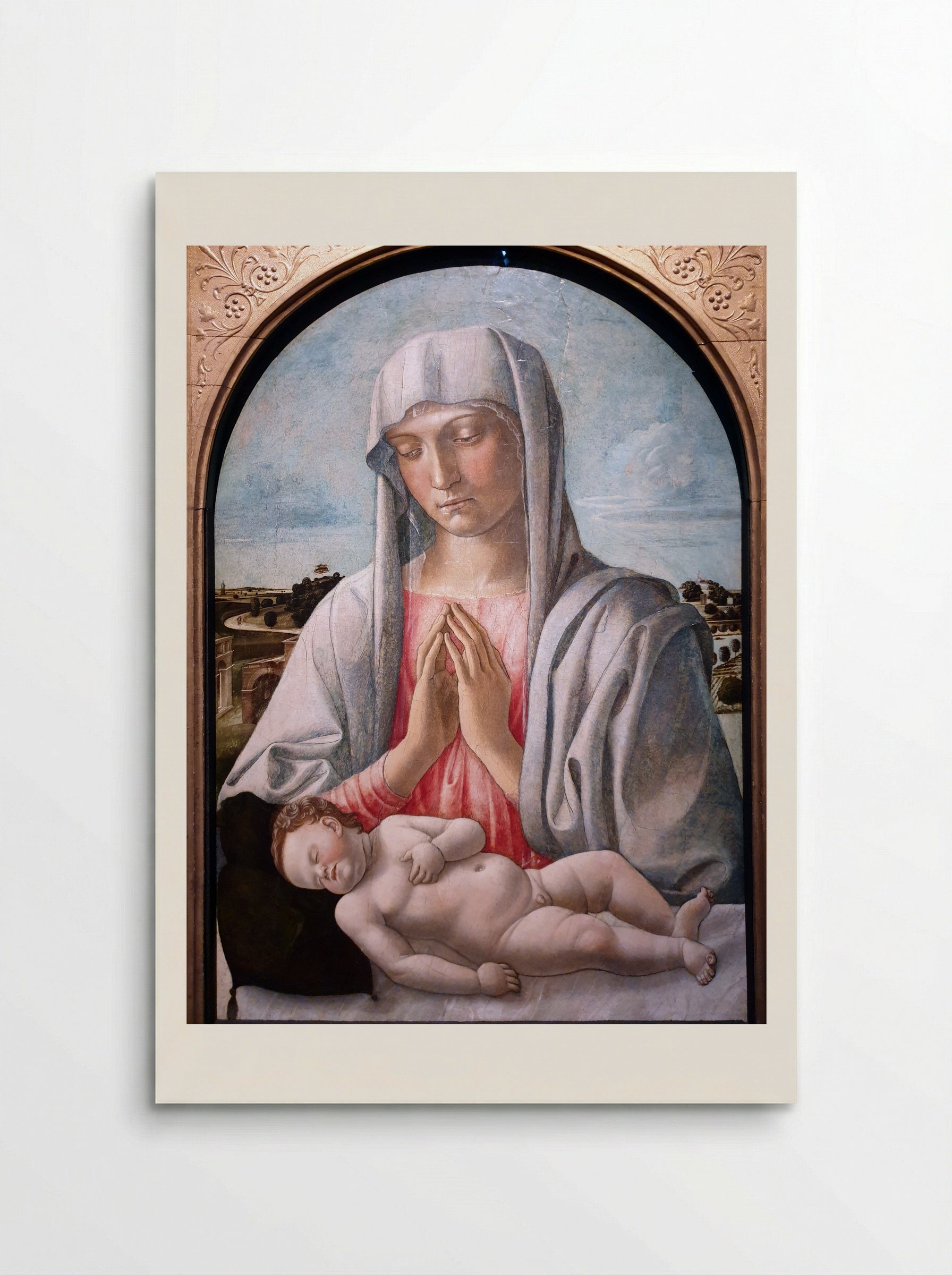
 Madonna Adoring the Sleeping Child - Giovanni Bellini
Print · Framed · Canvas
Regular price From £28.00 GBPSale price From £28.00 GBP Regular price


Artist Biography
Giovanni Bellini
Bellini ran the most important painting workshop in Venice for over half a century. Whether he was the son or the younger brother of Jacopo Bellini has been debated by scholars since Daniel Maze challenged the traditional assumption; what is not debated is that by the 1470s, Giovanni had surpassed everyone in the family. His older brother Gentile was more famous during their lifetimes, but that ranking has been reversed for centuries.
His brother-in-law was Andrea Mantegna, who married Jacopo's daughter Nicolosia. The two men influenced each other constantly: Mantegna's hard, sculptural line pushed Bellini toward precision, while Bellini's instinct for colour and atmosphere gradually softened Mantegna's edges. The dialogue between them is one of the most productive in Renaissance art.
He transformed Venetian painting by introducing oil glazes over tempera, a technique he adapted from Antonello da Messina after Antonello visited Venice in 1475. The new method allowed him to build up translucent layers of colour that captured the specific quality of Venetian light: soft, diffused, reflected off water. Before Bellini, Venetian painters worked in the dry, linear style of the rest of Italy. After Bellini, Venice had its own tradition.
Titian and Giorgione both came through his workshop. Titian may have caused him some annoyance; their professional relationship was complicated. But Bellini was painting into his eighties, still the official painter of the Venetian Republic, and still producing work that held its own against pupils forty years younger.
When Albrecht Durer visited Venice in 1505, he said Bellini was very old but still the greatest artist of them all.
His brother-in-law was Andrea Mantegna, who married Jacopo's daughter Nicolosia. The two men influenced each other constantly: Mantegna's hard, sculptural line pushed Bellini toward precision, while Bellini's instinct for colour and atmosphere gradually softened Mantegna's edges. The dialogue between them is one of the most productive in Renaissance art.
He transformed Venetian painting by introducing oil glazes over tempera, a technique he adapted from Antonello da Messina after Antonello visited Venice in 1475. The new method allowed him to build up translucent layers of colour that captured the specific quality of Venetian light: soft, diffused, reflected off water. Before Bellini, Venetian painters worked in the dry, linear style of the rest of Italy. After Bellini, Venice had its own tradition.
Titian and Giorgione both came through his workshop. Titian may have caused him some annoyance; their professional relationship was complicated. But Bellini was painting into his eighties, still the official painter of the Venetian Republic, and still producing work that held its own against pupils forty years younger.
When Albrecht Durer visited Venice in 1505, he said Bellini was very old but still the greatest artist of them all.




Why Choose Us ?