

Collection
Dante Gabriel Rossetti
Explore curated art prints selected for distinctive homes and considered interiors.
-
 The Gate of Memory - Dante Gabriel Rossetti
Print
Regular price From £28.00 GBPSale price From £28.00 GBP Regular price -
 King René's Honeymoon - Dante Gabriel Rossetti
Print
Regular price From £28.00 GBPSale price From £28.00 GBP Regular price -
 The First Madness of Ophelia - Dante Gabriel Rossetti
Print
Regular price From £28.00 GBPSale price From £28.00 GBP Regular price -
 Ecce Ancilla Domini! - Dante Gabriel Rossetti
Print
Regular price From £28.00 GBPSale price From £28.00 GBP Regular price -
 Before the Battle - Dante Gabriel Rossetti
Print
Regular price From £28.00 GBPSale price From £28.00 GBP Regular price -
 The Beautiful Hand - Dante Gabriel Rossetti
Print
Regular price From £28.00 GBPSale price From £28.00 GBP Regular price -
 Joli Coeur - Dante Gabriel Rossetti
Print
Regular price From £28.00 GBPSale price From £28.00 GBP Regular price -
 Giotto Painting the Portrait of Dante - Dante Gabriel Rossetti
Print
Regular price From £28.00 GBPSale price From £28.00 GBP Regular price -
 Fair Rosamund - Dante Gabriel Rossetti
Print
Regular price From £28.00 GBPSale price From £28.00 GBP Regular price -
 Monna Rosa - Dante Gabriel Rossetti
Print
Regular price From £28.00 GBPSale price From £28.00 GBP Regular price -
 The Laboratory - Dante Gabriel Rossetti
Print
Regular price From £28.00 GBPSale price From £28.00 GBP Regular price -
 Mariana - Dante Gabriel Rossetti
Print
Regular price From £28.00 GBPSale price From £28.00 GBP Regular price -
 Roman de la Rose - Dante Gabriel Rossetti
Print
Regular price From £37.00 GBPSale price From £37.00 GBP Regular price -
 Writing on the Sand - Dante Gabriel Rossetti
Print
Regular price From £37.00 GBPSale price From £37.00 GBP Regular price -
 The Woman at the Window (Jane Morris) - Dante Gabriel Rossetti
Print
Regular price From £28.00 GBPSale price From £28.00 GBP Regular price -
 Saint Catherine - Dante Gabriel Rossetti
Print
Regular price From £28.00 GBPSale price From £28.00 GBP Regular price -
 Golden Tresses - Dante Gabriel Rossetti
Print
Regular price From £28.00 GBPSale price From £28.00 GBP Regular price -
 Astarte Syriaca - Dante Gabriel Rossetti
Print
Regular price From £28.00 GBPSale price From £28.00 GBP Regular price -
 Alexa Wilding - Dante Gabriel Rossetti
Print
Regular price From £28.00 GBPSale price From £28.00 GBP Regular price -
 Sancta Lilias - Dante Gabriel Rossetti
Print
Regular price From £37.00 GBPSale price From £37.00 GBP Regular price -

 Ecce Ancilla Domini - Dante Gabriel Rossetti
Print · Framed · Canvas
Regular price From £28.00 GBPSale price From £28.00 GBP Regular price -

 La Donna della Finestra - Dante Gabriel Rossetti
Print · Framed · Canvas
Regular price From £30.00 GBPSale price From £30.00 GBP Regular price -

 Lady Lilith - Dante Gabriel Rossetti
Print · Framed · Canvas
Regular price From £30.00 GBPSale price From £30.00 GBP Regular price -
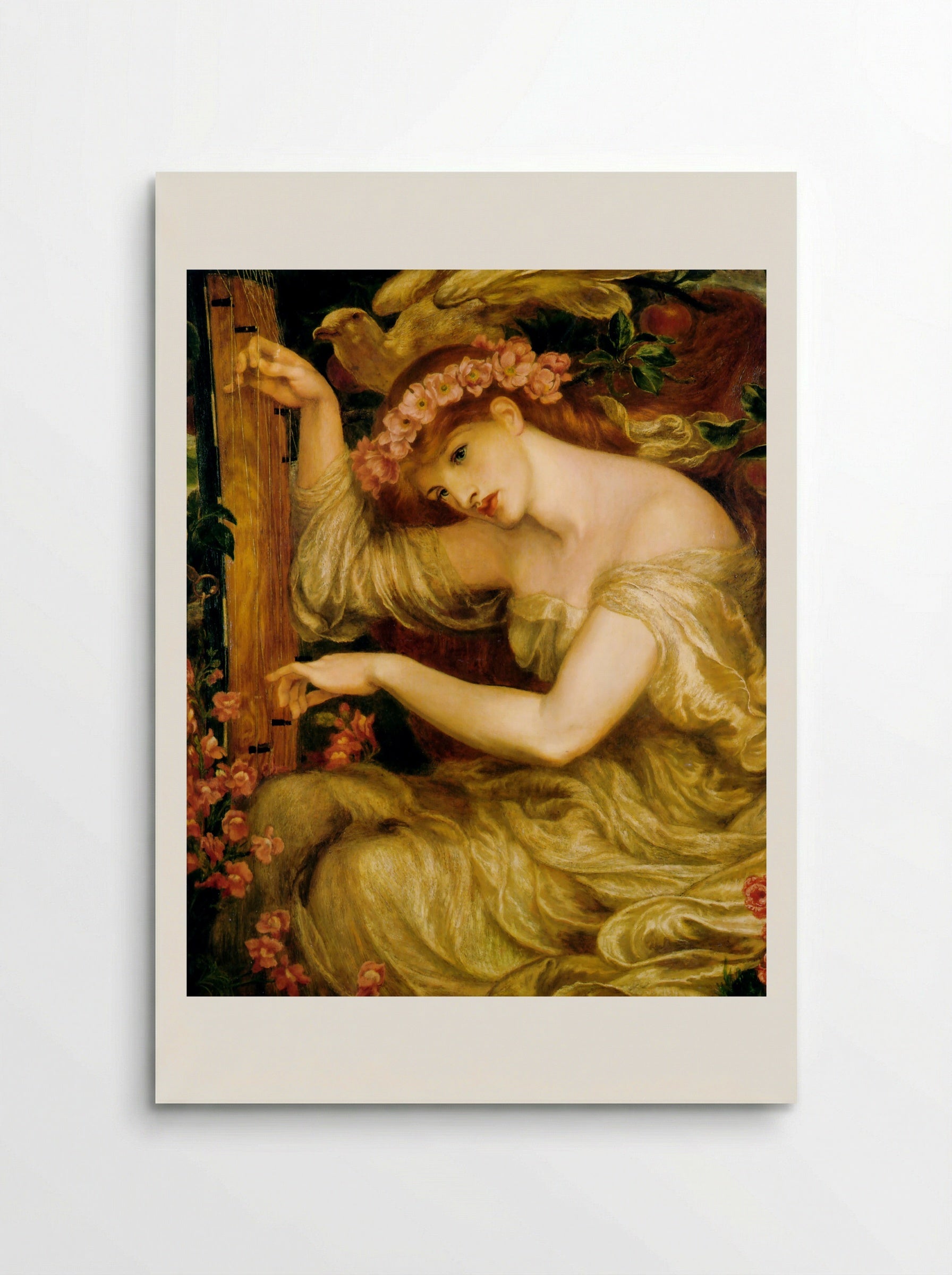 Ligeia Siren - Dante Gabriel Rossetti
Print
Regular price From £28.00 GBPSale price From £28.00 GBP Regular price


Artist Biography
Dante Gabriel Rossetti
Rossetti was the engine of the Pre-Raphaelite Brotherhood. He co-founded it in 1848 with Holman Hunt and John Everett Millais, writing the manifesto, recruiting members, and generating the intensity that held the group together. He was nineteen. The name was deliberately provocative: they wanted to reject everything after Raphael, which was most of Western art.
He was born in London to an Italian political exile and named after the author of the Divine Comedy. His father was a professor of Italian at King's College. The household ran on poetry, politics, and argument. Rossetti wrote verse throughout his life and considered himself a poet as much as a painter.
His early paintings are small, bright, and meticulously detailed in the Pre-Raphaelite manner. The Girlhood of Mary Virgin and Ecce Ancilla Domini have the flat, jewelled quality of medieval altarpieces. After 1860 the style changed. The paintings became larger, more sensual, and dominated by the face and figure of Jane Burden, who was William Morris's wife.
The relationship between Rossetti, Morris, and Jane is one of the more uncomfortable triangles in art history. Morris married her. Rossetti painted her obsessively. She modelled for Proserpine, La Pia de' Tolomei, and dozens of other works in which she appears as a mythological woman trapped in an unwanted situation. Whether the affair was physical remains debated. Morris, characteristically, said nothing publicly and channelled his feelings into wallpaper.
Rossetti buried a manuscript of his poems in his wife Lizzie Siddal's coffin when she died of a laudanum overdose in 1862. Seven years later he had the coffin exhumed to retrieve them. He published the poems. He was addicted to chloral hydrate by then and increasingly paranoid. He died in 1882, at fifty-three.
He was born in London to an Italian political exile and named after the author of the Divine Comedy. His father was a professor of Italian at King's College. The household ran on poetry, politics, and argument. Rossetti wrote verse throughout his life and considered himself a poet as much as a painter.
His early paintings are small, bright, and meticulously detailed in the Pre-Raphaelite manner. The Girlhood of Mary Virgin and Ecce Ancilla Domini have the flat, jewelled quality of medieval altarpieces. After 1860 the style changed. The paintings became larger, more sensual, and dominated by the face and figure of Jane Burden, who was William Morris's wife.
The relationship between Rossetti, Morris, and Jane is one of the more uncomfortable triangles in art history. Morris married her. Rossetti painted her obsessively. She modelled for Proserpine, La Pia de' Tolomei, and dozens of other works in which she appears as a mythological woman trapped in an unwanted situation. Whether the affair was physical remains debated. Morris, characteristically, said nothing publicly and channelled his feelings into wallpaper.
Rossetti buried a manuscript of his poems in his wife Lizzie Siddal's coffin when she died of a laudanum overdose in 1862. Seven years later he had the coffin exhumed to retrieve them. He published the poems. He was addicted to chloral hydrate by then and increasingly paranoid. He died in 1882, at fifty-three.


Why Choose Us ?