Alexander Calder

About Alexander Calder

Calder made sculpture move. Not kinetic in the art-school sense, but actually move: suspended from wires, turning in air currents, changing shape as you watch. Duchamp named them 'mobiles'. Arp named the stationary ones 'stabiles'. Calder accepted both names and kept working.

He was born in Lawnton, Pennsylvania, into a family of sculptors. His grandfather made the statue of William Penn on top of Philadelphia City Hall. His father made public monuments. His mother painted. He studied mechanical engineering at Stevens Institute of Technology before deciding he would rather make things that were not useful.

Read full bio

Filters

Sort by:

7 products

Blue Drop - Alexander Calder - Poster
Blue Drop - Alexander Calder

Print

Sale priceFrom £37.00
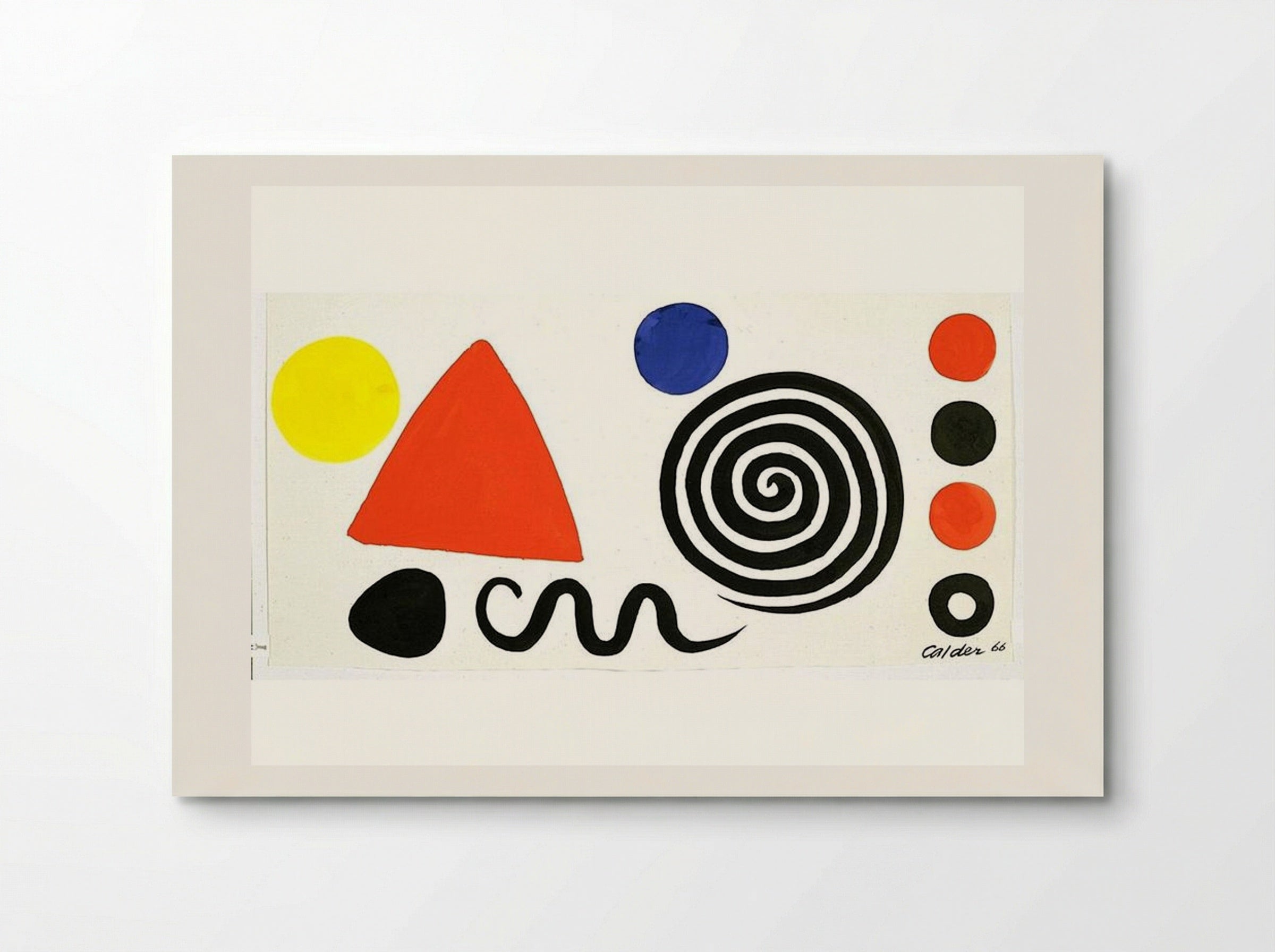
Abstraction (1966) - Alexander Calder - Poster
Abstraction (1966) - Alexander Calder

Print

Sale priceFrom £28.00
7 Circles Abstract - Alexander Calder - Poster
7 Circles Abstract - Alexander Calder

Print

Sale priceFrom £28.00
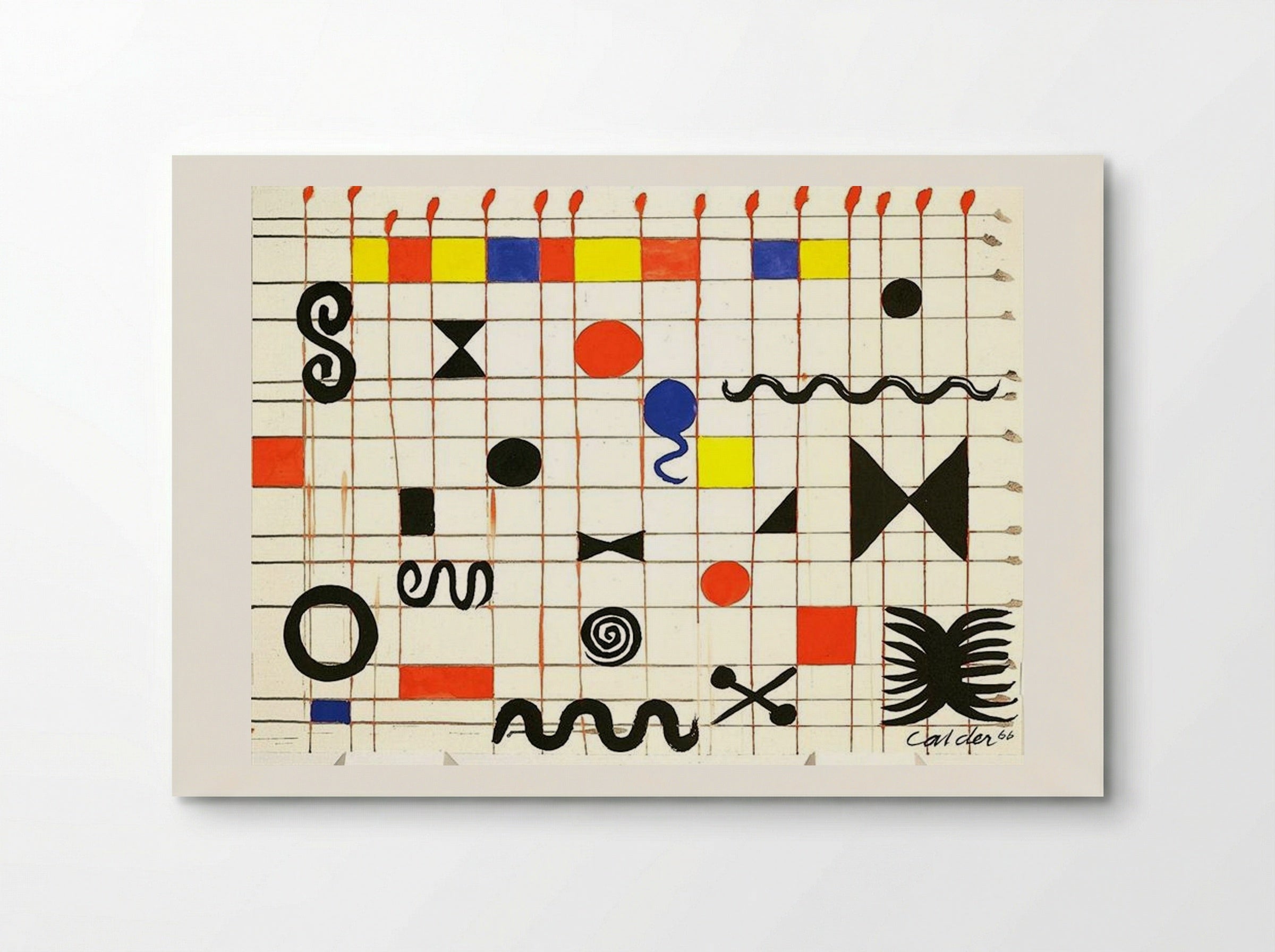
Grid With Symbols - Alexander Calder - Poster
Grid With Symbols - Alexander Calder

Print

Sale priceFrom £28.00
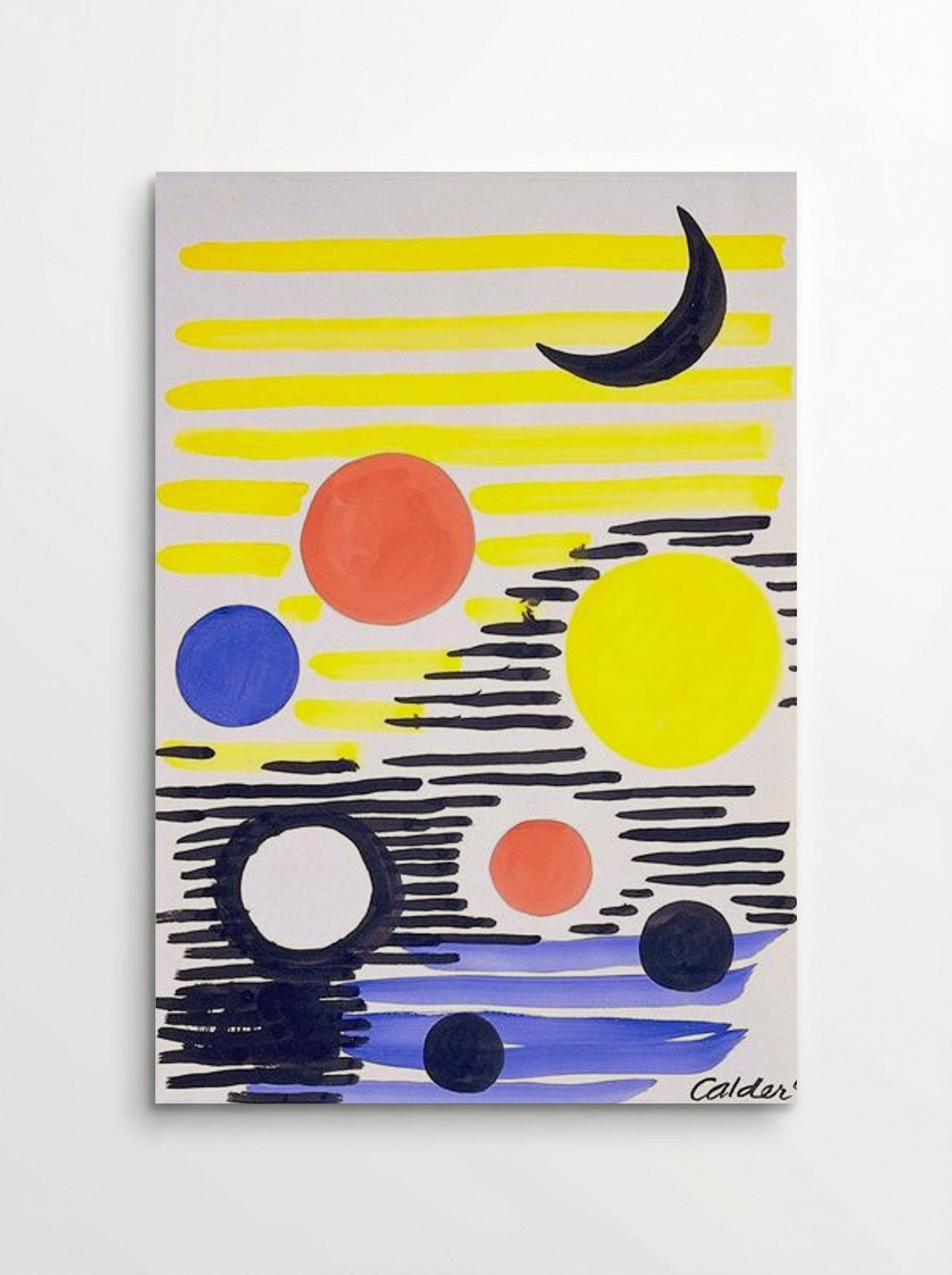
Across the Orange Moons - Alexander Calder - Poster
Across the Orange Moons - Alexander Calder

Print

Sale priceFrom £28.00
Waves - Alexander Calder - Poster
Waves - Alexander Calder

Print

Sale priceFrom £37.00
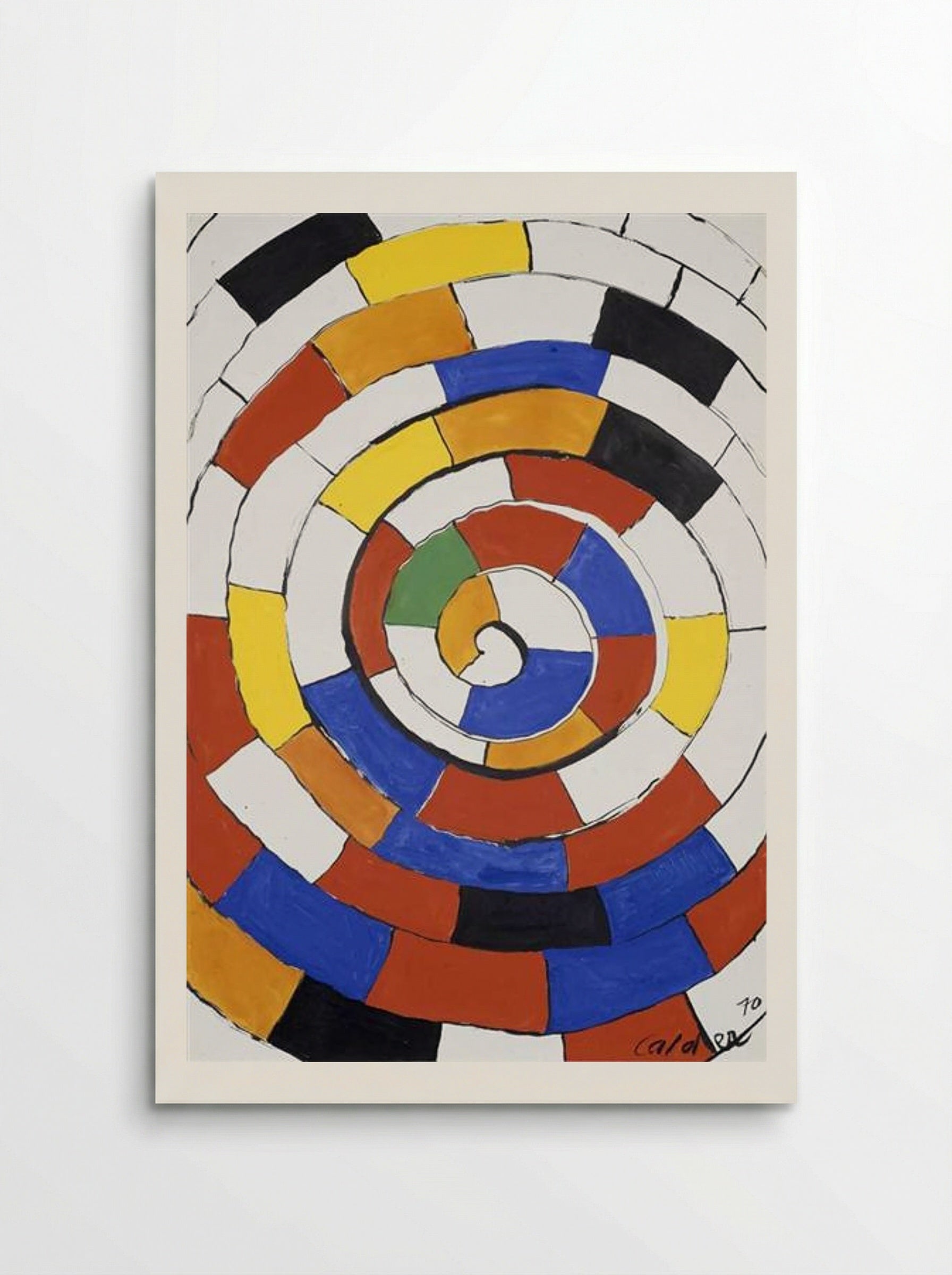
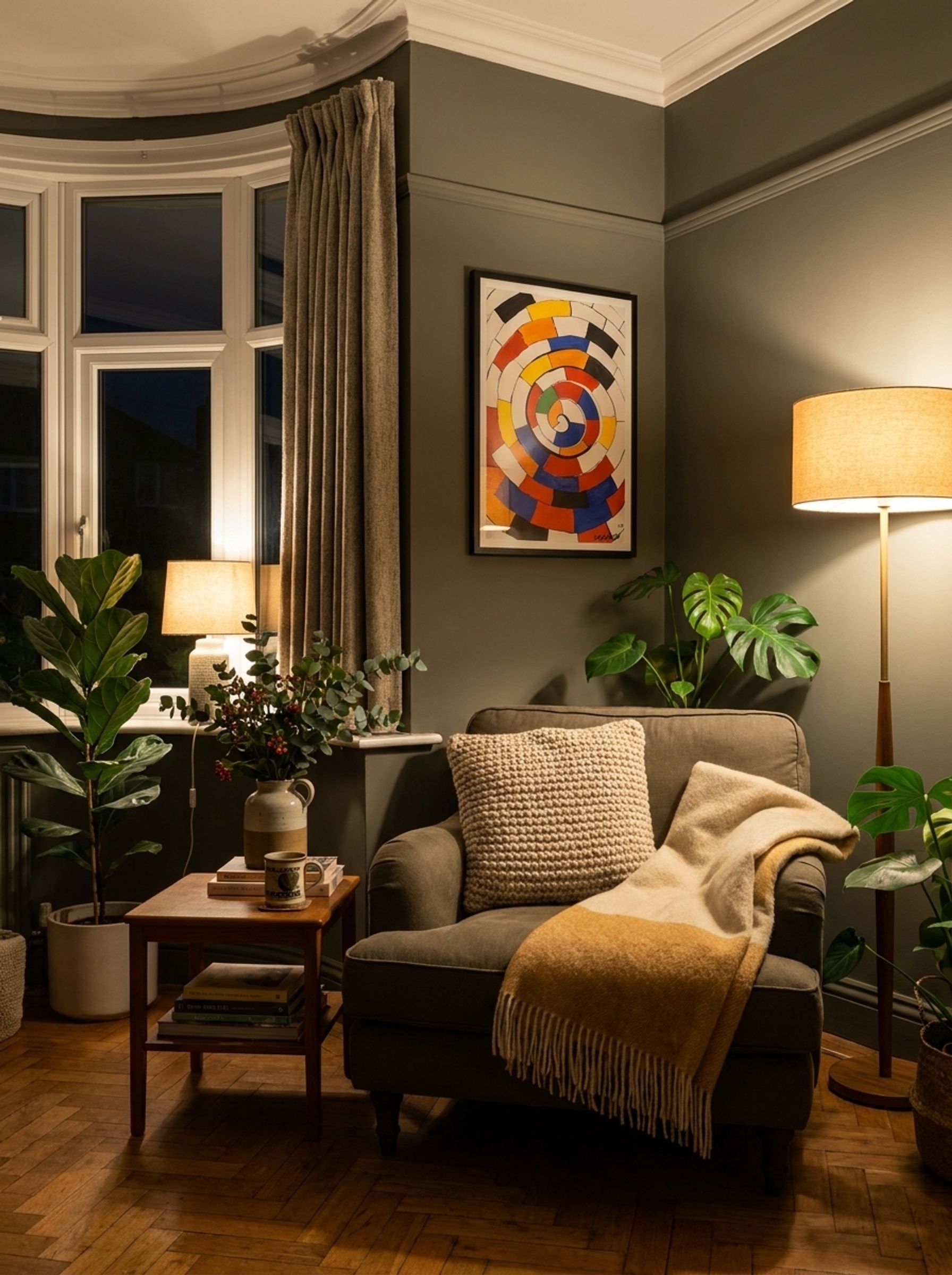
Spiral - Alexander Calder - PosterSpiral - Alexander Calder - Lifestyle
Spiral - Alexander Calder

Print · Framed

Sale priceFrom £28.00
Alexander Calder

Alexander Calder

Calder made sculpture move. Not kinetic in the art-school sense, but actually move: suspended from wires, turning in air currents, changing shape as you watch. Duchamp named them 'mobiles'. Arp named the stationary ones 'stabiles'. Calder accepted both names and kept working. He was born in Lawnton, Pennsylvania, into a family of sculptors. His grandfather made the statue of William Penn on top of Philadelphia City Hall. His father made public monuments. His mother painted. He studied mechanical engineering at Stevens Institute of Technology before deciding he would rather make things that were not useful. He went to Paris in 1926 and built a miniature circus out of wire, cork, cloth, and found objects. The Cirque Calder was performed by Calder himself in his studio, manipulating tiny acrobats, lions, and trapeze artists while providing sound effects. Mondrian, Miro, Duchamp, and Cocteau attended performances. It was part sculpture, part theatre, and entirely original. The wire portraits came next: single lengths of wire bent into three-dimensional likenesses of Josephine Baker, Kiki de Montparnasse, and other Paris figures. Then, after visiting Mondrian's studio in 1930 and seeing his rectangular colour compositions, Calder decided he wanted to make 'Mondrians that move.' The mobiles followed: painted metal shapes suspended on wire, balanced so precisely that a breath of air sets them turning. Each configuration is temporary. The sculpture is always becoming something else. The late stabiles are monumental: painted steel constructions in red, black, and orange, installed in plazas and airports worldwide. Flamingo in Chicago. La Grande Vitesse in Grand Rapids. He died in 1976, at seventy-eight, a few weeks after a retrospective at the Whitney.