


Odin hung for nine nights on the windswept tree, pierced by his own spear and given himself to himself, then took up the runes.
The sacrifice on the tree
Odin pierced himself with Gungnir and hung from a high bough of Yggdrasil, the windswept tree. He gave himself to Odin, himself to himself. The tree had roots whose paths no one knew. The wind battered him as he swung there for nine long days and nine long nights.
No bread refreshed him, and no drink from a horn reached his lips. He allowed no one to ease his suffering. He peered downwards from the tree. Then he saw the runes, seized them, screamed, and fell back from the tree.
Odin learnt nine mighty spells from the famous son of Bolthor, Bestla’s father. He also drank the precious mead from Odrerir. After this, he quickened, grew wise, prospered, and expanded his understanding. One word led him to another word, and one deed led him to another deed.
He found the runes and their meaningful letters, the great and difficult signs that brought him supernatural knowledge. His spear wound, his hanging, his hunger, and his fall marked the price of what he gained from the tree. The sacrifice gave him the runes and the spells that followed from them.
The eye and the head
Odin lowered the Gjallarhorn into Mímir’s well and drank the water of wisdom. He had travelled through Jotunheim in the guise of a wanderer to seek that drink. Mímir guarded the well, which bubbled up from deep in the ground and fed Yggdrasil, the world-tree. He allowed nobody else to drink from it. Odin claimed kinship with Mímir through Bestla, his mother, but Mímir demanded a greater price. Odin gave one of his eyes for a single drink. The waters preserved the eye in the well, where it saw nothing and everything. Odin then bore the names Blindr, Hoarr, and Baleyg.
When the war between the Aesir and the Vanir ended, the two peoples exchanged warriors and chiefs. Odin sent Mímir to Vanaheim as adviser to Hoenir, whom the Vanir accepted as their new chief. Hoenir looked like a king, and Mímir’s advice helped him make wise decisions. When Mímir left his side, Hoenir could not decide what to say or do. The Vanir grew angry. They cut off Mímir’s head and sent it back to Odin.
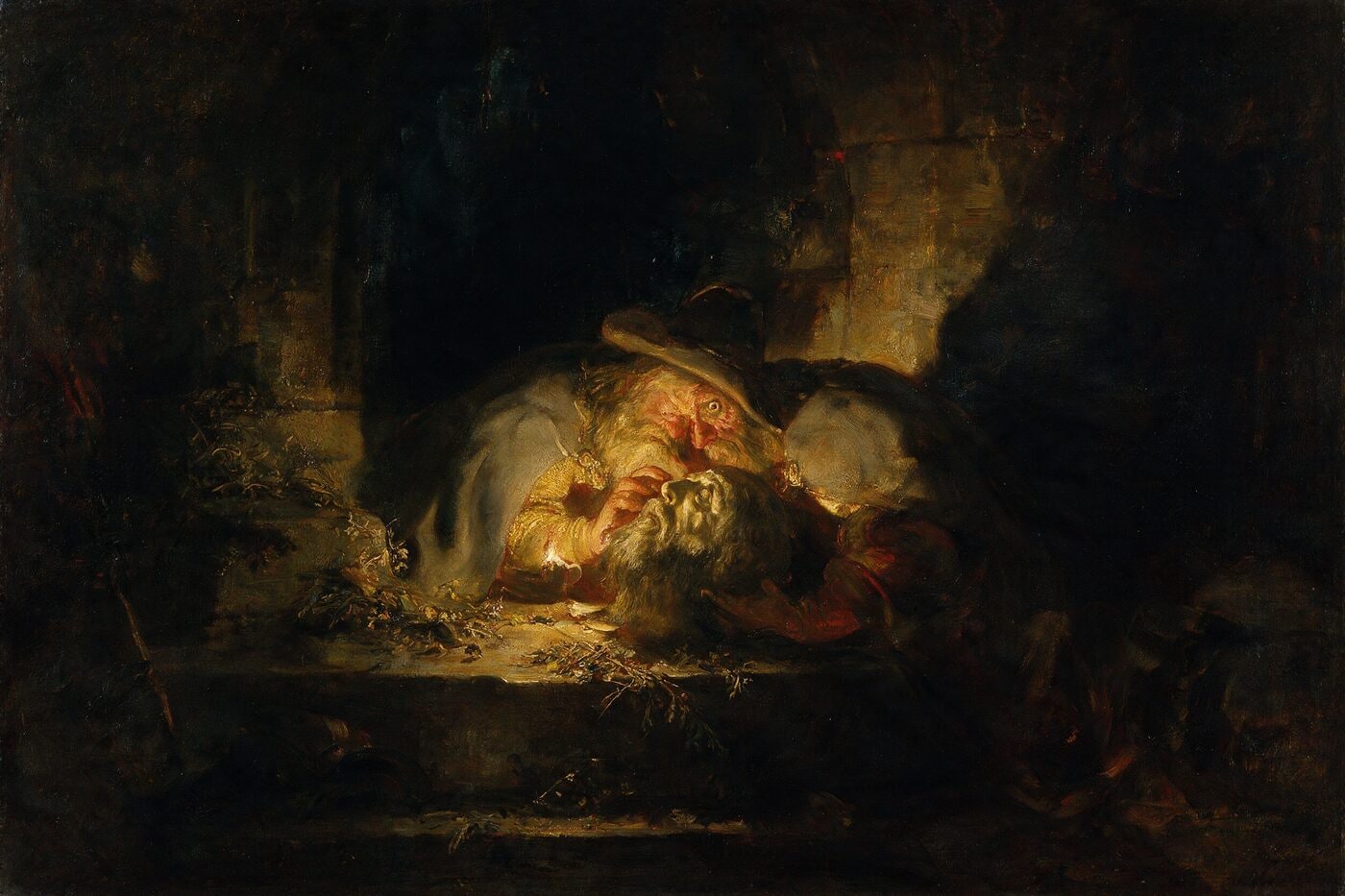
Odin held the severed head in his arms. He rubbed it with herbs that kept it from rotting, then chanted charms over it. Mímir’s head regained the power of speech. From then on, Odin asked it for counsel, and the head gave him wisdom.
At Ragnarök, Odin consulted Mímir’s speaking head again. The head remained linked to the wisdom of the well and to the fate of the gods.
The wager of heads
Odin asked Frigg for advice because he wanted to visit Vafthrudnir and test his wisdom against the giant. Frigg urged him to stay in the courts of the gods. She knew no giant as powerful as Vafthrudnir. She wished Odin a safe journey and hoped that his mind would serve him well. Odin went against her advice, disguised as a poor wanderer, and entered the hall owned by Im’s father.
Odin greeted Vafthrudnir and challenged him to prove whether he was wise or very wise. The giant accepted him as a guest. Odin answered the giant’s questions about the steeds of day and night, the river that marked the boundary between the countries of gods and giants, and the plain Vígríðr. He also answered other questions about ancient matters. Vafthrudnir did not hesitate when he answered Odin’s questions about the world, the giants, the wind, and what he remembered from the earliest times.
After Odin had proved his knowledge, Vafthrudnir invited him to sit on the giant’s bench. They wagered their heads on their wisdom and questioned each other in turn. Vafthrudnir answered Odin’s questions, including how the frost giant had fathered children without joining with giantesses, and what the giant remembered from the time before the world was made. Odin continued until he asked what the giant had first said in Baldr’s ear before Baldr was carried to the pyre.
Vafthrudnir then understood whom he had faced. No living man knew what Odin had said to his son. The giant admitted defeat, and Odin won the wager of heads.


