

Cubism did something no previous movement had attempted: it broke the convention that a painting should represent the world from a single, fixed point of view. Instead, Picasso and Braque showed objects from multiple angles simultaneously, fragmented into geometric planes and reassembled on a flat surface. The result was paintings that were difficult to read, impossible to mistake for reality, and enormously influential.
Les Demoiselles: The Painting That Started It
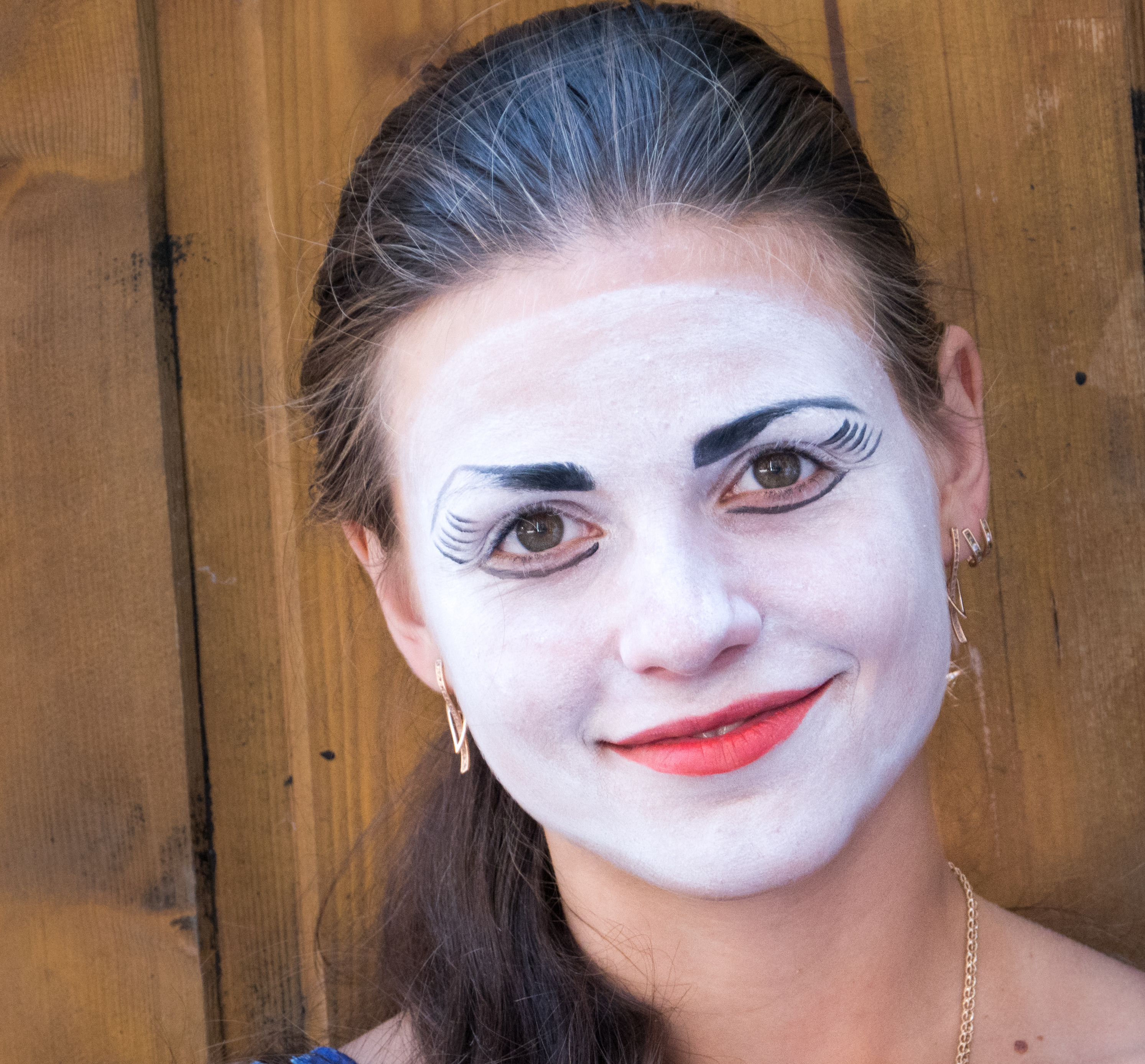
Picasso painted Les Demoiselles d'Avignon in 1907, and it shocked even his friends. Five nude women stare out from a composition of angular, flattened forms. The two figures on the right have faces derived from African masks, with features rearranged into jagged planes. There is no consistent light source, no atmospheric depth, and no attempt to make the space believable. The painting was not exhibited publicly until 1916; Picasso kept it in his studio, where visiting artists could see it and absorb its implications.
The painting drew on Cézanne's late work (the geometric simplification, the multiple viewpoints) and on African and Iberian sculpture (the mask-like faces, the angular forms). It was not yet Cubism, but it cleared the ground.
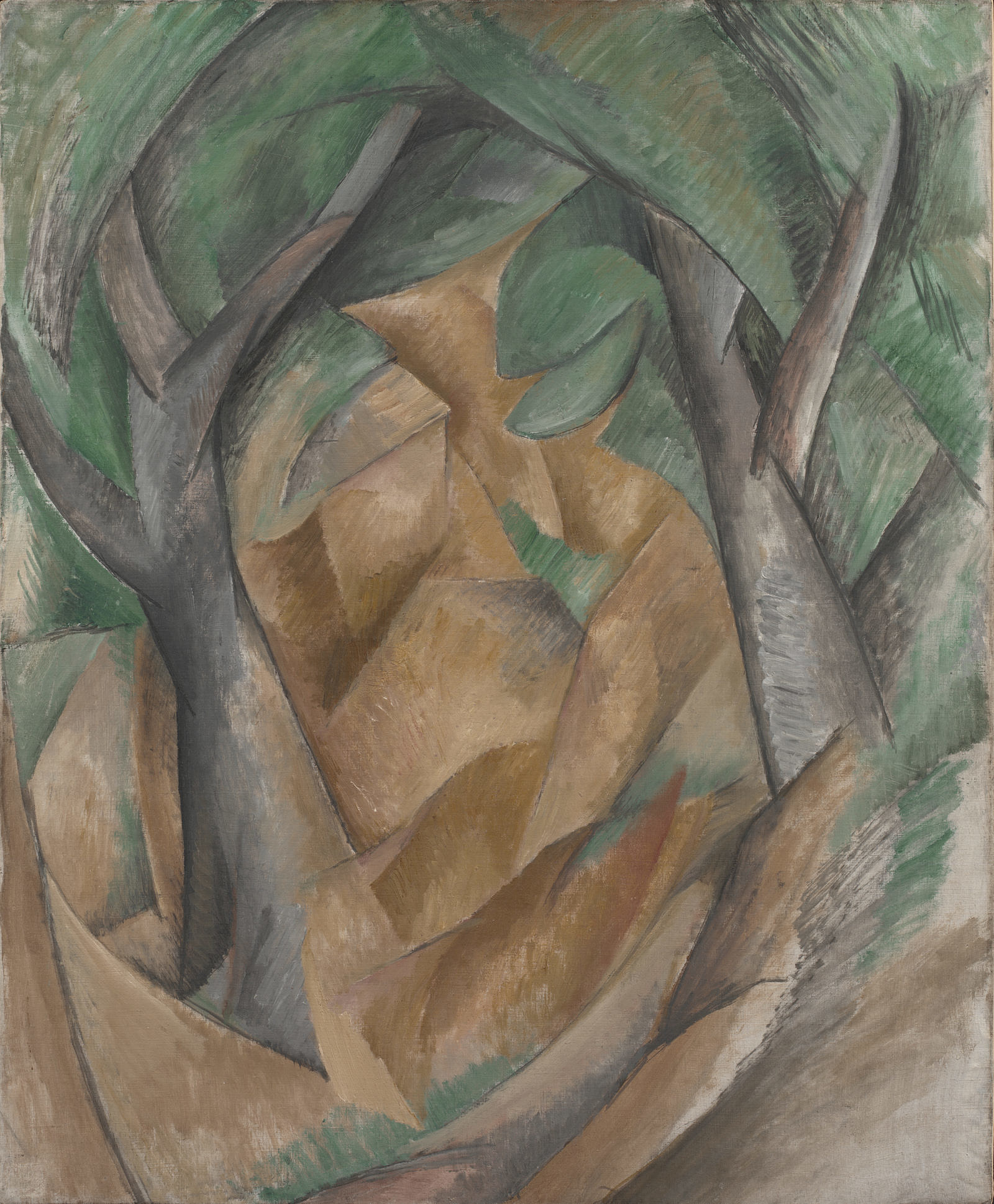
Braque at L'Estaque: The Name Arrives
Georges Braque (1882 to 1963) saw Picasso's Demoiselles and responded with a series of landscapes painted at L'Estaque in 1908. The houses in these paintings are reduced to cubes, the trees to cylinders, the sky to a flat plane. When the critic Louis Vauxcelles described Braque's work as "bizarreries cubiques" (cubic oddities), the name stuck.
Between 1908 and 1912, Picasso and Braque worked so closely that their paintings are sometimes difficult to tell apart. They called each other "Wilbur" and "Orville," comparing their collaboration to the Wright brothers: two people working on the same problem, building something that neither could have built alone. They moved from "Analytic Cubism" (breaking objects into small, overlapping facets of muted colour) to "Synthetic Cubism" (building images from flat shapes, collaged paper, and fragments of text).
What Cubism Changed
Cubism's impact went beyond painting. It influenced sculpture (Lipchitz, Archipenko), architecture (Le Corbusier's early buildings), typography, set design, and fashion. Its central insight, that representation is a convention rather than a truth, opened the door to every subsequent movement that took liberties with appearances: Futurism, Constructivism, De Stijl, and ultimately Abstract Expressionism.
If a face can be shown from the front and the side at the same time, then the rules of representation are negotiable. Cubism negotiated them, and painting was never the same.