

Fine Art Poster
From £28
A giclée print on 200gsm matte fine art paper, using a twelve-colour process for accurate, fade-resistant colour. Supplied unframed, delivered flat or rolled.




Archival giclée
Frames arrive ready to hang
Secure checkout
Made to order
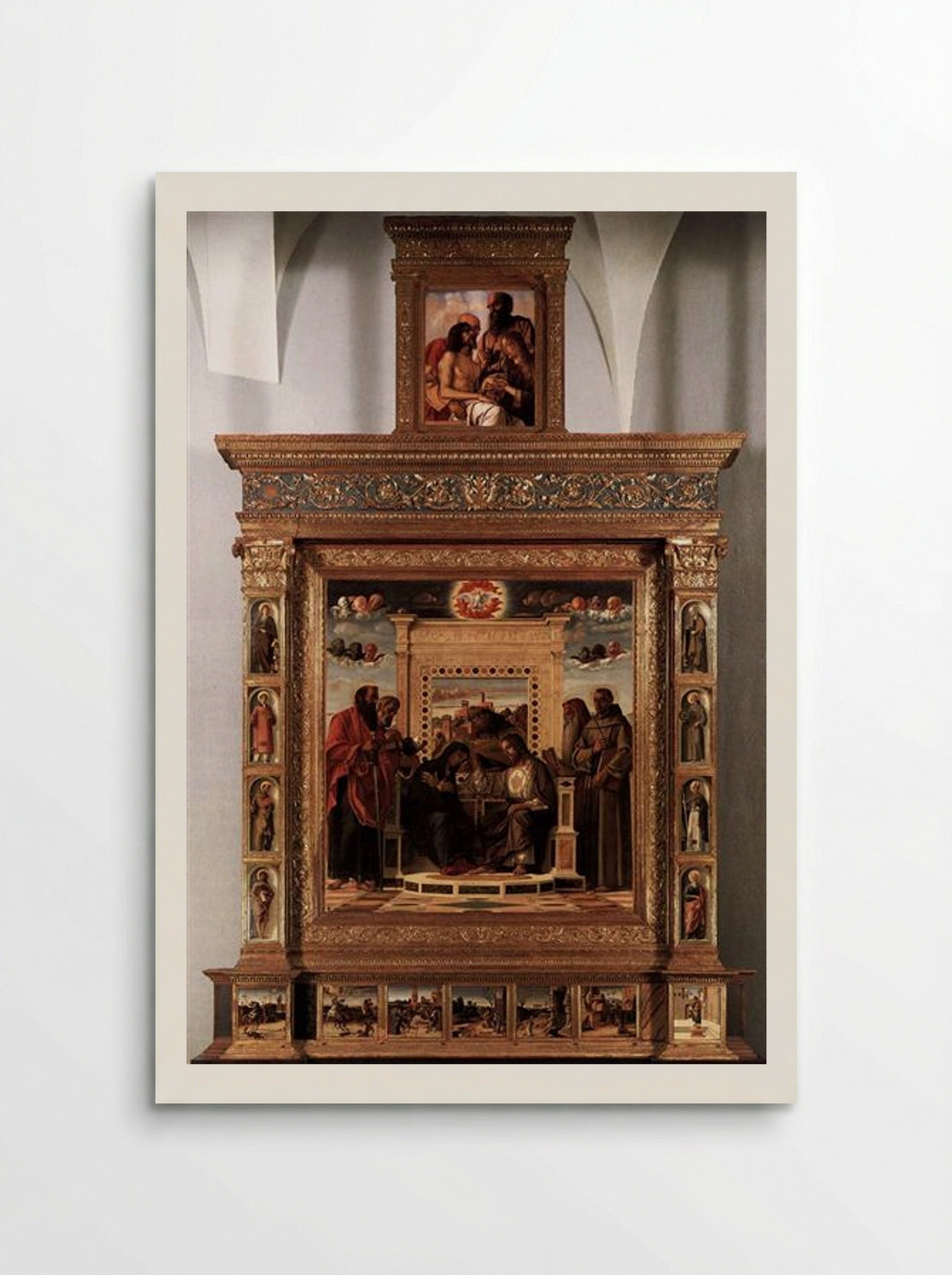
Giovanni Bellini's Pesaro Altarpiece, c. 1471-1474, exemplifies the Early Renaissance style with its detailed figures, rich colours, and integrated architectural framework. This oil on panel work, originally in Pesaro, is now in the Vatican Museums.
The Pesaro Altarpiece, created by Giovanni Bellini around 1471-1474, is a significant work of the Early Renaissance. Bellini, a Venetian painter, was instrumental in developing the Venetian style, characterised by its use of colour and light. This altarpiece, originally located in the church of San Francesco in Pesaro, Italy, demonstrates Bellini's mastery of oil painting and his ability to create a sense of depth and realism. The work is now housed in the Vatican Museums. The altarpiece is divided into several registers. The main panel depicts a gathering of saints, including Saint Peter and Saint Paul, surrounding the enthroned Virgin Mary. The figures are rendered with careful attention to detail and a naturalistic approach to anatomy and drapery. Above the main panel is a depiction of the Pietà, showing Christ mourned by the Virgin Mary and other figures. The lower register features smaller scenes depicting various events from the lives of the saints. Bellini's use of colour is particularly noteworthy in this work. He employs a range of hues to create a sense of atmosphere and to distinguish between the different figures and elements in the composition. The altarpiece is also notable for its architectural framework, which is integrated into the painting to create a unified and harmonious whole.
Because every print is made to order, we don't offer change-of-mind returns, refunds or exchanges. If your order arrives faulty, damaged or incorrect, we'll replace it free of charge — just contact us within 48 hours of delivery. See our refunds page for full details.
We ship worldwide, printing at the production hub nearest to your delivery address. Delivery times and costs vary by destination — you'll see the options available to you at checkout.
Each print is produced to order using 12-colour giclée printing on FSC-certified archival paper. Designed in Britain and printed at your nearest production hub to reduce waste and speed up delivery.

Artist Biography
Our Features
Designed for Lasting Impact
Every Solis piece is made to order with archival, gallery-quality materials built to last.
To keep your artwork looking its best:
Museum-grade giclée on FSC-certified archival matte paper, with framed and canvas options.
Made to order
Every piece is printed to order. These are the five finishes, and what makes each one different.
From £28
A giclée print on 200gsm matte fine art paper, using a twelve-colour process for accurate, fade-resistant colour. Supplied unframed, delivered flat or rolled.

From £45
The same fine art print in a solid wood frame with UV-protective acrylic glaze and rigid backing. Five frame colours. Arrives ready to hang.
Why Choose Us ?
Damage-free delivery guarantee
Fast Shipping
Museum-Quality Materials
Artist Biography
Giovanni Bellini
You May Also Like
We use cookies to measure our marketing and see which prints people love.We use cookies to measure our marketing.
By continuing to browse, you agree · Privacy Policy