

Fine Art Poster
From £28
A giclée print on 200gsm matte fine art paper, using a twelve-colour process for accurate, fade-resistant colour. Supplied unframed, delivered flat or rolled.



Archival giclée
Frames arrive ready to hang
Secure checkout
Made to order
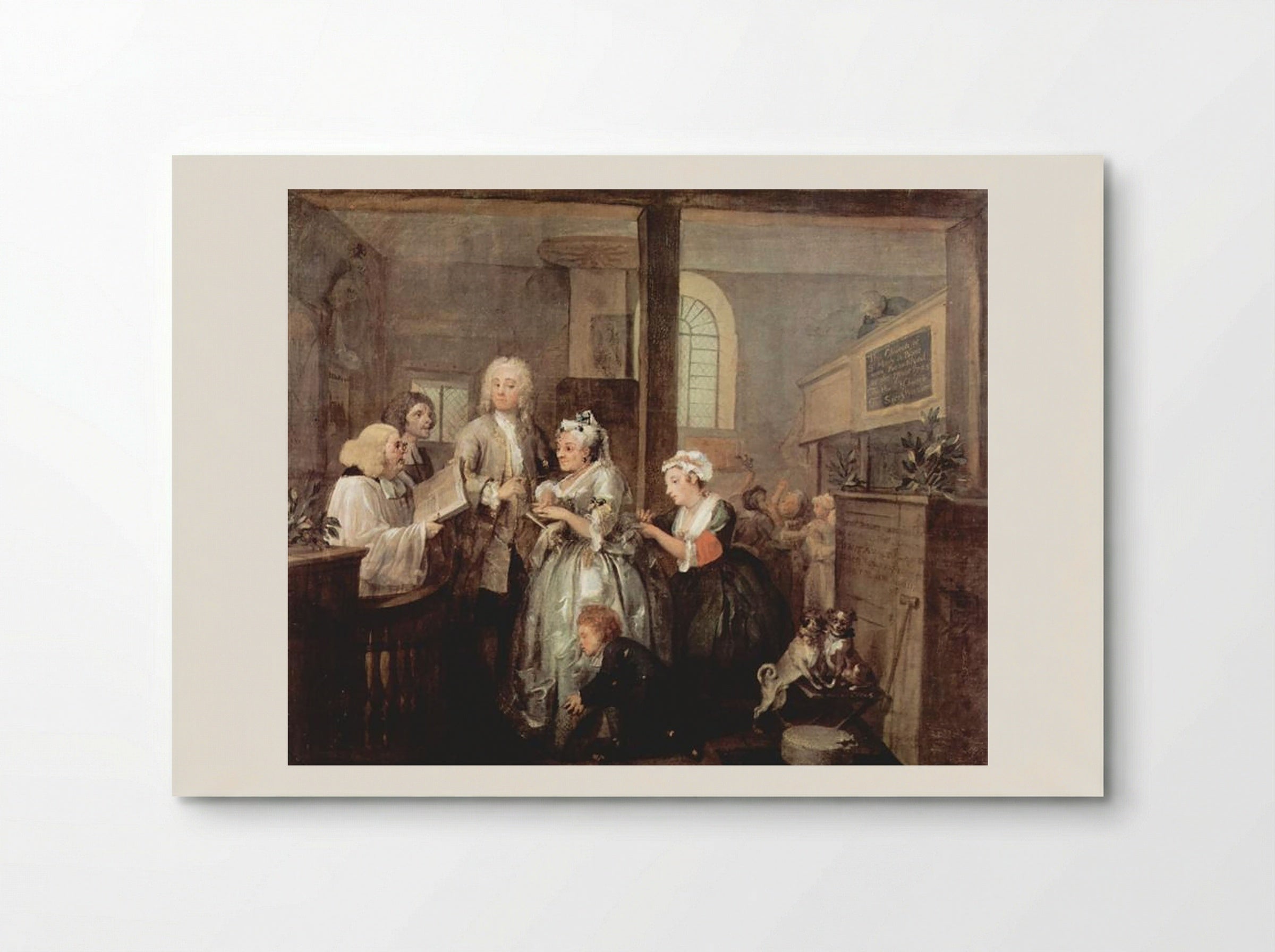
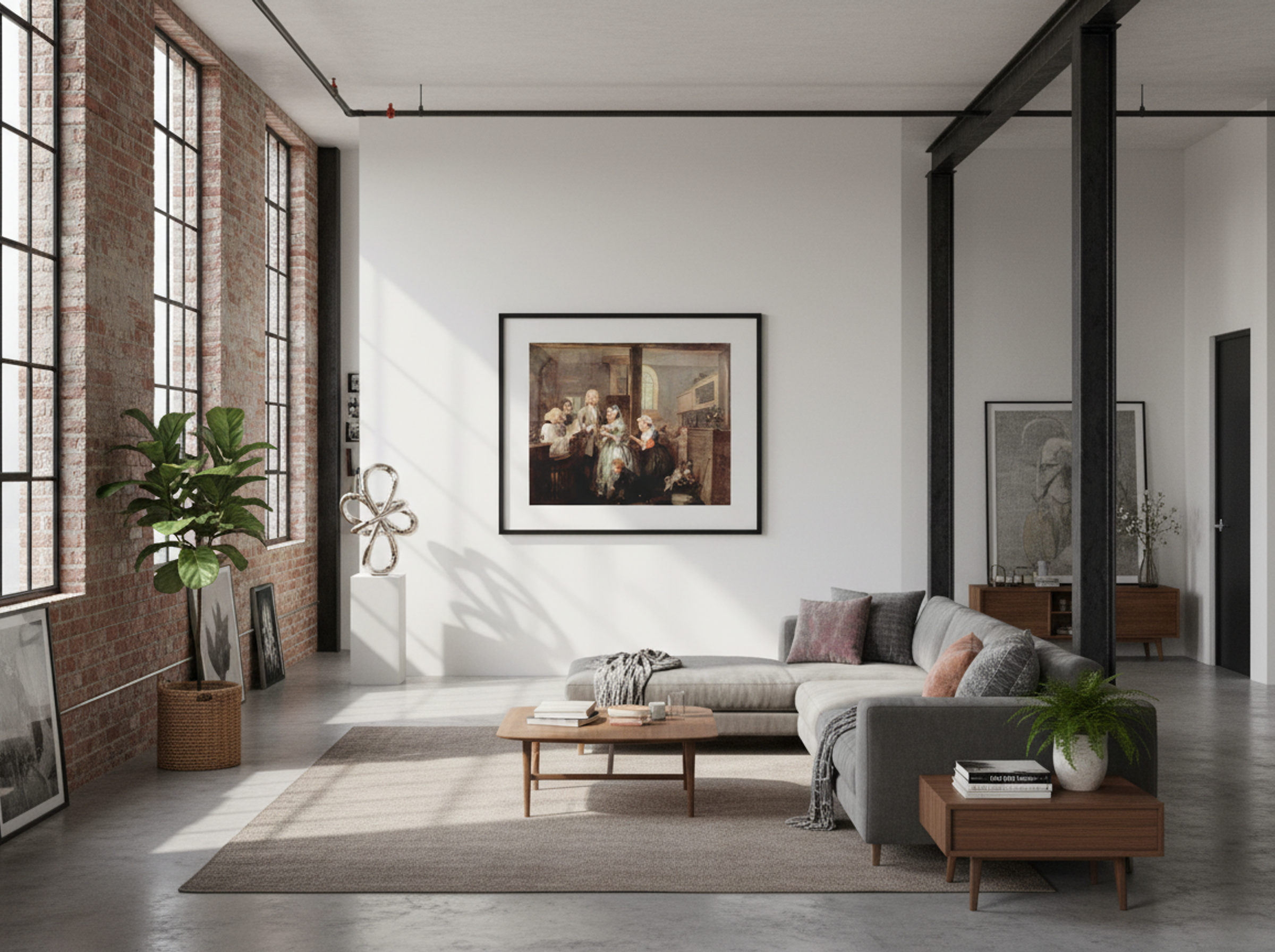
William Hogarth's *Marriage A-la-Mode, Plate 1: The Marriage Settlement* is the first in a series of six paintings satirising arranged marriages in 18th-century British high society. The painting shows the signing of a marriage contract, highlighting the financial and social motivations behind the union.
William Hogarth's series *Marriage A-la-Mode* is a set of six paintings produced between 1743 and 1745, satirising the conventions of arranged marriages within the British upper class. Hogarth, a painter and printmaker, is known for his narrative series that combine social critique with detailed observation. The paintings were engraved and sold as prints, achieving widespread popularity. *Plate 1: The Marriage Settlement* depicts the signing of a marriage contract between the son of bankrupt Earl Squanderfield and the daughter of a wealthy merchant. The scene is set in a grand, but somewhat dilapidated, interior. The Earl, sporting a gouty foot, gestures towards his family tree, while the merchant meticulously reviews the financial terms. The young bride and groom appear disinterested in each other; the groom is preoccupied with his appearance, while the bride is engaged in conversation with a lawyer. Hogarth uses detailed visual cues to convey the characters' flaws and the absurdity of the arrangement, including the presence of dogs mirroring the couple's indifference and the cluttered, ostentatious surroundings.
Because every print is made to order, we don't offer change-of-mind returns, refunds or exchanges. If your order arrives faulty, damaged or incorrect, we'll replace it free of charge — just contact us within 48 hours of delivery. See our refunds page for full details.
We ship worldwide, printing at the production hub nearest to your delivery address. Delivery times and costs vary by destination — you'll see the options available to you at checkout.
Each print is produced to order using 12-colour giclée printing on FSC-certified archival paper. Designed in Britain and printed at your nearest production hub to reduce waste and speed up delivery.
Specific Features
Every Solis piece is made to order with archival, gallery-quality materials built to last.
Care & Cleaning
To keep your artwork looking its best:
Materials & Sizing
Museum-grade giclée on FSC-certified archival matte paper, with framed and canvas options.

Artist Biography
Made to order
Every piece is printed to order. These are the five finishes, and what makes each one different.
From £28
A giclée print on 200gsm matte fine art paper, using a twelve-colour process for accurate, fade-resistant colour. Supplied unframed, delivered flat or rolled.

From £45
The same fine art print in a solid wood frame with UV-protective acrylic glaze and rigid backing. Five frame colours. Arrives ready to hang.
Why Choose Us ?
Damage-free delivery guarantee
Fast Shipping
Museum-Quality Materials
You May Also Like
We use cookies to measure our marketing and see which prints people love.We use cookies to measure our marketing.
By continuing to browse, you agree · Privacy Policy