

Fine Art Poster
From £28
A giclée print on 200gsm matte fine art paper, using a twelve-colour process for accurate, fade-resistant colour. Supplied unframed, delivered flat or rolled.



Archival giclée
Frames arrive ready to hang
Secure checkout
Made to order
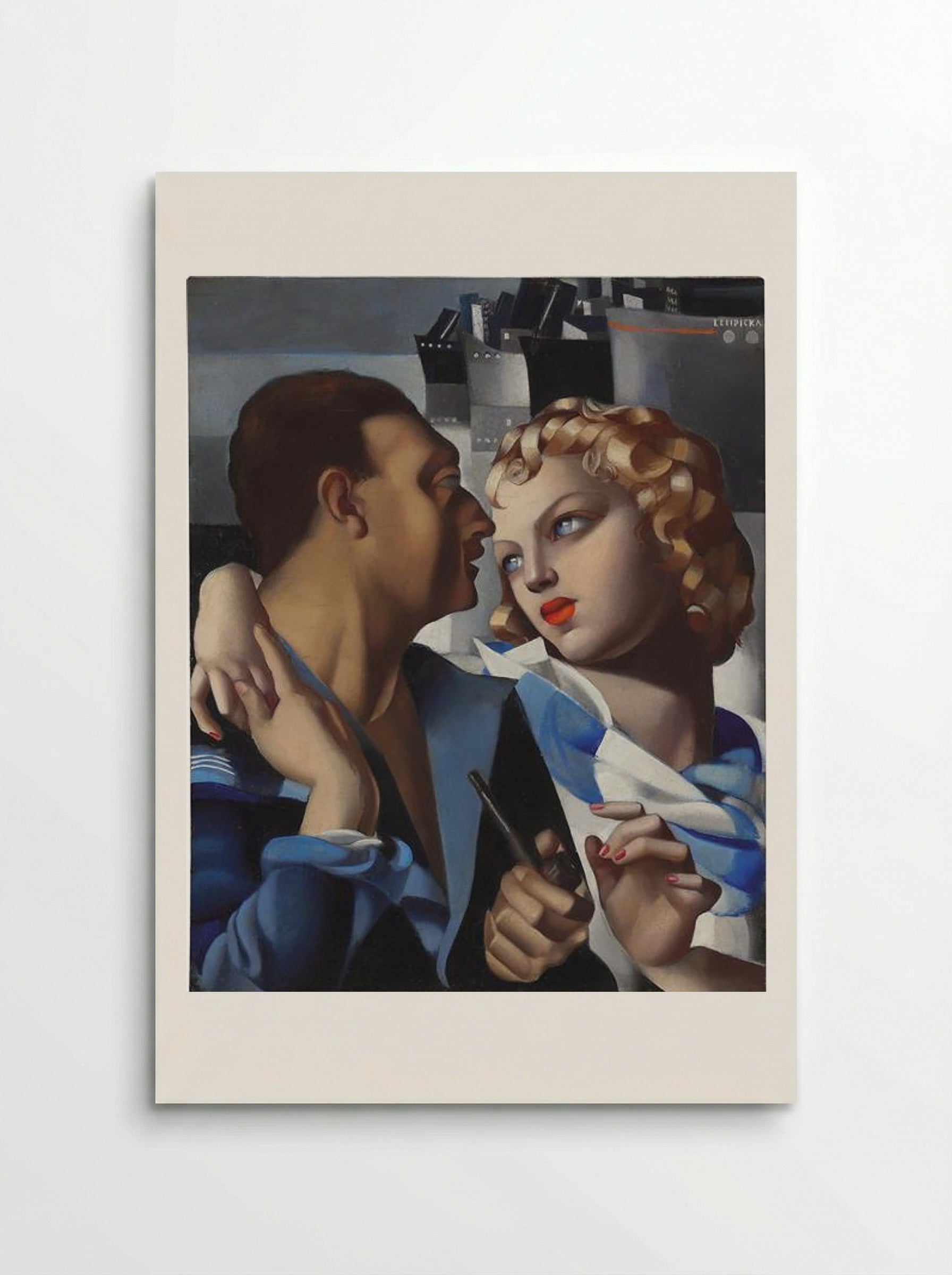
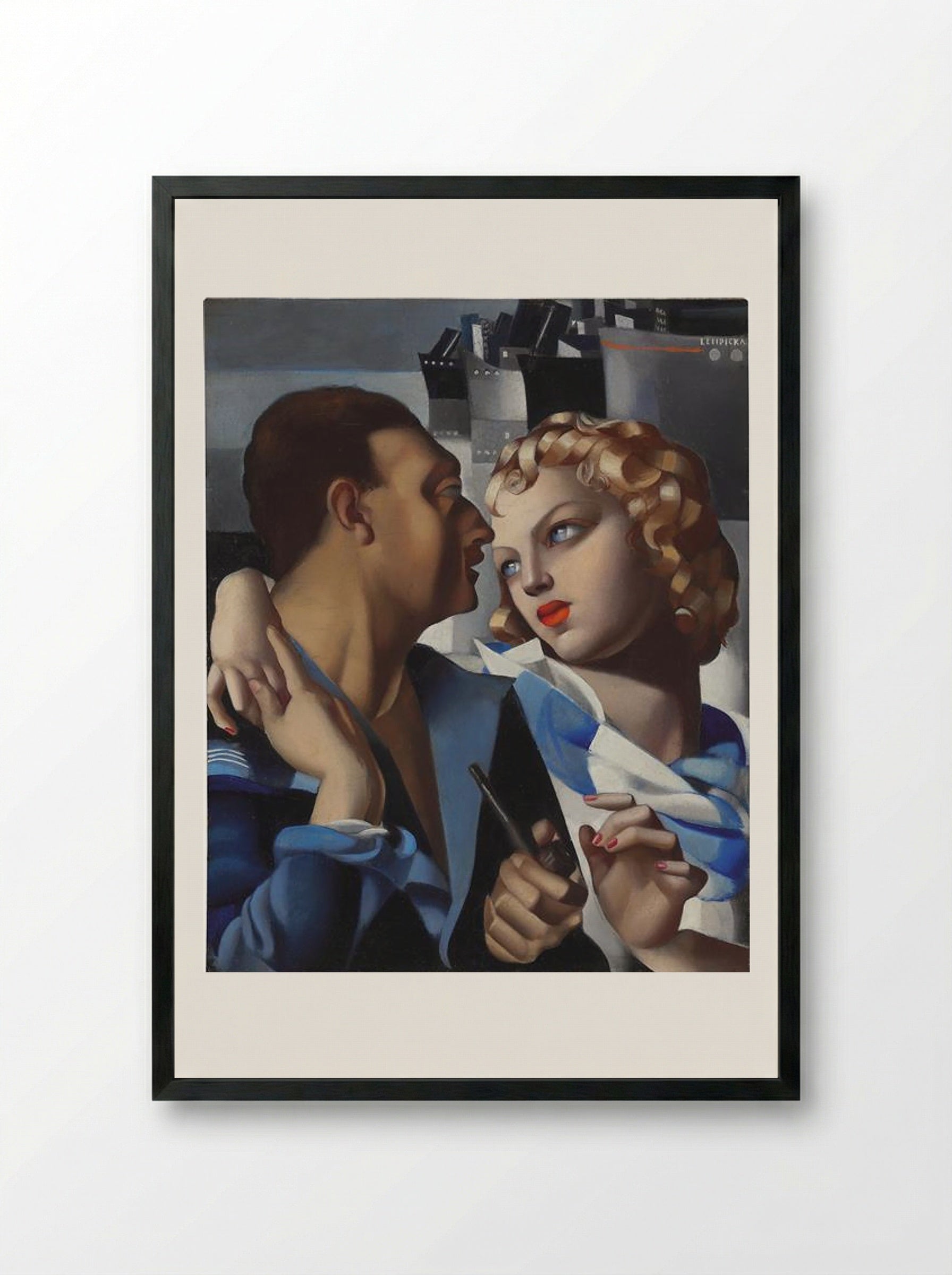
A glamorous Art Deco portrait by Tamara de Lempicka, 'Idyll' depicts a stylish couple against a backdrop of stylised ships, rendered in cool tones and sharp lines.
Tamara de Lempicka, a Polish artist who lived and worked in France and the United States, is best known for her glamorous Art Deco portraits. Her subjects, often aristocrats and members of high society, are rendered with a distinctive combination of cool detachment and sensual allure. Lempicka's style is characterised by smooth, almost enamel-like surfaces, geometric forms, and a sophisticated colour palette. She captured the spirit of the Roaring Twenties and the interwar period, a time of social change and artistic experimentation. 'Idyll' presents a close-up of a couple, rendered in Lempicka's signature style. The man, with his dark hair and tanned skin, is seen in profile, his face partially obscured. The woman, fair-skinned with blonde curls and striking blue eyes, gazes out at the viewer with a composed expression. The background features stylised depictions of ships, adding an element of modernity and travel to the composition. The painting's cool tones and sharp lines are typical of Art Deco, creating a sense of sophistication and elegance.
Because every print is made to order, we don't offer change-of-mind returns, refunds or exchanges. If your order arrives faulty, damaged or incorrect, we'll replace it free of charge — just contact us within 48 hours of delivery. See our refunds page for full details.
We ship worldwide, printing at the production hub nearest to your delivery address. Delivery times and costs vary by destination — you'll see the options available to you at checkout.
Each print is produced to order using 12-colour giclée printing on FSC-certified archival paper. Designed in Britain and printed at your nearest production hub to reduce waste and speed up delivery.
Specific Features
Every Solis piece is made to order with archival, gallery-quality materials built to last.
Care & Cleaning
To keep your artwork looking its best:
Materials & Sizing
Museum-grade giclée on FSC-certified archival matte paper, with framed and canvas options.

Artist Biography
Made to order
Every piece is printed to order. These are the five finishes, and what makes each one different.
From £28
A giclée print on 200gsm matte fine art paper, using a twelve-colour process for accurate, fade-resistant colour. Supplied unframed, delivered flat or rolled.

From £45
The same fine art print in a solid wood frame with UV-protective acrylic glaze and rigid backing. Five frame colours. Arrives ready to hang.
Why Choose Us ?
Damage-free delivery guarantee
Fast Shipping
Museum-Quality Materials
You May Also Like
We use cookies to measure our marketing and see which prints people love.We use cookies to measure our marketing.
By continuing to browse, you agree · Privacy Policy