

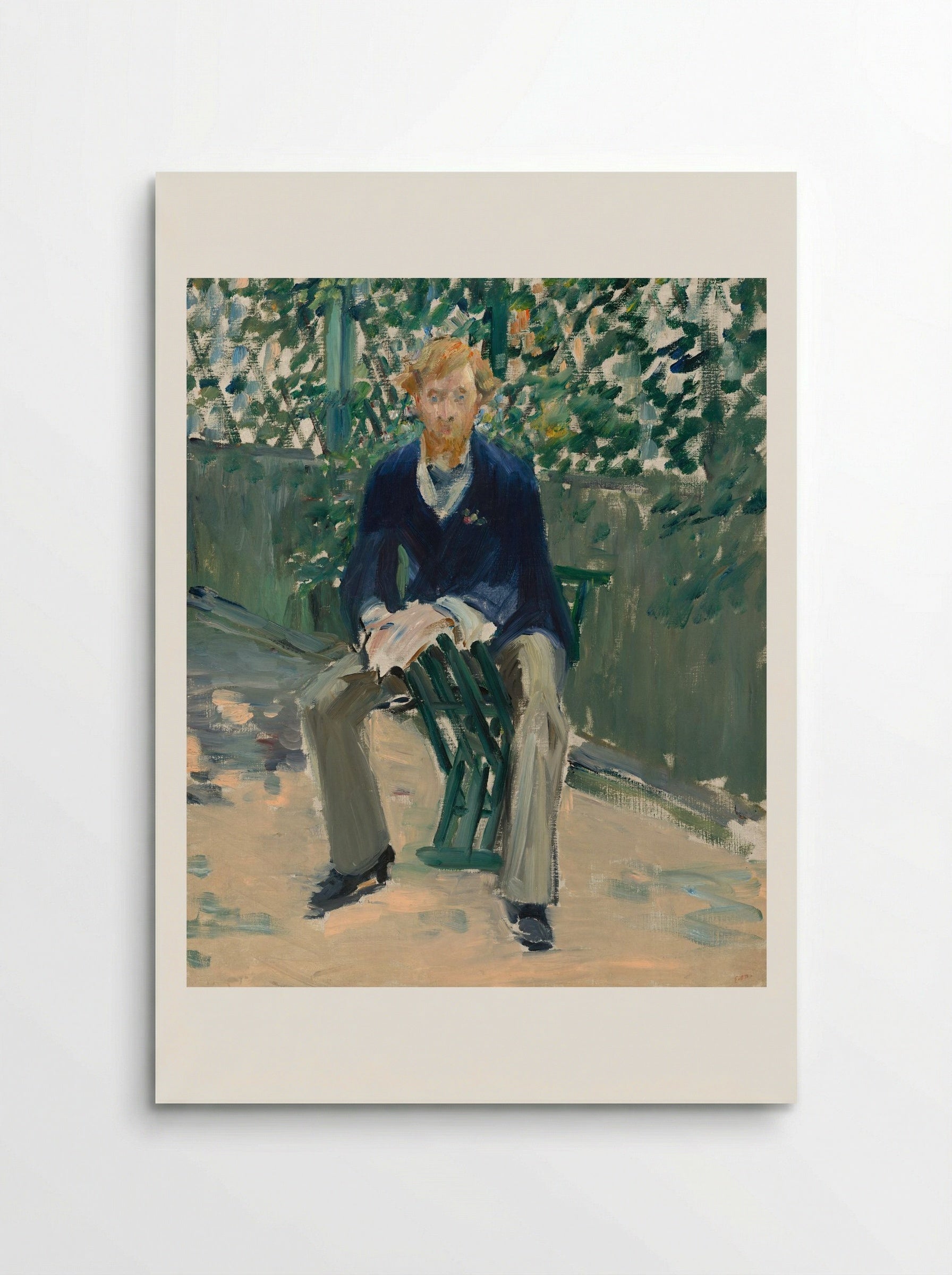


George Moore in the Artist's Garden - Édouard Manet
Archival giclée
Ready to hang
Secure checkout
Made to order
Description
Édouard Manet's "George Moore in the Artist's Garden" captures the Irish novelist in a relaxed pose amidst lush foliage, showcasing Manet's signature Impressionist style and vibrant use of light.
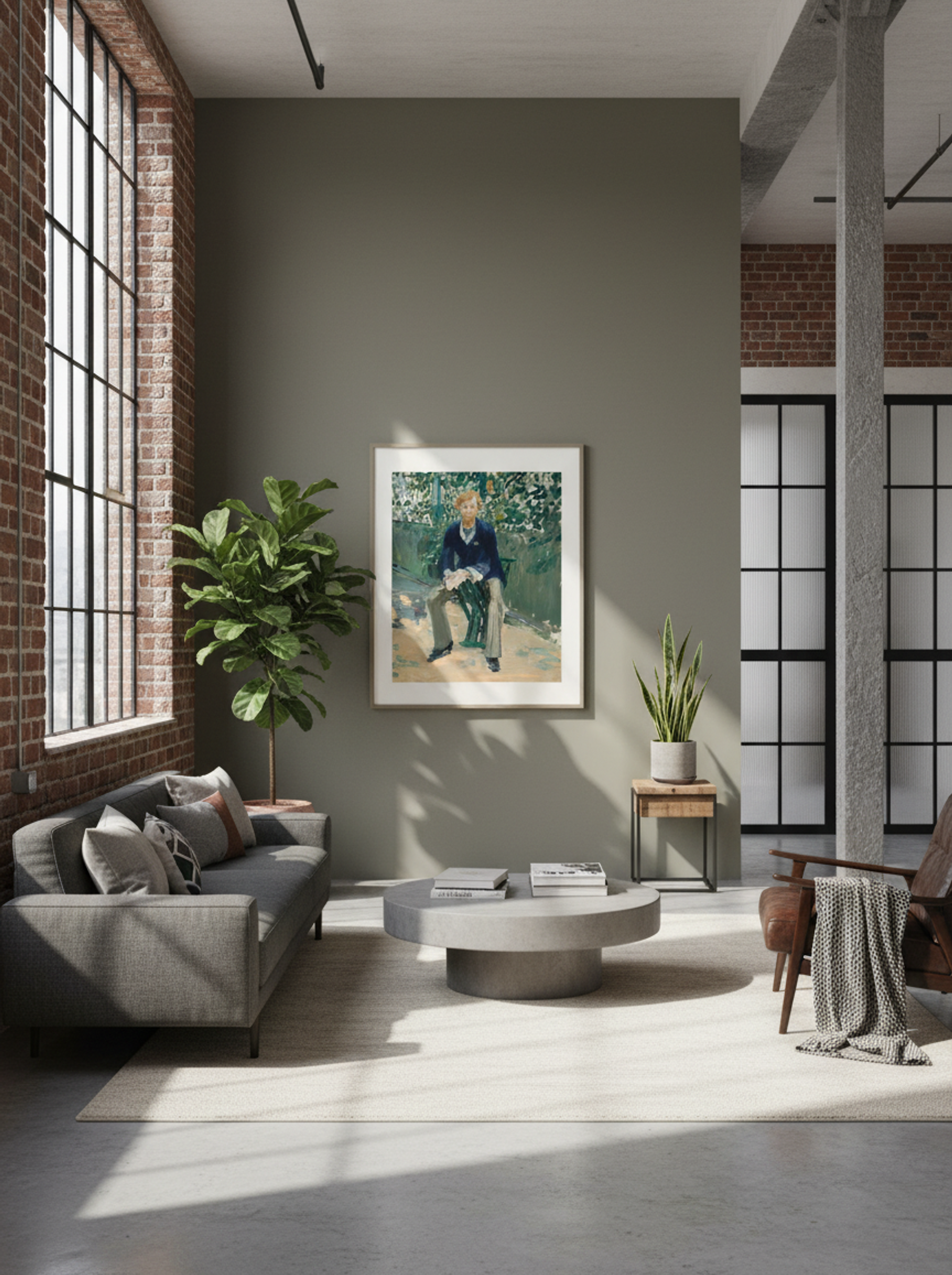
Édouard Manet's "George Moore in the Artist's Garden", painted circa 1879, captures the Irish novelist George Moore seated in a verdant outdoor setting. Manet, a pivotal figure in the transition from Realism to Impressionism, employs his signature loose brushstrokes and attention to light to depict Moore in a relaxed pose. The composition is informal, with Moore seated on a simple green chair, surrounded by lush foliage that blurs into a backdrop of vibrant greens and dappled sunlight. Manet's focus on capturing the fleeting moment and the effects of light are evident in the painting's overall atmosphere. The portrait offers a glimpse into the artistic circles of late 19th-century Paris, where Manet and Moore were both prominent figures. As a fine art print, this work brings a touch of Impressionist charm to any interior, evoking a sense of relaxed elegance and intellectual curiosity. The vibrant greens and blues create a calming yet stimulating atmosphere, making it a perfect addition to a living room, study, or hallway. The print serves as a reminder of the artistic innovation and cultural exchange that defined the era.
Return policy
Because every print is made to order, we don't offer change-of-mind returns, refunds or exchanges. If your order arrives faulty, damaged or incorrect, we'll replace it free of charge — just contact us within 48 hours of delivery. EU customers have a 14-day cooling-off right. See our refunds page for full details.
Shipping
We ship worldwide, printing at the production hub nearest to your delivery address. Delivery times and costs vary by destination — you'll see the options available to you at checkout.
Manufacturing
Each print is produced to order using 12-colour giclée printing on FSC-certified archival paper. Designed in Britain and printed at your nearest production hub to reduce waste and speed up delivery.
George Moore in the Artist's Garden - Édouard Manet
Our Features
Designed for Lasting Impact
Specific Features
Every Solis piece is made to order with archival, gallery-quality materials built to last.
- Museum-grade giclée printing for rich, fade-resistant colour
- Archival matte fine-art paper, FSC-certified
- Choose poster, framed print, canvas or framed canvas
- Frames in black, natural wood, dark wood or white
- Framed prints arrive ready to hang
Care & Cleaning
To keep your artwork looking its best:
- Dust gently with a soft, dry cloth
- Avoid prolonged direct sunlight
- Never use liquid cleaners on the print or canvas surface
- Keep in a dry, room-temperature space
- Handle prints with clean, dry hands
Materials & Sizing
Museum-grade giclée on FSC-certified archival matte paper, with framed and canvas options.
- Paper sizes: A4, A3, A2, A1, A0 and B2 (50×70 cm)
- Canvas: XS (20×30 cm) to Large (60×90 cm)
- Frames: black, natural wood, dark wood or white
Why Choose Us ?
100% Satisfaction Guarantee
Fast Shipping
Museum-Quality Materials

Artist Biography
Édouard Manet
Manet's genius lay in his ability to capture modern life with unflinching honesty. He abandoned traditional academic painting styles, favouring loose brushstrokes, bold colours, and flattened perspectives. Works like 'The Spanish Singer' and 'Boating' showcase his vibrant energy, while 'The Dead Toreador' exemplifies his dramatic flair. Manet sought to depict the world as he saw it, rejecting sentimental idealisation in favour of capturing the fleeting moments of contemporary existence.
Today, Édouard Manet's art continues to captivate with its rebellious spirit and timeless elegance. His innovative approach paved the way for future generations of artists, and his paintings offer a window into the vibrant world of 19th-century Paris. Owning a Manet print is not just acquiring a beautiful image; it's possessing a piece of art history, a testament to the power of artistic vision.
You May Also Like