

Fine Art Poster
From £28
A giclée print on 200gsm matte fine art paper, using a twelve-colour process for accurate, fade-resistant colour. Supplied unframed, delivered flat or rolled.

Archival giclée
Frames arrive ready to hang
Secure checkout
Made to order
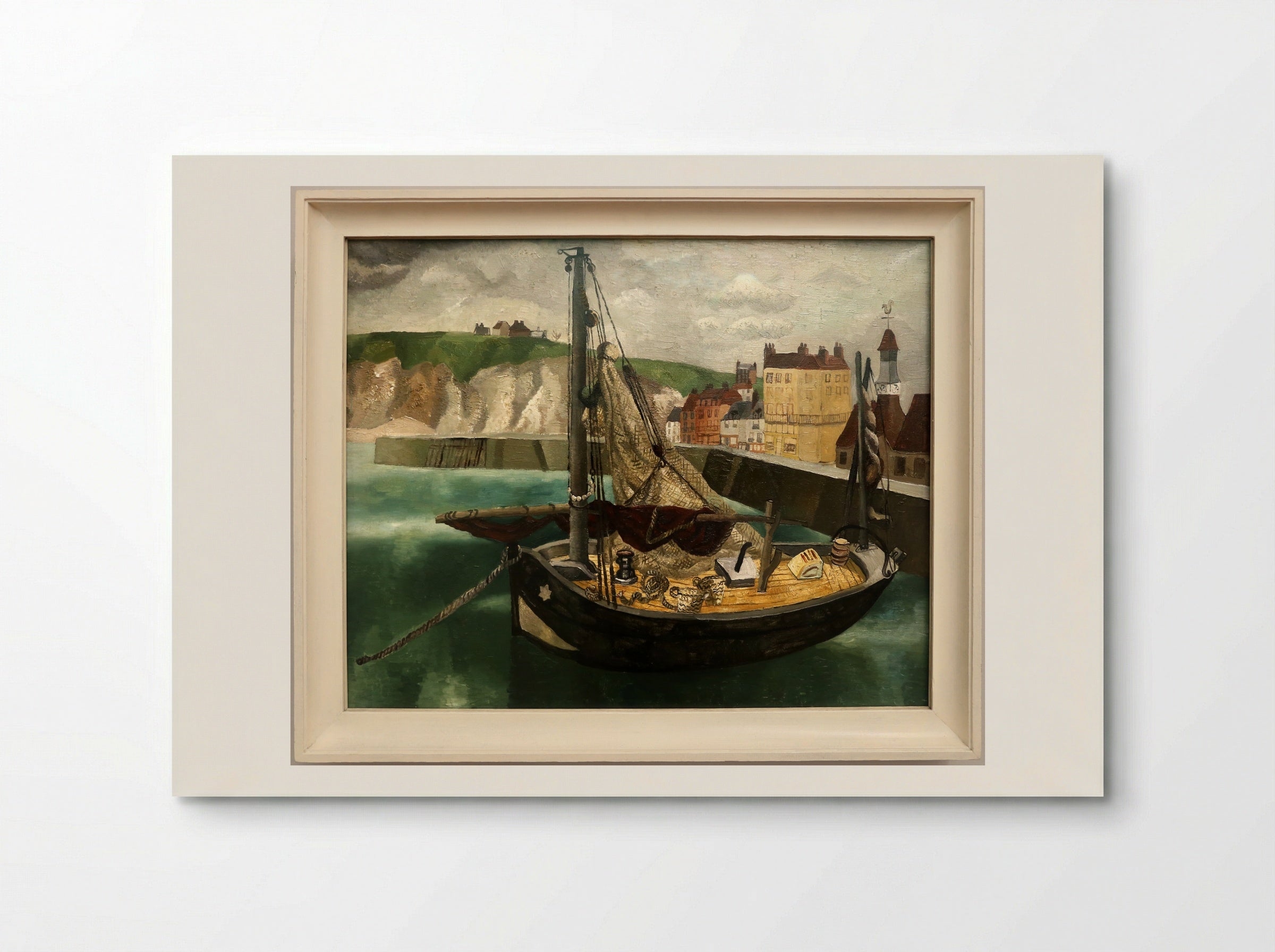
A quiet maritime scene by Christopher Wood, depicting a fishing boat moored in the harbour at Dieppe with the town and cliffs in the background.
Christopher Wood, a British painter active during the early twentieth century, produced this work during his time in France. The composition captures a fishing vessel moored within the harbour at Dieppe, a location he frequented alongside other artists of the period. The boat occupies the foreground, its deck cluttered with nets and equipment, rendered with a deliberate simplicity that characterises Wood's approach to form. Behind the vessel, the harbour wall separates the water from the town buildings. The architecture is depicted with flattened perspective, reflecting the influence of the naive style that Wood adopted during his career. The chalk cliffs, a common feature of the Normandy coastline, rise in the background under a cloudy sky. The colour palette remains restrained, relying on muted greens, browns, and ochres to convey the atmosphere of the northern French coast. Wood's technique here avoids excessive detail, focusing instead on the arrangement of shapes and the overall mood of the scene. The water is painted with broad, fluid strokes, contrasting with the more rigid, geometric treatment of the buildings and the boat's hull. This work demonstrates his interest in the everyday life of coastal towns, a recurring theme in his output. By stripping away unnecessary ornamentation, Wood directs the viewer's attention to the structural elements of the harbour and the quiet presence of the boat. The painting offers a glimpse into the artist's engagement with the French maritime environment, providing a clear example of his stylistic development during the late 1920s.
Because every print is made to order, we don't offer change-of-mind returns, refunds or exchanges. If your order arrives faulty, damaged or incorrect, we'll replace it free of charge — just contact us within 48 hours of delivery. See our refunds page for full details.
We ship worldwide, printing at the production hub nearest to your delivery address. Delivery times and costs vary by destination — you'll see the options available to you at checkout.
Each print is produced to order using 12-colour giclée printing on FSC-certified archival paper. Designed in Britain and printed at your nearest production hub to reduce waste and speed up delivery.

Artist Biography
Our Features
Designed for Lasting Impact
Every Solis piece is made to order with archival, gallery-quality materials built to last.
To keep your artwork looking its best:
Museum-grade giclée on FSC-certified archival matte paper, with framed and canvas options.
Made to order
Every piece is printed to order. These are the five finishes, and what makes each one different.
From £28
A giclée print on 200gsm matte fine art paper, using a twelve-colour process for accurate, fade-resistant colour. Supplied unframed, delivered flat or rolled.

From £60
The same fine art print in a solid wood frame with UV-protective acrylic glaze and rigid backing. Five frame colours. Arrives ready to hang.
Why Choose Us ?
Damage-free delivery guarantee
Fast Shipping
Museum-Quality Materials
Artist Biography
Christopher Wood
You May Also Like
We use cookies to measure our marketing and see which prints people love.We use cookies to measure our marketing.
By continuing to browse, you agree · Privacy Policy