


Torii Kiyonaga
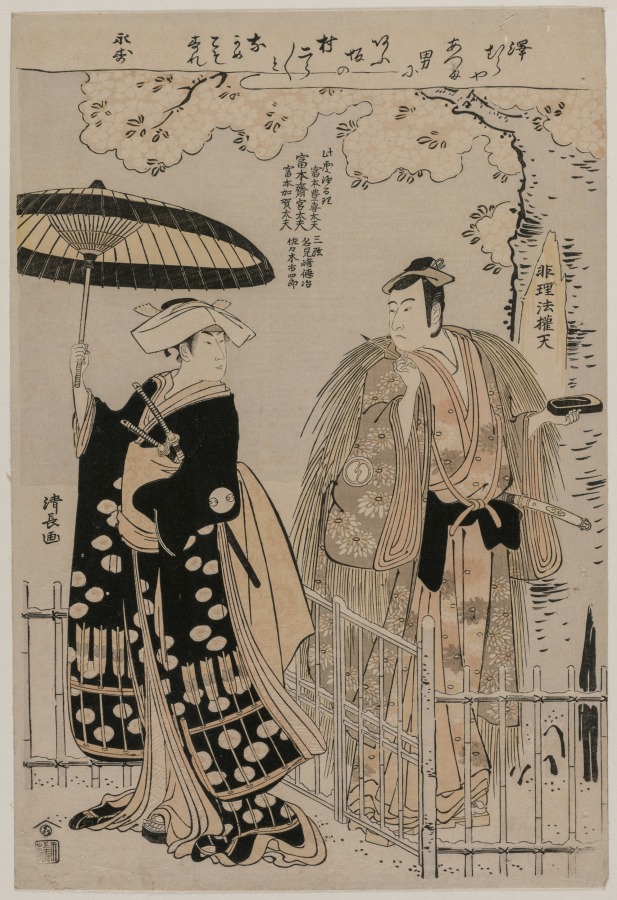
Torii Kiyonaga was the son of a book dealer and became the fourth head of the Torii school. He accepted this leadership position with some reluctance. The Torii family held exclusive commissions to produce posters for major kabuki theatres in Edo (including the Nakamura-za and Ichimura-za). While his official duty required him to focus on actor prints (yakusha-e), Kiyonaga preferred to depict women in everyday settings. He eventually trained the grandson of his teacher to take over the family business so he could retire from these formal obligations.
Biography
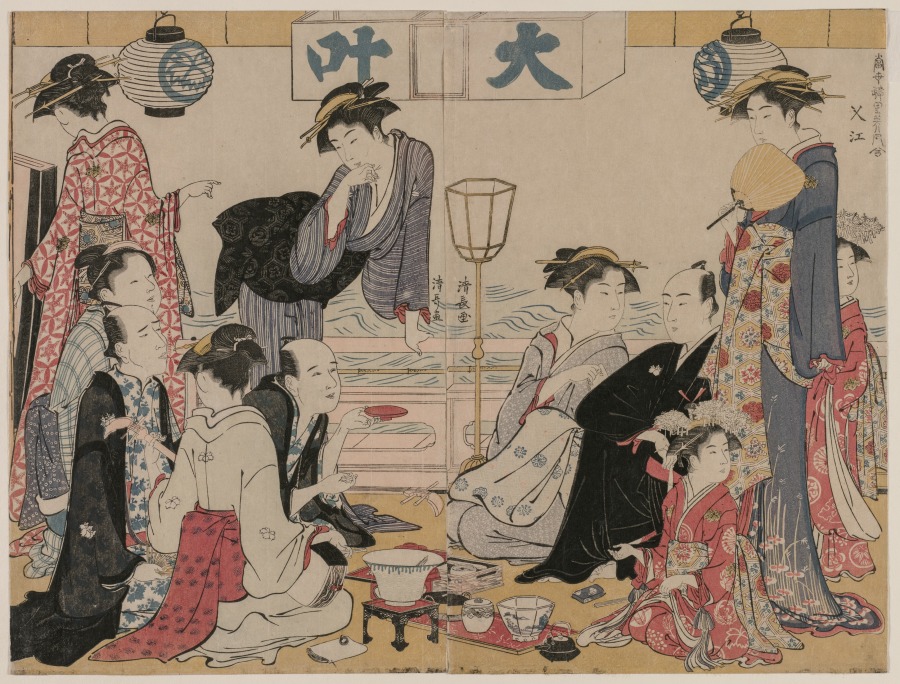
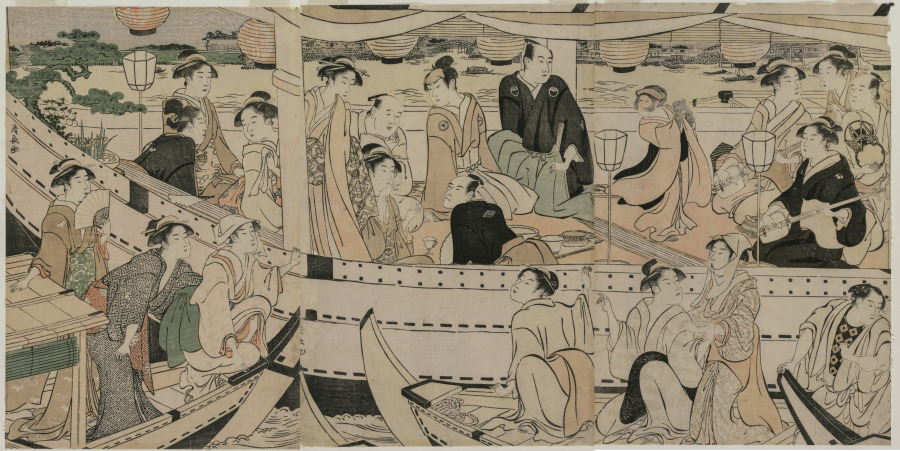
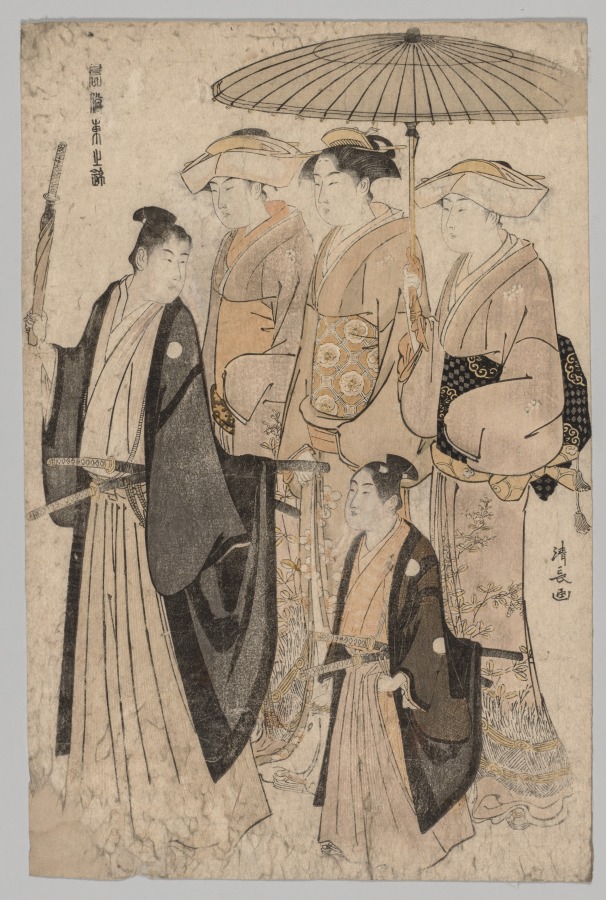
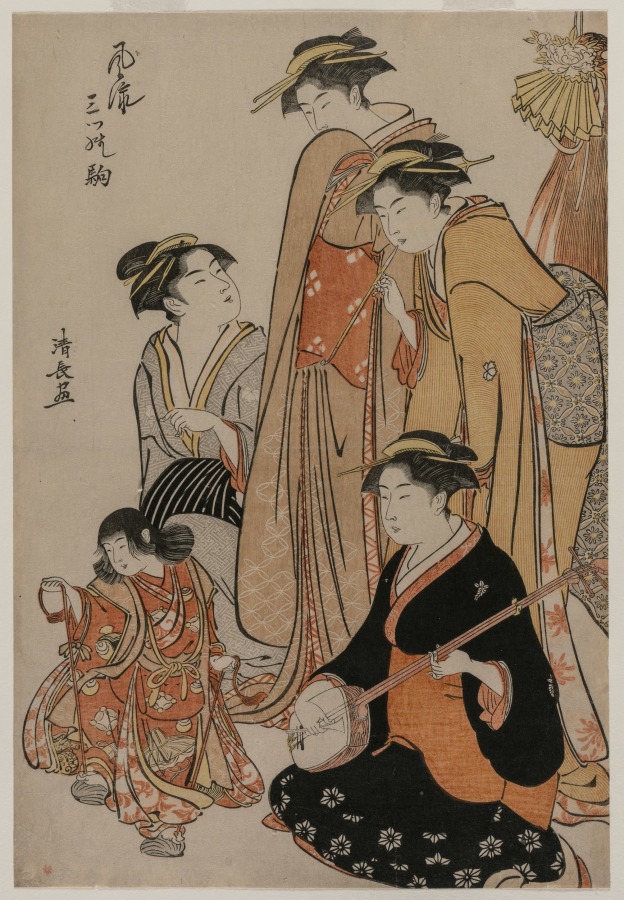
His work is defined by a shift towards realism and natural proportions. During the 1780s, he introduced a new aesthetic for bijin-e. These figures were exceptionally tall, with a height equal to seven times the size of their heads. He placed these figures in outdoor scenes using Western perspective techniques. This method created a sense of physical space that was uncommon in earlier Japanese woodblock prints. His compositions often used multiple sheets of paper to accommodate these tall figures.
Modern collectors value Kiyonaga for his restrained use of colour and clear linework. He avoided the glitter and heavy ornamentation that became popular in the late eighteenth century. His prints offer a calm view of Edo life through balanced compositions and natural poses. Because he stopped producing large-scale prints in the 1790s to focus on private commissions, his original woodblock prints remain distinct from the more exaggerated styles of his contemporaries.
Notable Works
Tap to view larger.
Next stop
Browse the movements →
Every movement in the collection, from the Renaissance to Pop art.
Torii Kiyonaga prints
Hand-finished archival prints from Torii Kiyonaga's body of work.
 Summer Twilight on the Banks of the Sumida River - Torii Kiyonaga
From £28.00
Summer Twilight on the Banks of the Sumida River - Torii Kiyonaga
From £28.00
 Three Women after a Bath, from the series A Brocade of Eastern Manners - Torii Kiyonaga
From £28.00
Three Women after a Bath, from the series A Brocade of Eastern Manners - Torii Kiyonaga
From £28.00
 Scene at the Ishido Mansion - Torii Kiyonaga
From £28.00
Scene at the Ishido Mansion - Torii Kiyonaga
From £28.00
 An Actors' Boating Party on the Sumida River - Torii Kiyonaga
From £28.00
An Actors' Boating Party on the Sumida River - Torii Kiyonaga
From £28.00
 Chrysanthemum festival, from the series Precious Children's Games of the Five Festivals - Torii Kiyonaga
From £28.00
Chrysanthemum festival, from the series Precious Children's Games of the Five Festivals - Torii Kiyonaga
From £28.00
 The Actors Matsumoto Koshiro IV and Sawamura Sojuro III - Torii Kiyonaga
From £28.00
The Actors Matsumoto Koshiro IV and Sawamura Sojuro III - Torii Kiyonaga
From £28.00
Take Torii Kiyonaga home.
See all Torii Kiyonaga prints →Frequently Asked Questions
What is Torii Kiyonaga known for?
Torii Kiyonaga is known for a leading figure of the Torii school, Kiyonaga is known for his woodblock prints of tall women set against realistically rendered outdoor scenes.