

Johann Adam Friedrich Rauscher
Johann Adam Friedrich Rauscher spent much of his career as a court painter for the Dukes of Saxe-Coburg-Saalfeld. While his official duties required formal portraits, his personal interest lay in the topography of the Thuringian countryside. He produced a series of etchings that documented the small towns and castles of central Germany with a level of detail that surpassed simple map-making. These works were often printed in small batches for local nobility, making original impressions quite rare today.
Biography
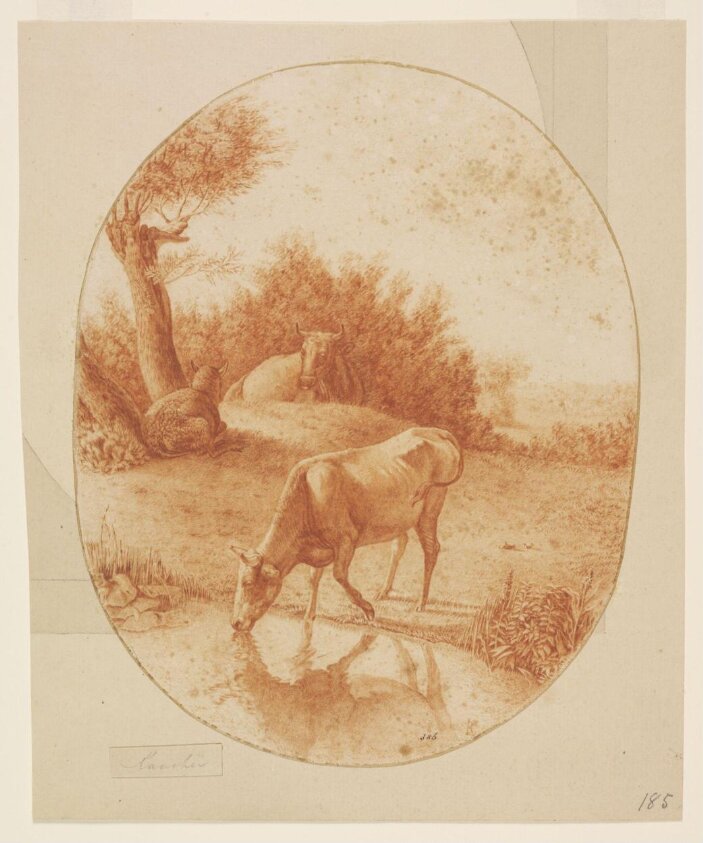
His artistic method relied on direct observation of the natural world. Rauscher avoided the dramatic, idealised scenes common in the late eighteenth century. Instead, he used clear outlines and balanced compositions to present the German countryside as it appeared. His watercolours and etchings use subtle washes of colour to define space. The artist focused on the structural elements of a scene, such as the geometry of a bridge or the specific silhouette of a church spire.
Modern collectors value Rauscher for his technical precision and the quiet atmosphere of his prints. His work offers a window into a pre-industrial Europe without the sentimentality of later Romantic movements. The compositions fit well in contemporary interiors due to their neutral palettes and architectural clarity. These prints provide a sense of order and historical continuity for a home gallery.
Notable Works
Tap to view larger.
Next stop
Browse the movements →
Every movement in the collection, from the Renaissance to Pop art.
Frequently Asked Questions
What is Johann Adam Friedrich Rauscher known for?
Johann Adam Friedrich Rauscher is known for johann Adam Friedrich Rauscher was an eighteenth-century German court painter known for his precise topographical etchings and watercolours of the Thuringian countryside.