

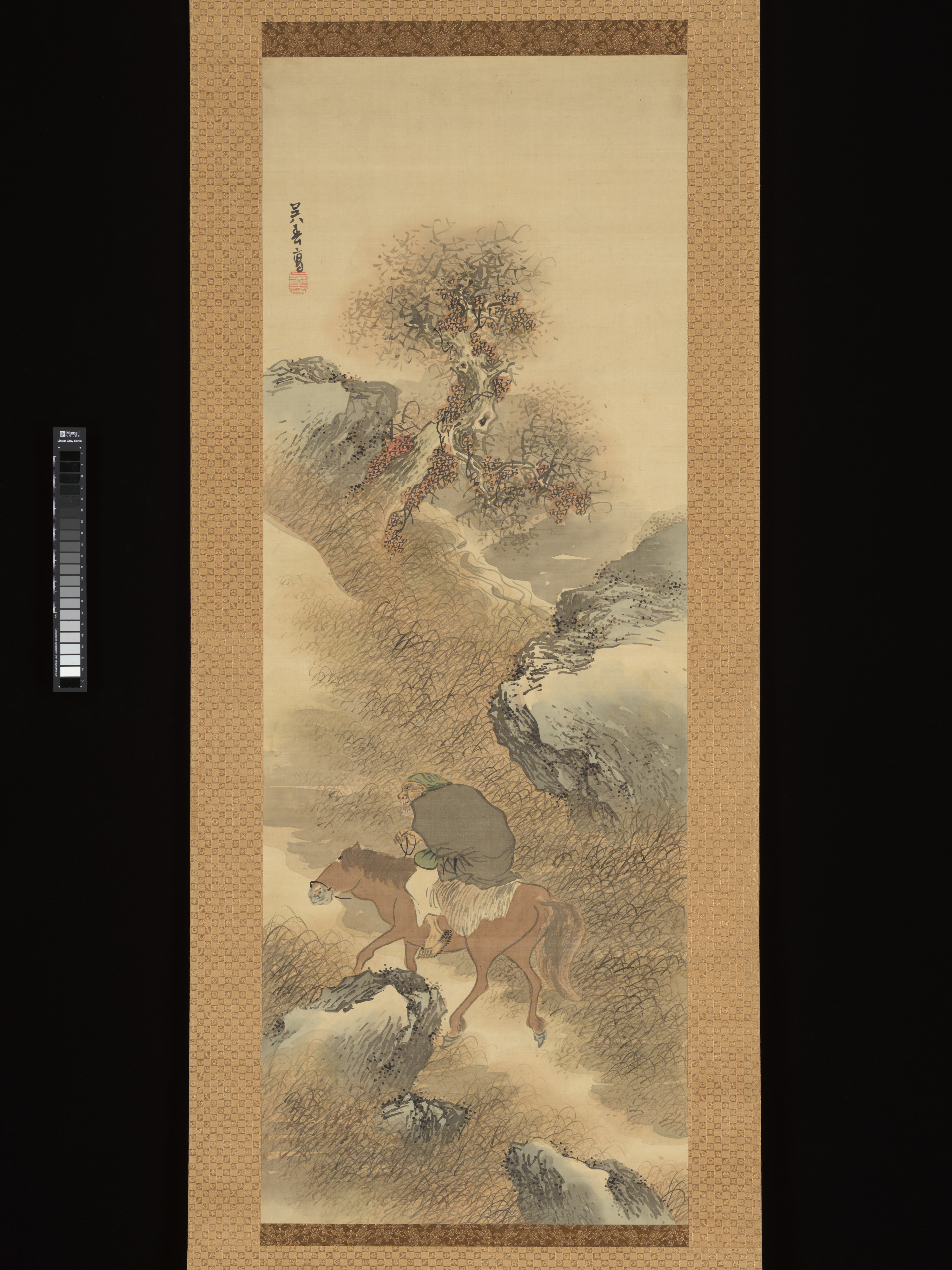
Goshun (Matsumura Gekkei)
Goshun, also known as Matsumura Gekkei, followed an unusual path in the Kyoto art world. After the death of his teacher Buson, he sought instruction from the realist master Maruyama Ōkyo. In a rare gesture of professional respect, Ōkyo declined to teach him, stating that Goshun had already mastered his craft. The two artists became close friends instead, leading to a creative exchange that defined Goshun’s mature style.
Biography
As the founder of the Shijō School, Goshun developed a technique that balanced literal observation with a literary sensibility. He avoided the large, formal compositions common among his contemporaries, preferring small canvases and simple subjects. His work often features rural scenes or quiet natural observations, such as his studies of peasant life or his Snow Landscape. This approach brought a softer, more poetic quality to the realism practised in Kyoto at the time.
Modern collectors are often drawn to the economy of Goshun’s brushwork. His preference for small-scale pieces and uncomplicated themes makes his prints easy to place in a contemporary home. The focus on natural cycles and rural simplicity provides a sense of quietude. His ability to capture a specific mood through minimal detail ensures his work remains a staple of Japanese art history.
Notable Works
Tap to view larger.
Next stop
Browse the movements →
Every movement in the collection, from the Renaissance to Pop art.
Frequently Asked Questions
What is Goshun (Matsumura Gekkei) known for?
Goshun (Matsumura Gekkei) is known for goshun was the founder of the Shijō School, known for blending realist observation with a poetic, literary style across quiet landscapes and rural scenes.