



Cecco Bravo
Cecco Bravo, born Francesco Montelatici, earned his nickname due to his volatile temper. While many Baroque artists sought clarity, he often worked in a style called sfumato that blurred edges into a hazy, dreamlike atmosphere. He spent much of his career in Florence before moving to the court of Archduke Ferdinand Charles in Innsbruck. His transition from large frescoes to small, private cabinet paintings allowed him to explore more eccentric themes.
Biography
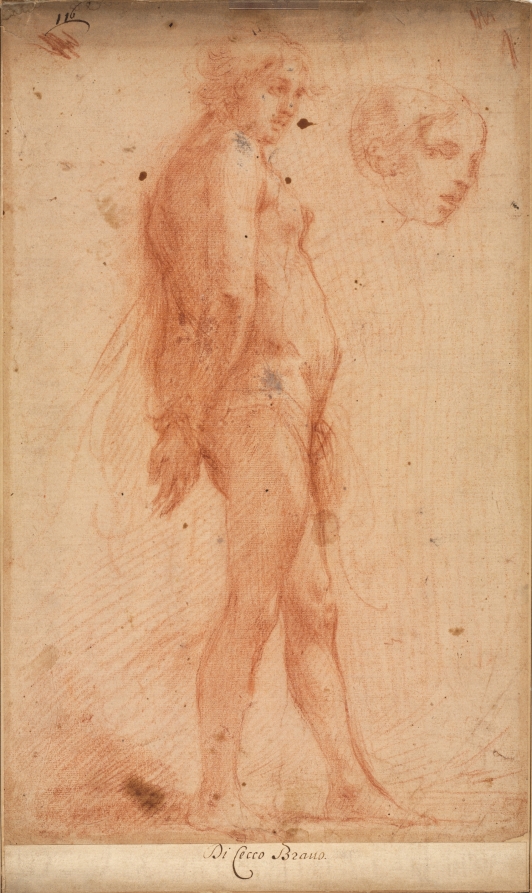
His technique is defined by soft, dissolving outlines and a muted palette. Unlike the rigid anatomical precision of his contemporaries, works like Study of a Standing Male Nude show a preference for fluid movement. He often used red chalk to create a sense of life on paper. In his painting Mary Magdalene, the figure appears to emerge from the shadows. This approach creates a sense of mystery that was unusual for the formal Florentine school of the seventeenth century.
Modern collectors value his work for its atmospheric quality and psychological depth. His drawings possess a sketch-like immediacy that feels contemporary despite being four centuries old. These pieces suit minimalist or classical interiors because they offer a quiet, moody presence without overwhelming a room. The soft transitions of colour and form make his prints an excellent choice for those who prefer subtle art over bold statements.
Notable Works
Tap to view larger.
Next stop
Browse the movements →
Every movement in the collection, from the Renaissance to Pop art.
Related Artists


Frequently Asked Questions
When was Cecco Bravo born?
Cecco Bravo was born in 1601 and died in 1661.What is Cecco Bravo known for?
Cecco Bravo is known for cecco Bravo was a seventeenth-century Florentine artist known for his atmospheric drawings and moody, sfumato-heavy paintings that capture a sense of dreamlike mystery.